Healthcare Predictions 2025 | Multimodal measurement in medicine
TL;DR
AI technology in healthcare faces financial and adoption challenges despite significant advancements.
Transcript
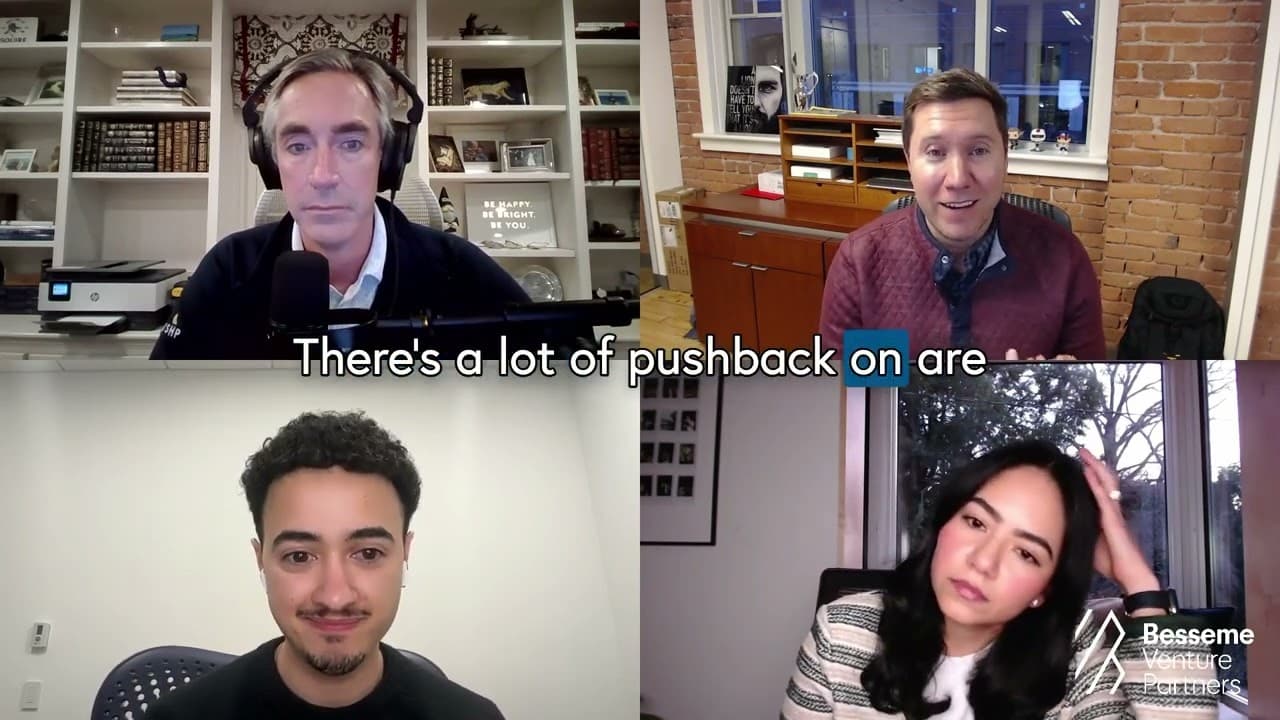
all right Morgan your prediction all right so got to wrap it up with some AI as if we didn't talk about it enough so far 2024 the year of AI in health I I missed that I I think I fell asleep all right go what are we gonna do in 2025 in AI I think we're on the start of a really interesting trajectory so this might be a prediction we we also roll for... Read More
Key Insights
- 🪛 The healthcare sector is at the brink of an AI revolution driven by multimodal data integration, enhancing disease measurement and treatment personalization.
- 👶 Despite technological advancements, existing reimbursement models are outdated and hinder the implementation of new AI diagnostic tools, emphasizing a critical need for reform.
- 🤑 A focus on understanding diseases through rich phenotypes enables healthcare providers to address the root causes rather than just symptoms, representing a significant shift in diagnostic approaches.
- 😨 Collaboration and knowledge sharing between digital therapeutics and AI diagnostics could streamline the adoption of innovative healthcare technologies and improve patient care outcomes.
- 🎁 Regulatory and reimbursement complexities present substantial challenges, necessitating a strategic focus on demonstrating value and cost-effectiveness of AI technologies.
- 🥳 Stakeholders must align incentives for healthcare practitioners to ensure that AI tools are embraced as integral parts of patient care strategies.
- 😷 AI in diagnostics is seen as a means to enhance, rather than replace, the roles of medical professionals, reinforcing the importance of human oversight in healthcare.
Install to Summarize YouTube Videos and Get Transcripts
Explore YouTube Video Summarizer or Get YouTube Transcript Extractor
Questions & Answers
Q: What does multimodal AI refer to in the context of healthcare?
Multimodal AI refers to the integration of various forms of data, such as imaging, lab results, audio, and video, to create a comprehensive view of a patient's health. This technology allows for a deeper understanding of diseases by analyzing multiple variables rather than relying on single measurements, leading to more accurate diagnoses and personalized treatment plans.
Q: Why is there a gap between AI advancements and clinical implementation in healthcare?
The gap exists primarily due to outdated reimbursement models that have not adapted to incorporate new technologies. While AI can dramatically enhance diagnostic processes, securing insurance coverage for these innovations remains a significant hurdle, meaning that many patients may not benefit from available technologies despite their potential.
Q: What challenges do companies face in getting AI technologies reimbursed?
Companies must navigate a complex network of regulations and payer policies that often favor traditional diagnostic methods. They need to demonstrate not only the efficacy of their AI solutions but also how these innovations can lead to cost savings or improved patient outcomes to be considered for reimbursement by insurance providers.
Q: What role do diagnostic AI and rich phenotypes play in modern medicine?
Diagnostic AI enables the categorization of diseases beyond traditional metrics by analyzing data from various sources to identify rich phenotypes. This allows healthcare providers to recognize and treat underlying causes of diseases more effectively, which can lead to improved outcomes and potentially redefine treatment strategies.
Q: How can lessons learned from digital therapeutics influence AI diagnostics?
Insights from the digital therapeutics sector regarding regulatory approval, market entry, and adoption strategies can guide AI diagnostics. Understanding the path these early companies took to secure reimbursement and gain acceptance among healthcare providers can help shape approaches for integrating AI technologies into everyday medical practice.
Q: What is necessary for AI diagnostic technologies to become widely adopted in healthcare?
For these technologies to be widely adopted, stakeholders need to establish clear value propositions that demonstrate how AI solutions improve patient care and are financially sustainable. This includes aligning incentives for healthcare professionals to use AI tools and ensuring that patients have access to affordable care based on AI-driven diagnostics.
Q: How is the healthcare industry addressing fears of AI replacing jobs in diagnostics?
Anxiety surrounding job replacement due to AI, particularly among pathologists and radiologists, is being mitigated by emphasizing AI's role in augmenting human capabilities rather than replacing them. AI is being positioned as a complement to medical professionals, enabling more efficient workflows and improved accuracy in diagnostics.
Q: What predictions are made for the future of AI in healthcare?
The discussion predicts that 2025 will witness greater integration of AI in health systems, provided that the financial and operational barriers are addressed. Anticipated advancements in multimodal AI could revolutionize diagnostics, but the healthcare industry must adapt business models to support these innovations for widespread implementation.
Summary & Key Takeaways
-
The content discusses the advancements in AI technology for healthcare, focusing on the potential of multimodal AI to transform medical diagnostics and patient care by integrating various data sources.
-
It highlights a critical gap between technological capabilities and existing reimbursement models in healthcare, which hinders the widespread adoption of these innovations despite their demonstrated utility.
-
The discussion emphasizes the need for the healthcare system to learn from past experiences in digital therapeutics to navigate the challenges of implementing AI solutions effectively, including securing necessary funding and ensuring adoption by medical professionals.
Read in Other Languages (beta)
Share This Summary 📚
Summarize YouTube Videos and Get Video Transcripts with 1-Click
Try YouTube Summary with ChatGPT & Claude or YouTube Transcript Generator
Explore More Summaries from Bessemer Venture Partners 📚



Summarize YouTube Videos and Get Video Transcripts with 1-Click
Try YouTube Summary with ChatGPT & Claude or YouTube Transcript Generator