How to Use the Simple Future Tense in English
TL;DR
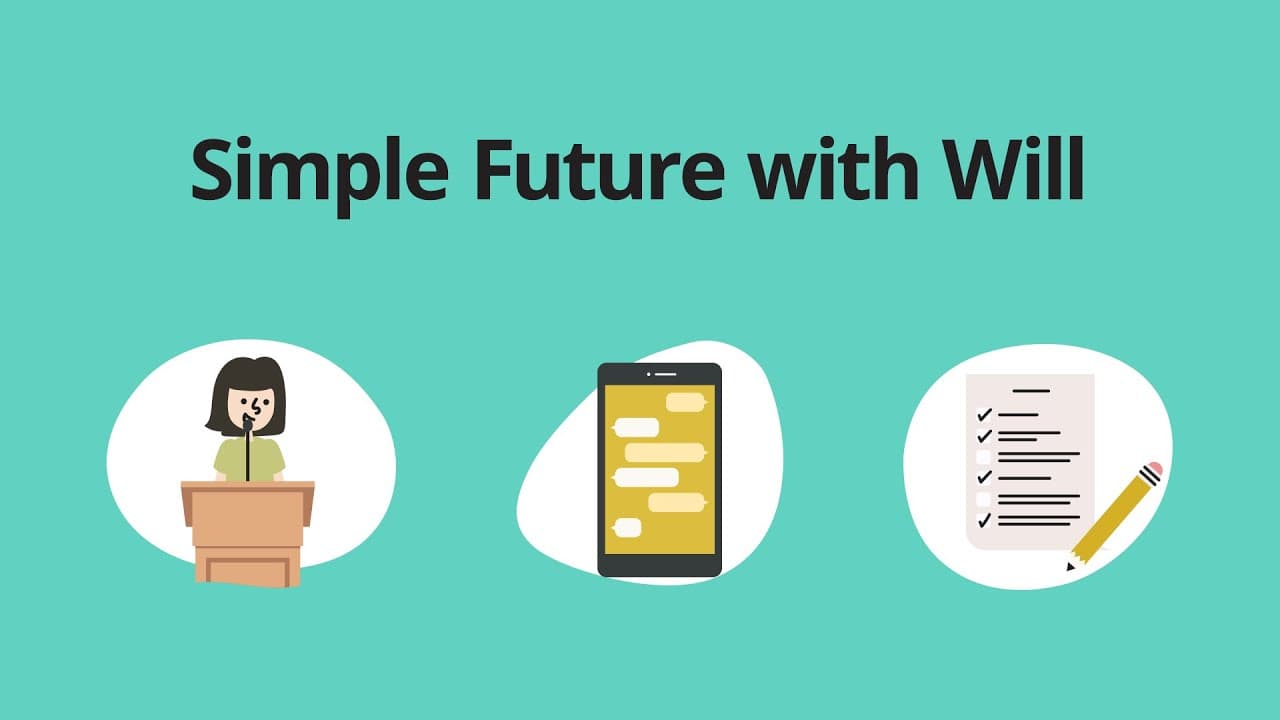
The simple future tense expresses actions that will occur and can be formed using 'will' plus a base verb, 'be going to' plus a base verb, or 'be' with an -ing verb. Remember to use contractions like 'I'll' with subject pronouns to create more natural sentences.
Transcript
ESL Library Simple Future with Will What are verb tenses? Verb tenses show the time that an action takes place. The simple future is a verb tense. We use the simple future tense for actions that will happen at a future time. There are three ways to express the simple future tense in English. We use will and a base verb to decide on a future action ... Read More
Key Insights
- 🥇 The simple future tense is used to talk about actions that will take place in the future.
- ⚾ It can be formed with "will" and a base verb, "be going to" and a base verb, or "be" and an -ing verb.
- ❓ Contractions, like "I'll" or "they'll," are used with subject pronouns in the simple future tense.
- 📢 The simple future tense is not used with subjects that are nouns.
- 😑 The simple future tense is commonly used to express predictions, promises, or future plans.
- 🍰 Using contractions with the simple future tense can make sentences shorter and more informal.
- ❤️🩹 The simple future tense has the same verb form for all subjects, without any changes like -s, -ed, or -ing endings.
Install to Summarize YouTube Videos and Get Transcripts
Explore YouTube Video Summarizer or Get YouTube Transcript Extractor
Questions & Answers
Q: What is the simple future tense and when is it used?
The simple future tense is used to talk about actions that will happen in the future. It is formed using "will" and a base verb, and it can express predictions, promises, or future plans.
Q: Are there other ways to express the future tense besides using "will"?
Yes, besides using "will," you can also use "be going to" and a base verb to talk about existing future plans. Additionally, you can use "be" and an -ing verb to express future actions.
Q: Can you provide some examples of forming the simple future tense with "will"?
Sure! "I will text you after class," "He will walk his dog tomorrow morning," and "The students will go to school on Monday" are all examples of the simple future tense formed with "will" and a base verb.
Q: When should contractions be used with the simple future tense?
Contractions, such as "I'll" or "she'll," are commonly used with subject pronouns in the simple future tense. However, they are not used with subject nouns, so instead of saying "the students'll go to school," we say "the students will go to school."
Key Insights:
- The simple future tense is used to talk about actions that will take place in the future.
- It can be formed with "will" and a base verb, "be going to" and a base verb, or "be" and an -ing verb.
- Contractions, like "I'll" or "they'll," are used with subject pronouns in the simple future tense.
- The simple future tense is not used with subjects that are nouns.
- The simple future tense is commonly used to express predictions, promises, or future plans.
- Using contractions with the simple future tense can make sentences shorter and more informal.
- The simple future tense has the same verb form for all subjects, without any changes like -s, -ed, or -ing endings.
- Practicing forming sentences with the simple future tense can aid in fluency and comprehension.
Summary & Key Takeaways
-
Verb tenses show the time an action takes place, and the simple future is a verb tense used for actions happening in the future.
-
The simple future tense can be expressed in three ways: using "will" and a base verb, using "be going to" and a base verb, or using "be" and an -ing verb.
-
To form the simple future tense with "will," use the base form of the verb, and remember to use contractions with subject pronouns.
Read in Other Languages (beta)
Share This Summary 📚
Summarize YouTube Videos and Get Video Transcripts with 1-Click
Try YouTube Summary with ChatGPT & Claude or YouTube Transcript Generator
Explore More Summaries from Ellii (formerly ESL Library) 📚
Summarize YouTube Videos and Get Video Transcripts with 1-Click
Try YouTube Summary with ChatGPT & Claude or YouTube Transcript Generator