5 Watercolor Painting Techniques (For Beginners and Pros)
TL;DR
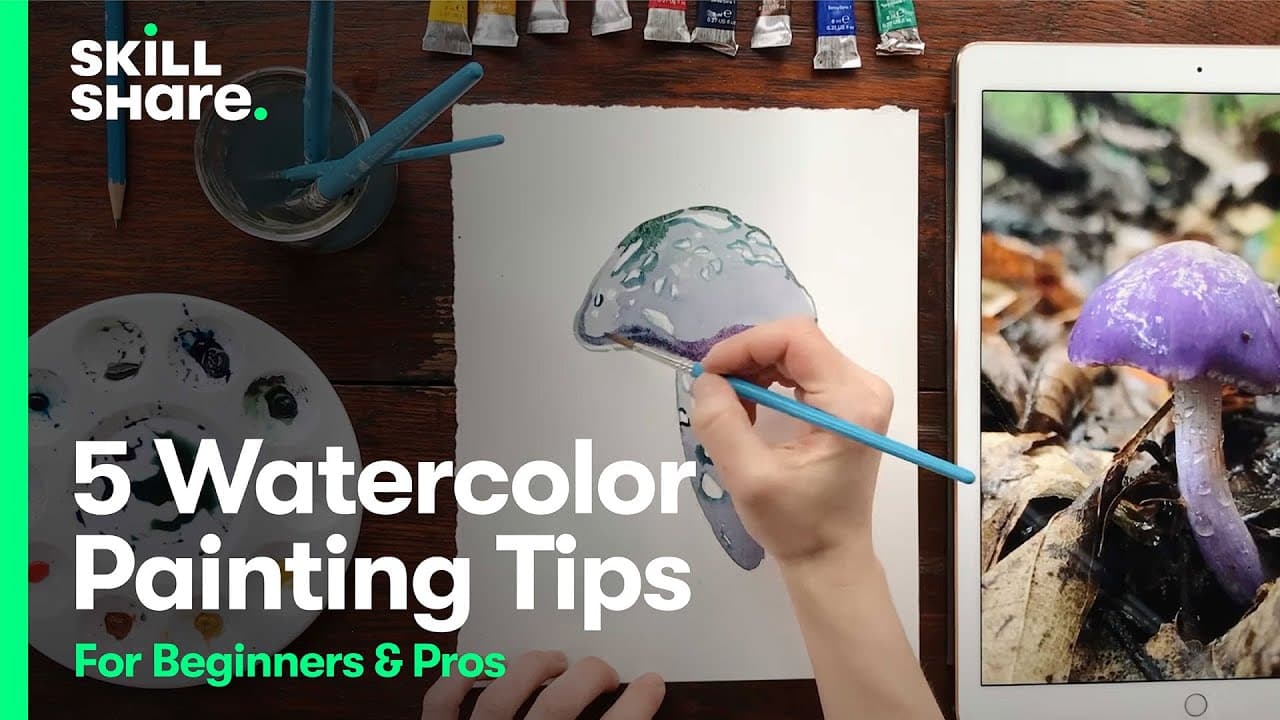
Learn the difference between wet-on-dry and wet-on-wet watercolor techniques for different effects.
Transcript
I'm going to load my brush up with water and pigment and lay a stroke down on dry paper you can see the stroke is incredibly contained with crisp edges here's what it looks like if I lay the same amount of paint and pigment down on a wet section of paper watch how the paint blooms outwards creating these soft edges that blend naturally into the pap... Read More
Key Insights
- 💦 Wet-on-dry technique offers precise control with crisp edges, ideal for detailed work.
- 🖌️ Brush size impacts the application of paint, with larger brushes for broad strokes and smaller for nuances.
- 💦 Smooth color transitions in watercolor require gradual mixing of concentrated paint and water.
- 👨🎨 Adding salt to wet paint can create interesting textures in watercolor artwork.
- 🏛️ Building up layers in watercolor paintings enhances depth and richness of colors.
- 🦸 Using super dark shades for shadows and outlines creates contrast and depth in watercolor artwork.
- 💦 Fading shadow areas with just water on the brush helps create natural gradations of color.
Install to Summarize YouTube Videos and Get Transcripts
Explore YouTube Video Summarizer or Get YouTube Transcript Extractor
Questions & Answers
Q: What is the difference between wet-on-dry and wet-on-wet watercolor techniques?
Wet-on-dry provides control with crisp edges, while wet-on-wet creates soft, blended effects due to paper moisture.
Q: How does brush size affect watercolor painting?
Large brushes are for broad strokes, holding more paint, while smaller brushes offer detail work and precision.
Q: What is the key to mixing colors smoothly in watercolor?
Gradually adding more concentrated paint to water and maintaining a smooth transition is crucial for color mixing in watercolor.
Q: How can adding salt create texture in watercolor paintings?
Sprinkling salt on wet paint absorbs pigment, creating unique textures once dried, adding interest and dimension to the artwork.
Summary & Key Takeaways
-
Wet-on-dry technique gives more control with crisp edges, while wet-on-wet creates soft blends.
-
Brush size impacts paint application, with larger brushes for broader strokes and smaller for details.
-
Mixing colors smoothly and adding textures like salt can enhance watercolor paintings.
Read in Other Languages (beta)
Share This Summary 📚
Summarize YouTube Videos and Get Video Transcripts with 1-Click
Try YouTube Summary with ChatGPT & Claude or YouTube Transcript Generator
Explore More Summaries from Skillshare 📚





Summarize YouTube Videos and Get Video Transcripts with 1-Click
Try YouTube Summary with ChatGPT & Claude or YouTube Transcript Generator