Will India Surpass China as the Next Economic Superpower?
TL;DR
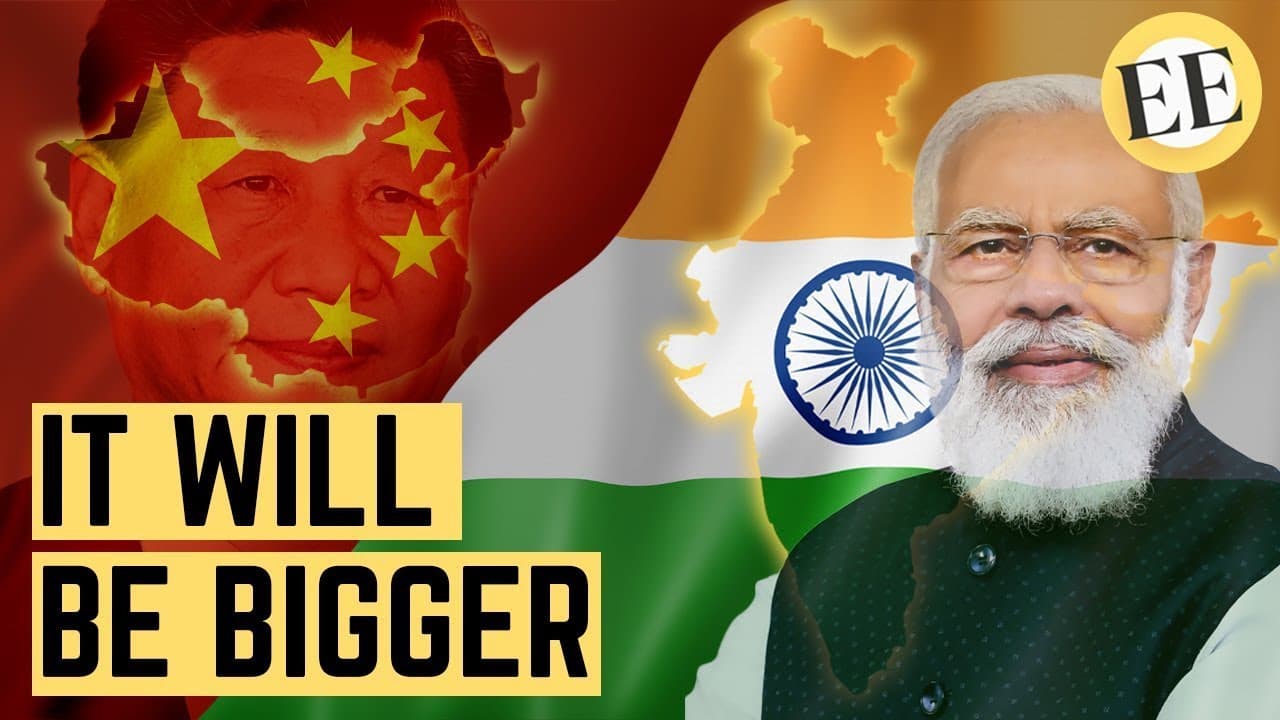
India has the potential to become an economic superpower due to its young workforce and growing manufacturing sector, but it lags behind China in per capita output. Key challenges include overregulation, a substantial informal economy, and the need for improved credit access. For India to fully realize its potential, it must stabilize investor confidence and continue to develop its service sector.
Transcript
- [Narrator] This is India, the fifth largest economy in the world and a country which will soon be the most populous on Earth. India's intense manpower is a big part of what has made it such an economic force on the world stage. While countless other countries are struggling with aging populations, equipped with skills that are misaligned from wha... Read More
Key Insights
- India is poised to become the most populous country and holds the fifth largest economy, with a young and productive workforce that presents significant economic opportunities.
- India has been gaining manufacturing jobs as China's economic growth slows, aligning with its goal of a $5 trillion economy by 2025, but it still lags behind in output per capita.
- The Washington Consensus played a crucial role in opening India's economy to trade and private business, moving away from protectionist policies and the License Raj.
- Protectionist policies, while protecting local industries, can lead to higher consumer prices and reduced export competitiveness, as seen in India's past economic struggles.
- India's economic growth has been hindered by overregulation, particularly in the financial sector, where state-owned banks have limited business and consumer credit access.
- The informal economy in India has been significant, but efforts to formalize it have been partially successful, with the informal sector's contribution decreasing significantly by 2021.
- India's service sector, particularly in areas like accounting, engineering, and legal services, offers a unique advantage over China, leveraging its large English-speaking population.
- For India to realize its economic potential, it must address issues of regulation, investor confidence, and provide financial tools for independent wealth growth.
Install to Summarize YouTube Videos and Get Transcripts
Explore YouTube Video Summarizer or Get YouTube Transcript Extractor
Questions & Answers
Q: What factors contribute to India's potential as an economic superpower?
India's potential as an economic superpower is driven by its young and productive workforce, its large English-speaking population, and its growing service sector. These factors, combined with recent manufacturing job gains and a shift away from protectionist policies, position India for significant economic growth.
Q: How has the Washington Consensus impacted India's economy?
The Washington Consensus helped open India's economy to trade and private business, moving away from protectionist policies and the License Raj. This shift allowed for greater economic growth by reducing government intervention, encouraging foreign investment, and enabling a more competitive market environment.
Q: What are the challenges posed by protectionist policies in India?
Protectionist policies in India have led to higher consumer prices and reduced export competitiveness. By imposing import taxes and trade restrictions, domestic industries were shielded but at the cost of higher prices for consumers and limited opportunities for developing export markets, hindering long-term economic growth.
Q: How has overregulation affected India's economic growth?
Overregulation, particularly in the financial sector, has limited credit access for businesses and consumers in India. State-owned banks have been slow to offer loans, stifling consumer spending and making it difficult for businesses to start and expand, thereby slowing down economic growth despite other positive trends.
Q: What role does the informal economy play in India's economic landscape?
The informal economy has been a significant part of India's economic landscape, contributing over half of the total output at one point. Efforts to formalize the economy have reduced this figure, but the informal sector still presents challenges in terms of tax collection and creating a two-speed economy with disparities in income.
Q: How does India's service sector compare to China's manufacturing sector?
India's service sector, particularly in fields like accounting, engineering, and legal services, offers a competitive edge over China's manufacturing sector. India's large English-speaking population facilitates outsourcing of complex services, which are less susceptible to being relocated based on labor costs, unlike manufacturing jobs.
Q: What measures are necessary for India to achieve its economic potential?
To achieve its economic potential, India needs to enhance investor confidence, streamline regulations, and provide financial tools for wealth growth. Addressing overregulation, improving credit access, and further formalizing the economy will be crucial for sustainable growth and maximizing its demographic advantages.
Q: What impact did the 2020 economic shrinkage have on India's growth trajectory?
The 2020 economic shrinkage, primarily due to the COVID-19 pandemic, highlighted vulnerabilities in India's growth trajectory, including overregulation and reliance on the informal economy. Despite this setback, the reduction in the informal sector's contribution and government efforts to improve business conditions offer hope for recovery and sustained growth.
Summary & Key Takeaways
-
India is on the brink of becoming the world's most populous country, with a young workforce contributing to its status as the fifth largest economy. However, its economic output per capita remains low compared to China, despite recent manufacturing gains.
-
The shift from protectionist policies and the License Raj to a more open economy under the Washington Consensus has spurred growth, yet India faces challenges with overregulation, particularly in the financial sector, limiting credit access.
-
India's service sector, bolstered by its large English-speaking population, positions it uniquely against China. However, the informal economy and regulatory hurdles remain significant challenges to achieving its full economic potential.
Read in Other Languages (beta)
Share This Summary 📚
Summarize YouTube Videos and Get Video Transcripts with 1-Click
Try YouTube Summary with ChatGPT & Claude or YouTube Transcript Generator
Explore More Summaries from Economics Explained 📚


Summarize YouTube Videos and Get Video Transcripts with 1-Click
Try YouTube Summary with ChatGPT & Claude or YouTube Transcript Generator