John Stuart Mill terms of trade
TL;DR
Mill's essay discusses tariffs' effect on trade and economic gains.
Transcript
now let's consider John Stewart Mills early and impressive work on tariffs and the terms of trade I'm drawing on Mill's early book essays on some unsettled questions of political economy these essays were written in 1829 to 1830 which means mil penum in his early 20s quite an impressive achievement this essay in particular is called of the laws of ... Read More
Key Insights
- John Stuart Mill's early essays explore the impact of tariffs on international trade, illustrating how a tax on exports can potentially benefit a nation if foreign demand is inelastic.
- Mill explains that taxing exports can mimic collusion among suppliers, raising prices and increasing national revenue, though the gains are captured by the treasury rather than the companies.
- A fixed exchange rate scenario shows that as foreign countries spend more on taxed exports, their domestic prices may fall, offering a secondary benefit to the exporting country.
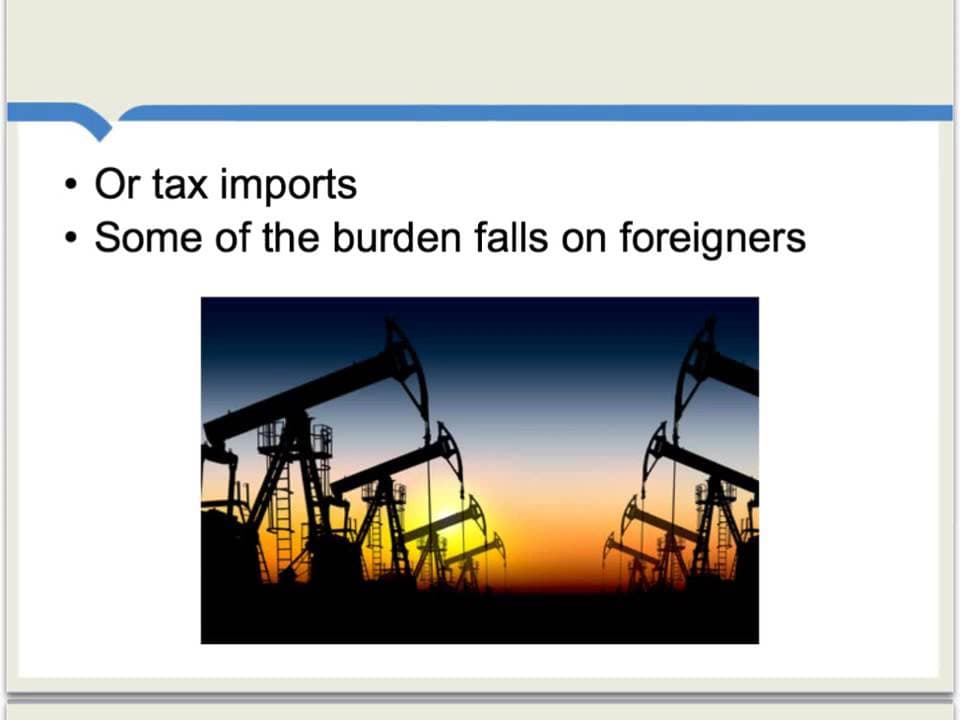
- Modern interpretations of Mill's work suggest that taxing imports can also shift trade terms favorably, acting as a monopsony and converting trade gains into government revenue.
- Despite theoretical benefits, economists generally support free trade, citing concerns over governments misapplying tariffs for political or special interests rather than efficiency.
- Mill's essays also touch on the transfer problem, where systematic money shifts abroad, such as through debt payments, can affect trade terms and national economies.
- The transfer problem, highlighted in the 1920s, shows Mill's early recognition of how foreign financial obligations can influence trade dynamics, though he did not fully solve it.
- For comprehensive historical context, Jacob Viner's work on international trade theory and Mill's later writings provide further insights into trade arguments and economic principles.
Install to Summarize YouTube Videos and Get Transcripts
Explore YouTube Video Summarizer or Get YouTube Transcript Extractor
Questions & Answers
Q: What is the main argument of Mill's essay regarding tariffs?
Mill argues that imposing a tax on exports can potentially benefit a nation if the foreign demand for those exports is inelastic. In such cases, the price increase due to the tax can outweigh the decrease in demand, leading to increased national revenue. This argument highlights the potential for strategic use of tariffs to improve a country's economic standing.
Q: How does Mill's essay describe the impact of tariffs on international trade?
Mill's essay describes tariffs as a tool that can alter the terms of trade in favor of the exporting country. By taxing exports, a country can effectively raise prices, similar to how collusion among suppliers would. This price increase can lead to greater revenue for the nation, particularly if the foreign demand remains strong despite the higher prices.
Q: What is the 'transfer problem' discussed by Mill?
The 'transfer problem' refers to the economic impact of systematic money transfers out of a country, such as through debt or reparations payments. Mill discusses how these transfers can affect trade terms and national economies by shifting financial resources abroad, potentially altering the balance of trade and impacting domestic economic conditions.
Q: Why do modern economists generally favor free trade despite Mill's findings?
Modern economists favor free trade because they are skeptical of governments' ability to implement optimal tariffs effectively. Tariffs are often applied for political or special interest reasons rather than economic efficiency, leading to potential market distortions and negative consequences. Free trade is seen as a more reliable path to economic prosperity and global cooperation.
Q: How does Mill's essay relate to modern trade theory?
Mill's essay lays the groundwork for modern trade theory by exploring the effects of tariffs and the transfer problem. His insights into how taxes can alter trade terms and the economic implications of financial transfers abroad have informed subsequent economic models and debates, highlighting the complexity and interdependence of international trade dynamics.
Q: What role does inelastic demand play in Mill's tariff argument?
Inelastic demand is crucial to Mill's argument because it determines the effectiveness of a tariff in increasing national revenue. When foreign demand for an export is inelastic, a price increase due to a tariff results in only a small decrease in quantity demanded. This allows the exporting nation to capture more revenue, as the price increase outweighs the reduction in sales volume.
Q: What is the significance of the fixed exchange rate in Mill's analysis?
The fixed exchange rate in Mill's analysis illustrates how tariffs can create secondary economic benefits. As foreign countries spend more on taxed exports, their domestic prices may fall, making their exports cheaper for the taxing country. This dynamic highlights how trade policies can have cascading effects on international economic relations and national economies.
Q: How does Mill's work address the limitations of free trade?
Mill's work addresses the limitations of free trade by identifying scenarios where tariffs can strategically benefit a nation. He acknowledges that while free trade is generally advantageous, there are specific conditions under which taxing exports or imports can improve a country's economic position. Understanding these limitations is crucial for evaluating trade policies and their potential impacts.
Summary & Key Takeaways
-
John Stuart Mill's essays from the early 19th century explore the economic implications of taxing exports, particularly when foreign demand is inelastic, potentially benefiting the exporting nation by increasing revenue and altering trade terms.
-
Mill's work suggests that tariffs can simulate collusion among suppliers, raising export prices and benefiting the national treasury, though modern economists caution against tariffs due to potential misuse for political reasons.
-
Mill also addresses the transfer problem, where financial obligations abroad affect trade terms, highlighting early recognition of complex trade dynamics, though his solutions were not fully developed.
Read in Other Languages (beta)
Share This Summary 📚
Summarize YouTube Videos and Get Video Transcripts with 1-Click
Try YouTube Summary with ChatGPT & Claude or YouTube Transcript Generator
Explore More Summaries from Marginal Revolution University 📚

Summarize YouTube Videos and Get Video Transcripts with 1-Click
Try YouTube Summary with ChatGPT & Claude or YouTube Transcript Generator