How to Implement Blended Learning in Education
TL;DR
Blended learning combines traditional classroom teaching with online tools to enhance engagement and effectiveness. This approach addresses challenges in content delivery and student understanding. By using digital resources, educators can facilitate knowledge acquisition, application, and reflection, while overcoming logistical and perceptual barriers. The method fosters continuous learning across different stages of a student's academic journey.
Transcript
okay to anyone who has joined us already we're 1 minute out and um we'll begin the session shortly okay um I will begin the session um okay um I will now begin the session um you know should more people join in they can just um yeah join in from the get gr all right then um good afternoon everyone um I'm thrilled to welcome you to today's unique we... Read More
Key Insights
- Blended learning integrates traditional and digital methods to enhance educational experiences.
- Digital resources enable self-contained learning without synchronous faculty input.
- Incremental scaffolding guides students from knowledge acquisition to practical application.
- Faculty face challenges like workload and skepticism about digital resources' effectiveness.
- Students appreciate structured, forced learning sequences for better understanding.
- Professional-quality digital resources are costly but crucial for student engagement.
- Master students benefit more from flexible, self-paced digital learning environments.
- Visibility concerns arise as students worry about who sees their input in digital modules.
Install to Summarize YouTube Videos and Get Transcripts
Explore YouTube Video Summarizer or Get YouTube Transcript Extractor
Questions & Answers
Q: How does blended learning enhance education?
Blended learning enhances education by combining traditional classroom instruction with digital tools, allowing for a more engaging and effective learning experience. This approach enables students to access content at their own pace, apply knowledge in practical scenarios, and receive feedback, thus fostering deeper understanding and retention of material across different stages of their academic journey.
Q: What are the key design principles for digital learning resources?
Key design principles for digital learning resources include incremental scaffolding, which transitions students from knowledge acquisition to practical application and reflection. Resources should offer simple and concise knowledge, interactivity, and practical learning opportunities. Reflexivity encourages students to reflect on their learning process. These principles ensure resources are engaging, effective, and adaptable to various educational contexts.
Q: What challenges do faculty face when integrating digital resources?
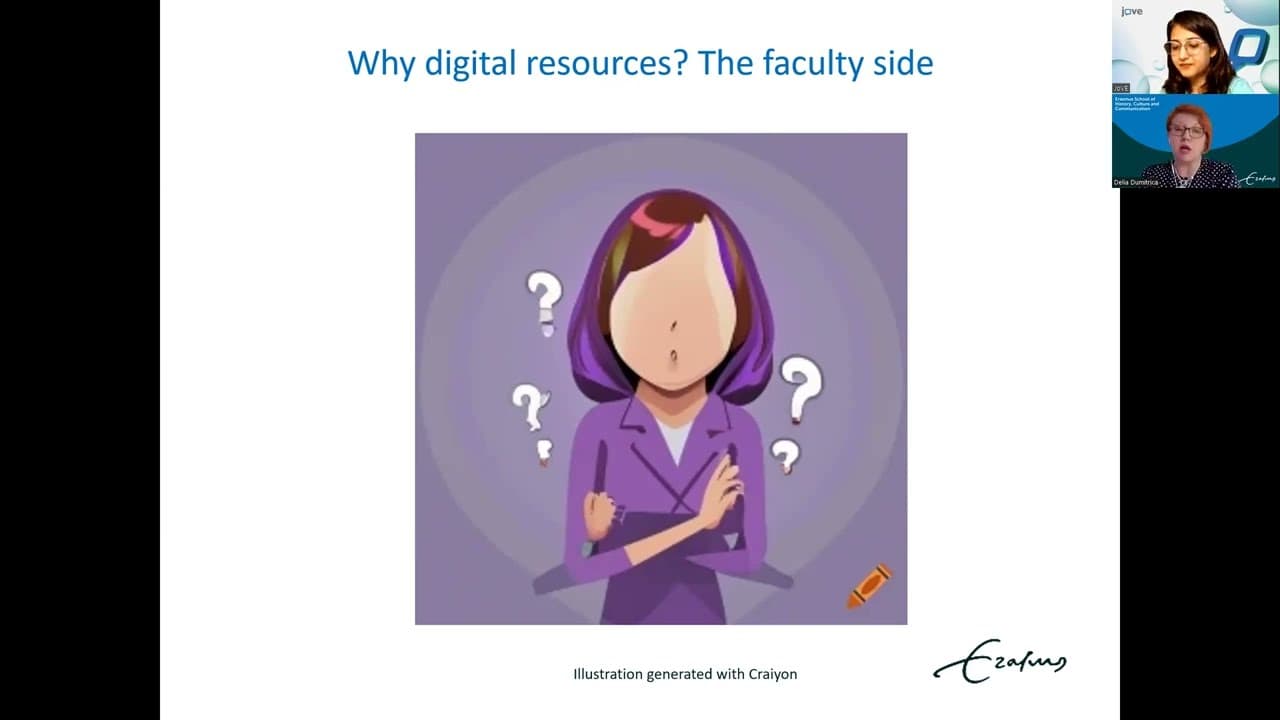
Faculty face challenges such as increased workload, logistical issues in managing student input, and skepticism about digital resources' ability to handle complex content. Concerns also arise about potential increases in teaching responsibilities if digital resources are seen as replacements for traditional methods. Ensuring faculty are aware of and promote these resources to students is crucial for successful integration.
Q: How do students perceive the advantages of digital learning resources?
Students perceive digital learning resources as valuable for improving learning practices, simplifying complex content, and facilitating practical application. They appreciate the structured, forced learning sequences that guide them through material incrementally. Despite concerns about visibility and who sees their input, students recognize the benefits of having clear templates and expert insights to aid their understanding.
Q: Why is professional quality important for digital resources?
Professional quality is important for digital resources because students have high expectations for digital content, influenced by their experiences with various online media. High-quality resources, including well-produced videos and graphics, enhance engagement and motivation. Professionalism ensures credibility and helps compete with other digital content students encounter, making them more likely to use and benefit from the resources.
Q: How do digital resources support continuous learning?
Digital resources support continuous learning by being integrated at various stages of a student's academic program. They offer repeated exposure to content, allowing students to revisit and reinforce their knowledge as they progress. This approach helps activate and solidify learning over time, ensuring students can apply their understanding in different contexts, such as coursework and thesis writing.
Q: What role does reflexivity play in digital learning?
Reflexivity in digital learning encourages students to think critically about their learning process, decisions, and outcomes. By prompting students to reflect on their choices and the reasoning behind them, reflexivity helps deepen understanding and fosters a more active learning approach. It supports students in developing self-awareness and adaptability, essential skills for lifelong learning and real-world application.
Q: Why are students concerned about visibility in digital modules?
Students are concerned about visibility in digital modules because they are unsure who will see their input and how it might impact their reputation. This concern affects their willingness to engage openly and honestly with the material. Addressing these fears by clarifying privacy policies and the purpose of sharing input can help alleviate anxiety and encourage more active participation.
Summary & Key Takeaways
-
Blended learning, combining traditional and online education, enhances student engagement and learning outcomes. Digital resources designed with clear principles help students acquire and apply knowledge independently, overcoming content complexity and time constraints. Faculty and students face challenges like workload and visibility concerns, but structured, professional digital materials improve learning practices.
-
Digital learning objects at Erasmus University Rotterdam are designed for self-contained learning, moving students from knowledge acquisition to application. Despite faculty skepticism and logistical challenges, students find these resources valuable for simplifying complex content and improving learning routines. Professional quality and structured sequences are essential for effective implementation.
-
Implementing digital resources in blended learning requires careful design and faculty buy-in. The structured approach helps students navigate complex content, while professional production ensures engagement. Faculty workload concerns and student visibility fears need addressing, but the benefits of improved learning practices and adaptability are significant.
Read in Other Languages (beta)
Share This Summary 📚
Summarize YouTube Videos and Get Video Transcripts with 1-Click
Try YouTube Summary with ChatGPT & Claude or YouTube Transcript Generator