How the Maker's Mark Distillery Produces 24 Million Bottles of Bourbon per Year — Dan Does
TL;DR
Exploring Maker's Mark's bourbon production process and its iconic features.
Transcript
- [Daniel] Maker's Mark is one of the most iconic bourbons around the world. And a lot of their success comes from the drinkability of their product. "Sweet, smooth, no bitterness," they say, it's sort of a bourbon that everyone can enjoy. What I didn't realize about the operation was just the amount of manual labor that goes into handling all thes... Read More
Key Insights
- Maker's Mark is renowned for its smooth, sweet bourbon, free from bitterness, appealing to a wide audience.
- The distillery relies heavily on manual labor and requires extensive real estate for its operations.
- Custom barrels are crucial, with each Maker's Mark barrel undergoing specific seasoning to enhance flavor.
- The bourbon-making process starts with sourcing local grains, which are ground and prepared for mashing.
- Fermentation involves combining the mash with yeast, converting sugars into alcohol over several days.
- The distillation process uses copper stills to separate alcohol vapor, forming a high-proof distillate.
- Barrels are filled with the distillate and aged for 5.5 to 7 years, impacting the flavor and color of the bourbon.
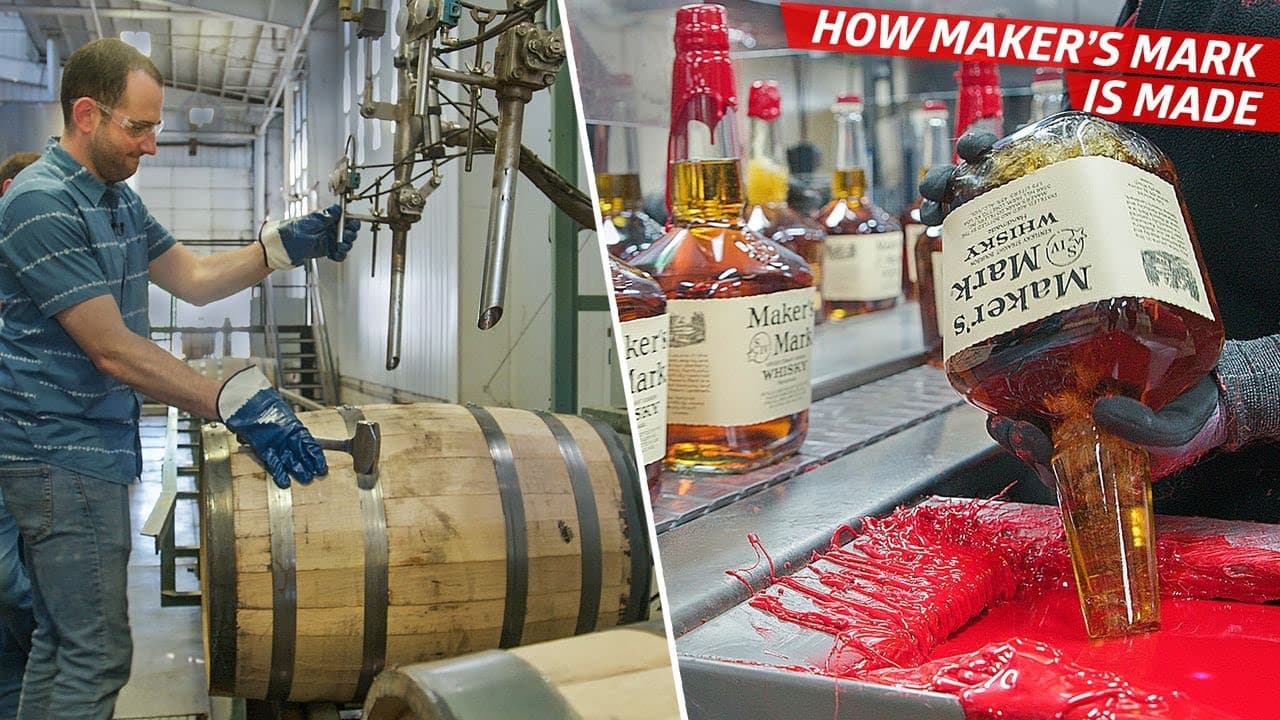
- The final product is bottled, featuring the famous red wax seal, a signature of Maker's Mark.
Install to Summarize YouTube Videos and Get Transcripts
Explore YouTube Video Summarizer or Get YouTube Transcript Extractor
Questions & Answers
Q: What makes Maker's Mark bourbon unique in flavor?
Maker's Mark bourbon is unique due to its smooth, sweet flavor profile, free from bitterness. This is achieved through a combination of factors including the use of custom barrels with specific seasoning, the choice of grains, and a consistent production process that has remained unchanged for decades.
Q: How does Maker's Mark ensure the quality of its barrels?
Maker's Mark ensures barrel quality by working with the Independent Stave Company, which customizes barrels specifically for them. The barrels undergo a seasoning process that lasts between 9 to 12 months, which contributes to the bourbon's flavor. Each barrel is visually inspected for defects before use.
Q: What is the role of fermentation in bourbon production at Maker's Mark?
Fermentation at Maker's Mark involves mixing the cooked mash with yeast in large open fermentors. The yeast converts the sugars in the mash into alcohol over a period of about three days. This stage is crucial for developing the bourbon's flavor profile and preparing it for distillation.
Q: How is the distillation process carried out at Maker's Mark?
The distillation process at Maker's Mark involves using copper stills to separate alcohol vapor from the mash. The stills use a series of plates and steam to carry the alcohol up as vapor, leaving solids behind. The vapor is then cooled back into a liquid, forming a high-proof distillate known as 'white dog.'
Q: What is the significance of the red wax seal on Maker's Mark bottles?
The red wax seal is a signature feature of Maker's Mark bottles, symbolizing the brand's commitment to quality and craftsmanship. Each bottle is hand-dipped, resulting in unique drips and variations that add to the brand's charm. The wax seal also serves as a quality assurance marker, ensuring authenticity.
Q: How does Maker's Mark manage its extensive inventory of barrels?
Maker's Mark manages its inventory by maintaining over 1 million barrels in storage across 46 giant warehouses. The operation requires careful organization and investment, with barrels being regularly rotated and monitored to ensure optimal aging conditions. The physical handling of barrels is a significant aspect of the process.
Q: What is the process of bottling at Maker's Mark?
Bottling at Maker's Mark involves several steps, starting with rinsing the bottles with a shot of Maker's to sanitize them. The bottles are then filled with bourbon, capped, labeled, and finally dipped in red wax. Each step is carefully monitored to maintain the brand's high standards of quality.
Q: How does Maker's Mark maintain consistency in its bourbon production?
Consistency at Maker's Mark is maintained through adherence to traditional methods and a commitment to quality at every stage of production. The distillery uses the same recipes, processes, and quality checks that have been in place for over 60 years, ensuring each bottle meets their standards of 'sweet, smooth, no bitterness.'
Summary & Key Takeaways
-
Maker's Mark is a globally recognized bourbon brand known for its smooth, sweet flavor profile achieved through meticulous production processes and the use of custom barrels. The distillery in Kentucky relies on manual labor and extensive real estate to produce millions of bottles annually.
-
The bourbon production process at Maker's Mark begins with grinding locally sourced grains, followed by mashing, fermentation, and distillation. The high-proof distillate is aged in specially seasoned barrels, contributing to the bourbon's unique taste and color.
-
Iconic for its red wax seal, Maker's Mark bottles are filled, labeled, and sealed with wax before being distributed globally. The brand's commitment to quality and consistency has been maintained for over 60 years, ensuring each bottle meets their standards.
Read in Other Languages (beta)
Share This Summary 📚
Summarize YouTube Videos and Get Video Transcripts with 1-Click
Try YouTube Summary with ChatGPT & Claude or YouTube Transcript Generator
Explore More Summaries from Eater 📚


Summarize YouTube Videos and Get Video Transcripts with 1-Click
Try YouTube Summary with ChatGPT & Claude or YouTube Transcript Generator