How a fleet of wind-powered drones is changing our understanding of the ocean | Sebastien de Halleux
TL;DR
In this TED Talk, the speaker introduces a new type of robot designed to explore and study the Earth's oceans, highlighting the importance of understanding our planet and the challenges we face in gathering ocean data.
Transcript
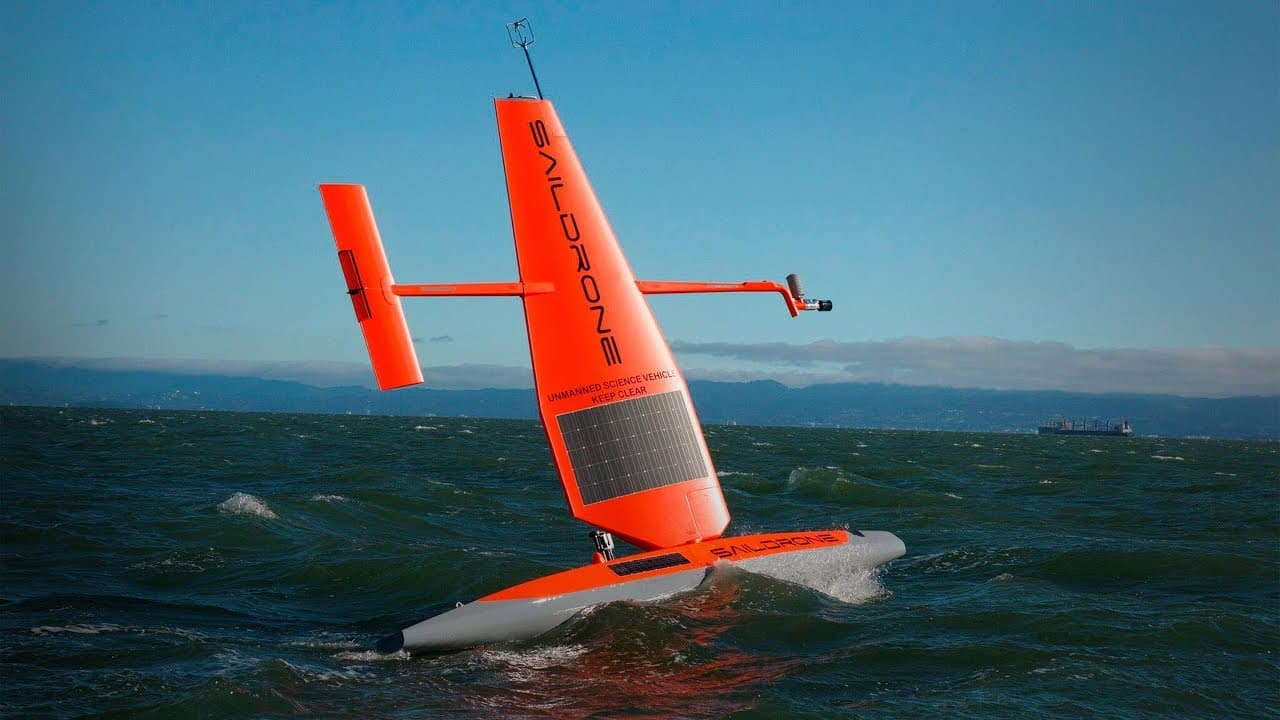
We know more about other planets than our own, and today, I want to show you a new type of robot designed to help us better understand our own planet. It belongs to a category known in the oceanographic community as an unmanned surface vehicle, or USV. And it uses no fuel. Instead, it relies on wind power for propulsion. And yet, it can sail around... Read More
Key Insights
- 🤖 Our oceans are vastly unexplored and undersampled, with limited in situ data available due to the high cost and danger of collecting it using ships and buoys. Ocean data is crucial to understanding complex planetary systems like global weather.
- 🚢 The National Oceanic and Atmospheric Administration (NOAA) only has 16 ships and less than 200 buoys offshore globally, making ocean data collection a challenging and expensive endeavor.
- 🛰️ Satellites provide valuable information about the oceans but have limitations in spatial and temporal resolution. They can only see through one micron of the ocean's surface and require corrections for cloud cover, land effects, and other factors.
- 🌊 The surface of the ocean is the interface through which all air-sea interactions occur, including the absorption of solar energy, gases exchange, heat generation, evaporation, and surface wind creation. Understanding these processes is crucial for studying climate systems and the marine ecosystem.
- ⚙️ To address the challenge of collecting oceanic data at scale, a team developed a wind-powered marine vehicle known as an ocean drone. This drone utilizes a novel wing concept and science-grade sensors to measure key oceanographic and atmospheric variables.
- 🐟 Ocean drones have been used in the Bering Sea to assess the size of the pollock fish stock, the largest fishery in the US. Acoustic surveys conducted by the drones help improve the fishery's quota system and protect the ecosystem.
- 🌡️ The Bering Sea also hosts a large colony of fur seals, whose population has rapidly declined. GPS tags attached to mother seals reveal their foraging patterns and the impact of climate change on prey availability, leading to the decline in population.
- 🌍 Understanding our oceans is crucial not only for fisheries but also for global weather systems, agricultural output, and disaster preparedness. By deploying ocean drones to achieve planetary coverage, we can gather better insights into the systems that affect humanity and work towards addressing them.
Install to Summarize YouTube Videos and Get Transcripts
Explore YouTube Video Summarizer or Get YouTube Transcript Extractor
Questions & Answers
Q: What type of robot is being discussed in the video?
The robot being discussed in the video is an unmanned surface vehicle (USV) designed for oceanographic purposes.
Q: How does the robot obtain propulsion?
The robot relies on wind power for propulsion instead of using fuel.
Q: How long can the robot sail around the globe for?
The robot can sail around the globe for months at a time.
Q: Why is there a lack of ocean data?
There is a lack of ocean data due to the vastness of the oceans and the scarcity and expense of in situ data collection methods like ships and buoys.
Q: What are the limitations of using satellites to study the oceans?
Satellites have relatively poor spatial and temporal resolution when it comes to studying the oceans. Their signal also needs to be corrected for various factors such as cloud cover and land effects.
Q: What key variables are scientists trying to understand about the oceans?
Scientists are trying to understand various key variables such as air-sea interactions, energy and gas exchange, oceanic temperature and currents, and marine life ecosystems.
Q: How does the robot contribute to studying ocean variables at scale?
The robot, equipped with science-grade sensors, collects high-resolution data on key oceanographic and atmospheric variables. This data is transmitted in real-time through a live satellite link, helping researchers gain a better understanding of the oceans on a larger scale.
Q: Why is it important to study the oceans and collect data?
Studying the oceans and collecting data is crucial because they play a significant role in driving global weather systems, affecting daily lives, global agriculture, and the occurrence of natural disasters. Understanding and quantifying the oceans is essential for addressing environmental issues and preparing for future events.
Summary & Key Takeaways
-
The speaker introduces a new type of robot, known as an unmanned surface vehicle (USV), designed to help us understand our own planet.
-
The USV is powered by wind and can sail around the globe for months at a time, collecting data on key variables in the ocean.
-
The data collected by the USV can provide valuable insights into planetary systems that affect humanity and help us prepare for the future.
Read in Other Languages (beta)
Share This Summary 📚
Summarize YouTube Videos and Get Video Transcripts with 1-Click
Try YouTube Summary with ChatGPT & Claude or YouTube Transcript Generator
Explore More Summaries from TED 📚





Summarize YouTube Videos and Get Video Transcripts with 1-Click
Try YouTube Summary with ChatGPT & Claude or YouTube Transcript Generator