Big Think Interview With Freeman Dyson | Big Think
TL;DR
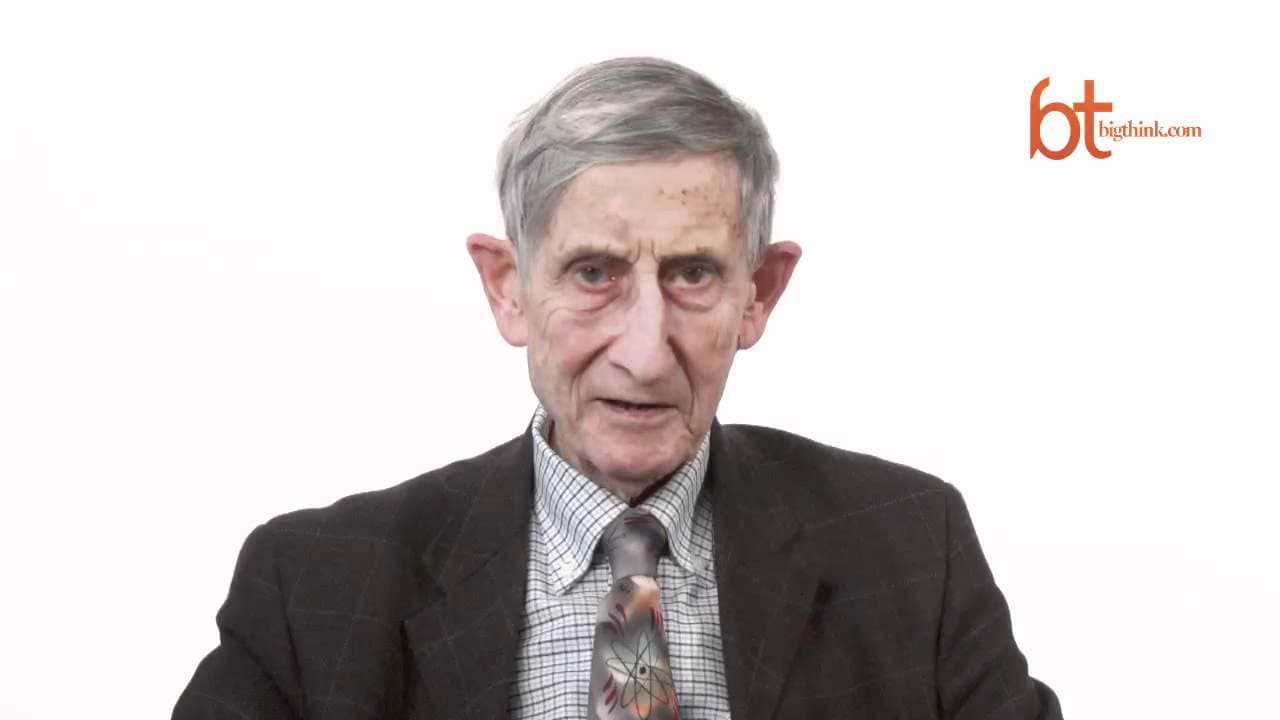
Physicist Freeman Dyson discusses his science journey, World War II involvement, and thoughts on science education and public perception.
Transcript
Freeman Dyson: So my first name is Freeman and my last name Dyson and my title, Mister.I’m a physicist, but also a writer. Question: How did you first become interested in science? Freeman Dyson: Yeah, it’s hard to tell of course, but I’ve been interested in sciencecertainly from a child. I wasmostly interested in numbers. Iwas calculating things a... Read More
Key Insights
- 🥺 Early fascination with numbers can lead to a profound interest in science and nature.
- 🎓 An unconventional science education approach can foster a genuine passion for scientific pursuits.
- 🤗 First-hand experiences during World War II can shape an individual's perspectives on tragedy and conflict.
- 💖 The dropping of the atomic bomb sparked intense debates within the scientific community on ethics and responsibility.
- 🎓 Public perceptions of science can significantly impact scientific progress and education.
- ❓ History influences the development of scientific disciplines and attitudes towards technological advancements.
- 🔬 The interconnectedness of science, history, and societal perceptions shapes individual experiences and contributions.
Install to Summarize YouTube Videos and Get Transcripts
Explore YouTube Video Summarizer or Get YouTube Transcript Extractor
Questions & Answers
Q: How did Freeman Dyson's childhood fascination with numbers pave the way for his interest in science?
Freeman Dyson's love for numbers as a child eventually led to a broader interest in science and nature, stemming from a memorable experience during a solar eclipse at a young age.
Q: What was Freeman Dyson's unique science education like in England, and how did it differ from traditional approaches?
Freeman Dyson's science education in England focused more on Latin and Greek than science, allowing for a more organic love for scientific pursuits as a source of enjoyment rather than obligation.
Q: What role did Freeman Dyson play during World War II, and how did it shape his views on the tragedies of war?
Freeman Dyson worked as a statistician for the Royal Air Force during World War II, providing insights into the bombing campaigns in Germany and witnessing the devastations of war, leading to a nuanced perspective on its impact.
Q: How did the dropping of the atomic bomb impact the physics community and spark debates about ethics and responsibility?
The dropping of the atomic bomb instigated significant discourse within the physics community on the ethical implications of the invention and use of such destructive weaponry, leading to diverse opinions and reflections on the consequences.
Summary & Key Takeaways
-
Freeman Dyson shares his childhood fascination with numbers leading to a love for science and nature, sparked by a memory of a solar eclipse at three.
-
He highlights an unconventional science education in England focusing on Latin and Greek, fostering a love for science as a fun pursuit rather than a chore.
-
Dyson reflects on his World War II experience working for the Royal Air Force as a statistician and witnessing the tragedy of the bombing of Germany.
Read in Other Languages (beta)
Share This Summary 📚
Summarize YouTube Videos and Get Video Transcripts with 1-Click
Try YouTube Summary with ChatGPT & Claude or YouTube Transcript Generator
Explore More Summaries from Big Think 📚

Summarize YouTube Videos and Get Video Transcripts with 1-Click
Try YouTube Summary with ChatGPT & Claude or YouTube Transcript Generator