Viruses - Part 1: Enveloped and Non-Enveloped Viruses
TL;DR
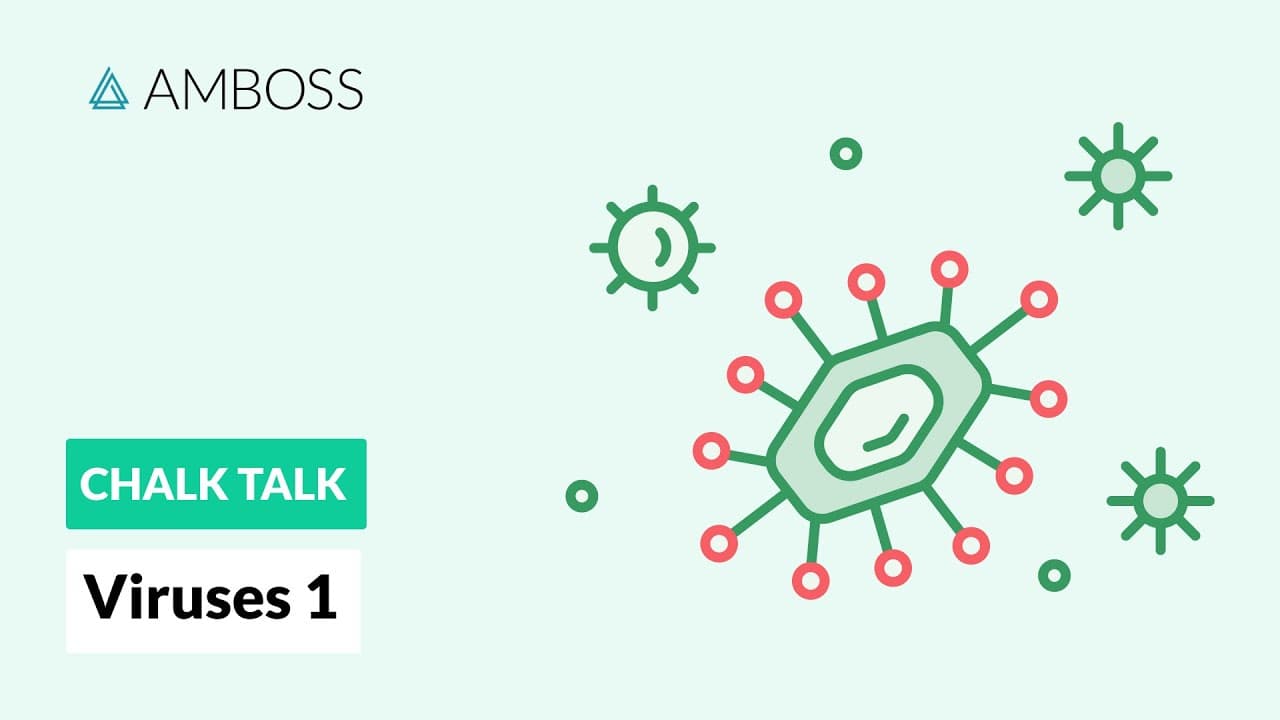
Enveloped and non-enveloped viruses have different structures and characteristics, affecting their ability to cause infection and evade the immune system.
Transcript
viruses differences between enveloped and non-enveloped viruses despite being exposed to billions of viruses per day only some viruses actually cause infection indicating that viruses affect humans in different ways in this series of chalk talk facts we'll be looking at how the characteristics of viruses correlate with their structure let's start w... Read More
Key Insights
- 💄 Viruses are complex molecular structures without their own metabolism, making them obligate intracellular parasites.
- 🚄 The shape and size of a virus can vary, with some being rods, bullets, spheres, or icosahedra.
- 👻 Viral genomes encode certain proteins that link the virus to the metabolic pathways of the host cell they infect.
- 🖐️ The stability and labile nature of viral capsids play a crucial role in viral uncoating and release of the viral genome.
- 👻 Enveloped viruses have advantages in evading the host's immune system, but they are more sensitive to physical factors.
- 👻 Non-enveloped viruses are more resistant to physical factors but trigger a stronger immune response when exiting the host cell.
- 💌 The viral envelope is derived from the host cell, providing additional protection for enveloped viruses.
Install to Summarize YouTube Videos and Get Transcripts
Explore YouTube Video Summarizer or Get YouTube Transcript Extractor
Questions & Answers
Q: What is the difference between enveloped and non-enveloped viruses?
Enveloped viruses have a membrane derived from the host cell, providing protection and easier evasion of the host immune response. Non-enveloped viruses lack a membrane but have a protein capsid for protection.
Q: Why are enveloped viruses more sensitive to physical factors?
Enveloped viruses have a fragile biological membrane, making them more susceptible to heat, dryness, disinfectants, and stomach acid. This sensitivity contributes to their inability to survive in extreme conditions.
Q: How do viral genomes interfere with host transcription and translation processes?
After entering a host cell, the viral genome is released from its protective shell and interacts with the host cell's machinery, interfering with transcription and translation processes necessary for viral replication.
Q: Why are enveloped viruses less immunogenic than non-enveloped viruses?
Enveloped viruses can exit the host cell without causing cell lysis, which is a highly immunogenic event. On the other hand, non-enveloped viruses exit the cell by lysis, triggering a stronger immune response.
Key Insights:
- Viruses are complex molecular structures without their own metabolism, making them obligate intracellular parasites.
- The shape and size of a virus can vary, with some being rods, bullets, spheres, or icosahedra.
- Viral genomes encode certain proteins that link the virus to the metabolic pathways of the host cell they infect.
- The stability and labile nature of viral capsids play a crucial role in viral uncoating and release of the viral genome.
- Enveloped viruses have advantages in evading the host's immune system, but they are more sensitive to physical factors.
- Non-enveloped viruses are more resistant to physical factors but trigger a stronger immune response when exiting the host cell.
- The viral envelope is derived from the host cell, providing additional protection for enveloped viruses.
- Understanding viral genomes and the viral life cycle is essential for a comprehensive understanding of viral infections.
Summary & Key Takeaways
-
Viruses are complex molecular structures that come in different shapes and sizes.
-
Virions consist of a viral genome enclosed in a protein capsid. Non-enveloped viruses lack a membrane, while enveloped viruses have a biological membrane.
-
Non-enveloped viruses are more resistant to physical factors, while enveloped viruses have an advantage in evading the immune system.
Read in Other Languages (beta)
Share This Summary 📚
Summarize YouTube Videos and Get Video Transcripts with 1-Click
Try YouTube Summary with ChatGPT & Claude or YouTube Transcript Generator
Explore More Summaries from AMBOSS: Medical Knowledge Distilled 📚



Summarize YouTube Videos and Get Video Transcripts with 1-Click
Try YouTube Summary with ChatGPT & Claude or YouTube Transcript Generator