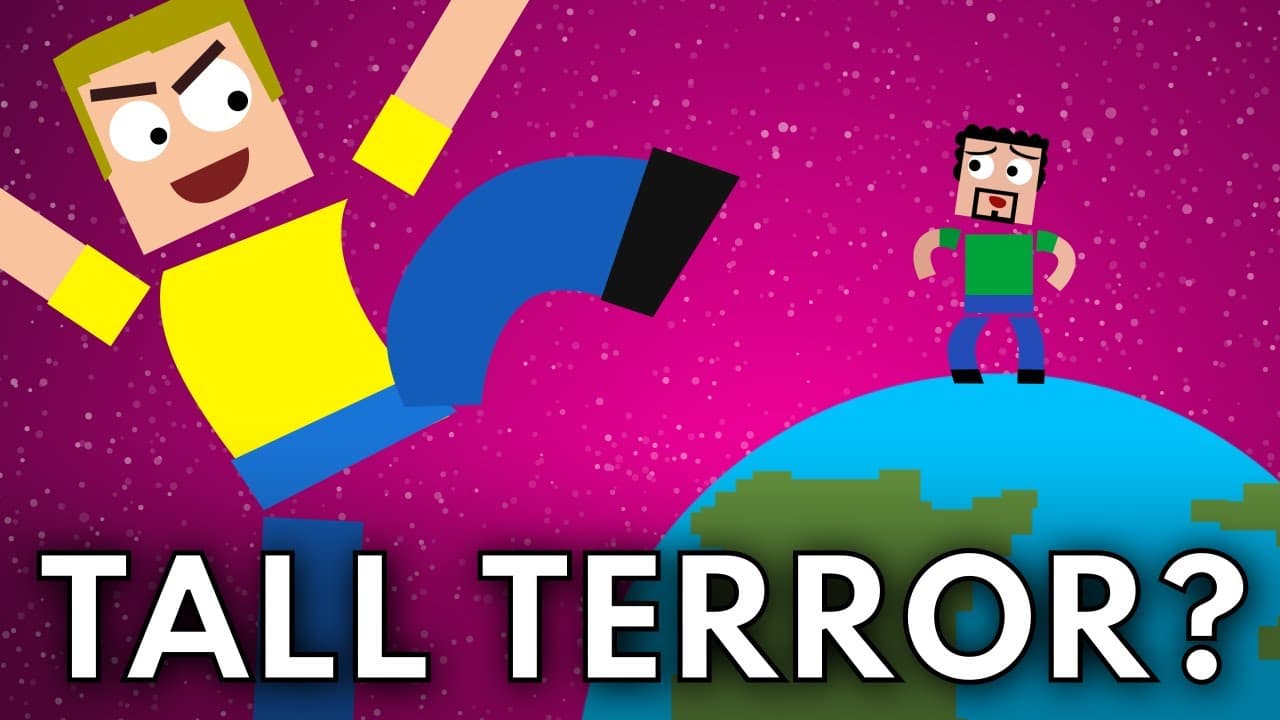
Are Tall People Killing the Planet?
TL;DR
Exploring how changes in human height could reduce food consumption and carbon emissions.
Transcript
Hey, Triangle Bob! You're so tiny. Wait a minute, did you mess with my shrink ray again? Yes, I see now that you totally did, judging by the looks of this room. Hey, animator, any chance we could resize Triangle Bob? Animator? Huh, that's weird. Well, good news though. Itty Bitty Bob here has me thinking of a fun video idea. What's the ... Read More
Key Insights
- ❓ Human height has varied drastically over history, from Neanderthals of 5'5" to modern pygmies of 4'11".
- 🖐️ Genetics and nutrition play significant roles in determining human height.
- 🥺 Short stature disorders, such as achondroplasia, can lead to abnormal growth patterns.
- 🥘 Smaller humans could lead to reduced food production needs and lower carbon emissions, especially in transportation.
- 😘 Environmental benefits of smaller individuals include decreased emissions and lower energy requirements.
- 🚙 Car manufacturers are already focusing on producing lighter vehicles for reduced emissions.
- 🤌 Historical instances like European males being four feet four inches tall showcase human height diversity.
Install to Summarize YouTube Videos and Get Transcripts
Explore YouTube Video Summarizer or Get YouTube Transcript Extractor
Questions & Answers
Q: What are some historical heights of different human populations?
Various populations throughout history have exhibited different average heights, ranging from as short as the Neanderthals at 5'5" to modern-day pygmies in central Africa at 4'11".
Q: How do genetics and nutrition play a role in determining human height?
Genetics and nutrition are crucial factors in determining human height, where genetic mutations like achondroplasia can lead to disorders that affect growth and bone development due to poor nutrition.
Q: How could smaller humans impact food production and carbon emissions?
Smaller humans could require less food to sustain themselves, leading to decreased food production requirements and subsequently lower carbon emissions, particularly in transportation-related emissions.
Q: What are the potential environmental benefits of having smaller individuals?
Smaller individuals could result in decreased food consumption, reduced energy needs, and lower carbon emissions, contributing to a more sustainable and environmentally friendly lifestyle.
Summary & Key Takeaways
-
Different human populations throughout history have varied greatly in height, with some standing as short as one foot 9.5 inches.
-
Factors such as genetics, nutrition, and short stature disorders influence human height.
-
The potential benefits of smaller humans include reduced food consumption, leading to lower carbon emissions, especially in transportation.
Read in Other Languages (beta)
Share This Summary 📚
Summarize YouTube Videos and Get Video Transcripts with 1-Click
Try YouTube Summary with ChatGPT & Claude or YouTube Transcript Generator
Explore More Summaries from Life Noggin 📚



Summarize YouTube Videos and Get Video Transcripts with 1-Click
Try YouTube Summary with ChatGPT & Claude or YouTube Transcript Generator