How Can We Achieve Sustainable Development in Rural Areas?
TL;DR
Sustainable development in rural areas can be achieved by integrating local insights with interdisciplinary approaches. The Sustainable Livelihoods Framework emphasizes understanding people's interactions with their environment and the significance of political leadership and grassroots movements. To democratize sustainability discussions, diverse voices must be included, addressing local contexts to create effective, applicable solutions.
Transcript
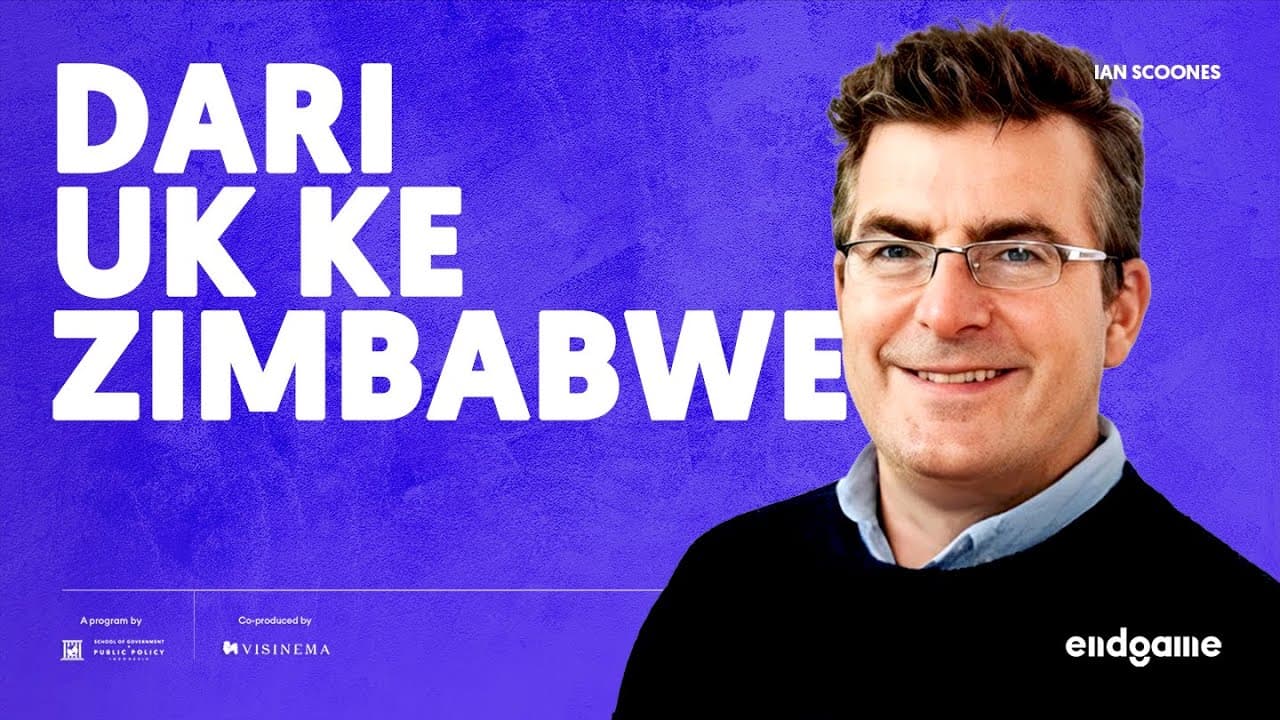
GITA WIRJAWAN: Hello friends, today we have Professor Ian Scoones. He is a teacher or professor at the University of Sussex. His field is related to agriculture and ecology. He has written many publications and books. Hi Ian, thank you so much for gracing our event. IAN SCOONES: Thank you. Thank you for inviting me. I want to inquire of your childh... Read More
Key Insights
- Ian Scoones' work in Zimbabwe shifted from a conventional biology approach to a focus on livelihoods and human-environment interactions, highlighting the importance of interdisciplinary studies.
- The Sustainable Livelihoods Framework developed in the 1990s aimed to integrate economic growth with environmental sustainability, moving away from technocratic rural development models.
- The framework emphasizes the importance of understanding local contexts and people's interactions with their environment to develop sustainable livelihood pathways.
- The Sustainable Development Goals (SDGs) are criticized for being siloed, and Scoones advocates for a holistic approach integrating various sectors to achieve sustainability.
- Scoones highlights the need for democratizing sustainability discussions, involving diverse voices and local contexts to develop applicable solutions.
- He emphasizes the importance of political leadership and state involvement in driving sustainable transitions, while recognizing the role of grassroots movements.
- The conversation touches on the challenges of achieving carbon neutrality by 2050, emphasizing the need for realistic, locally tailored solutions.
- Scoones argues for a reimagining of modernity and development, suggesting multiple pathways to sustainability that consider local needs and contexts.
Install to Summarize YouTube Videos and Get Transcripts
Explore YouTube Video Summarizer or Get YouTube Transcript Extractor
Questions & Answers
Q: What inspired Ian Scoones to focus on sustainable livelihoods?
Ian Scoones' inspiration came from his fieldwork in Zimbabwe, where he observed the complex interactions between people and their environment. The influence of local innovators like Zephaniah Phiri, who successfully managed water resources in a challenging environment, highlighted the potential of local knowledge and sustainable practices, steering Scoones towards an interdisciplinary approach to sustainability.
Q: How does the Sustainable Livelihoods Framework differ from traditional rural development models?
The Sustainable Livelihoods Framework differs by emphasizing the integration of economic growth with environmental sustainability, focusing on local contexts and the interactions between people and their environment. It moves away from technocratic models that offer one-size-fits-all technical solutions, advocating for a holistic approach that considers diverse livelihood strategies and the social, economic, and political factors influencing them.
Q: What are the main critiques of the Sustainable Development Goals (SDGs) according to Ian Scoones?
Ian Scoones critiques the SDGs for being siloed, with each goal often pursued in isolation, leading to fragmented efforts. He argues that this approach fails to address the interconnected nature of sustainability challenges. Scoones advocates for a more integrated approach that considers the interdependencies between different sectors and goals, aligning with the holistic perspective of the Sustainable Livelihoods Framework.
Q: Why does Ian Scoones emphasize democratizing sustainability discussions?
Ian Scoones emphasizes democratizing sustainability discussions to ensure that diverse voices and local contexts are included in developing solutions. He argues that current sustainability narratives are often elitist and disconnected from the realities of most of the world. By involving local communities, policymakers can better understand and address the specific challenges and needs of different regions, leading to more effective and applicable solutions.
Q: What role does political leadership play in sustainable transitions according to Ian Scoones?
Political leadership plays a crucial role in sustainable transitions by setting the direction and facilitating discussions on distribution and diversity. Leaders can create regulatory frameworks, mobilize resources, and engage with various stakeholders, including the private sector and civil society, to drive sustainable development. Scoones highlights the importance of democratic debate and long-term planning in achieving these transitions.
Q: What are the challenges of achieving carbon neutrality by 2050 mentioned by Ian Scoones?
Ian Scoones mentions several challenges, including the reliance on market-based solutions like carbon offsetting, which may not effectively reduce overall carbon consumption. He also points out the powerful vested interests of fossil fuel industries and the need for significant technological and economic shifts. Scoones emphasizes the importance of realistic, locally tailored solutions and the role of political leadership in driving these changes.
Q: How does Ian Scoones view the relationship between modernity and sustainability?
Ian Scoones argues for reimagining modernity to align with sustainability goals. He suggests that the traditional model of energy-intensive, fossil fuel-driven modernity is unsustainable and advocates for multiple pathways to development that consider local needs and contexts. Scoones emphasizes the importance of access to basic services like electricity while promoting diverse, sustainable solutions that do not replicate the unsustainable patterns of developed countries.
Q: What is the significance of the '4 Ds' framework proposed by Ian Scoones?
The '4 Ds' framework—Direction, Distribution, Diversity, and Democracy—proposed by Ian Scoones, is significant as it provides a comprehensive approach to sustainable transitions. It emphasizes setting clear directions for development, ensuring equitable distribution of benefits and costs, fostering diverse solutions, and promoting democratic participation in decision-making processes. This framework aims to address the complexities and interdependencies of sustainability challenges, encouraging inclusive and locally relevant solutions.
Summary & Key Takeaways
-
Ian Scoones discusses his journey from a conventional biology student to a focus on sustainable livelihoods, emphasizing the need for interdisciplinary approaches in understanding human-environment interactions.
-
The Sustainable Livelihoods Framework, developed in the 1990s, integrates economic growth with sustainability, moving away from technocratic rural development models by focusing on local contexts and people's interactions with their environment.
-
Scoones advocates for democratizing sustainability discussions, involving diverse voices and local contexts, and emphasizes the role of political leadership and grassroots movements in driving sustainable transitions.
Read in Other Languages (beta)
Share This Summary 📚
Summarize YouTube Videos and Get Video Transcripts with 1-Click
Try YouTube Summary with ChatGPT & Claude or YouTube Transcript Generator
Explore More Summaries from Gita Wirjawan 📚



Summarize YouTube Videos and Get Video Transcripts with 1-Click
Try YouTube Summary with ChatGPT & Claude or YouTube Transcript Generator