WW2 - Second Sino-Japanese War, 1937-1941
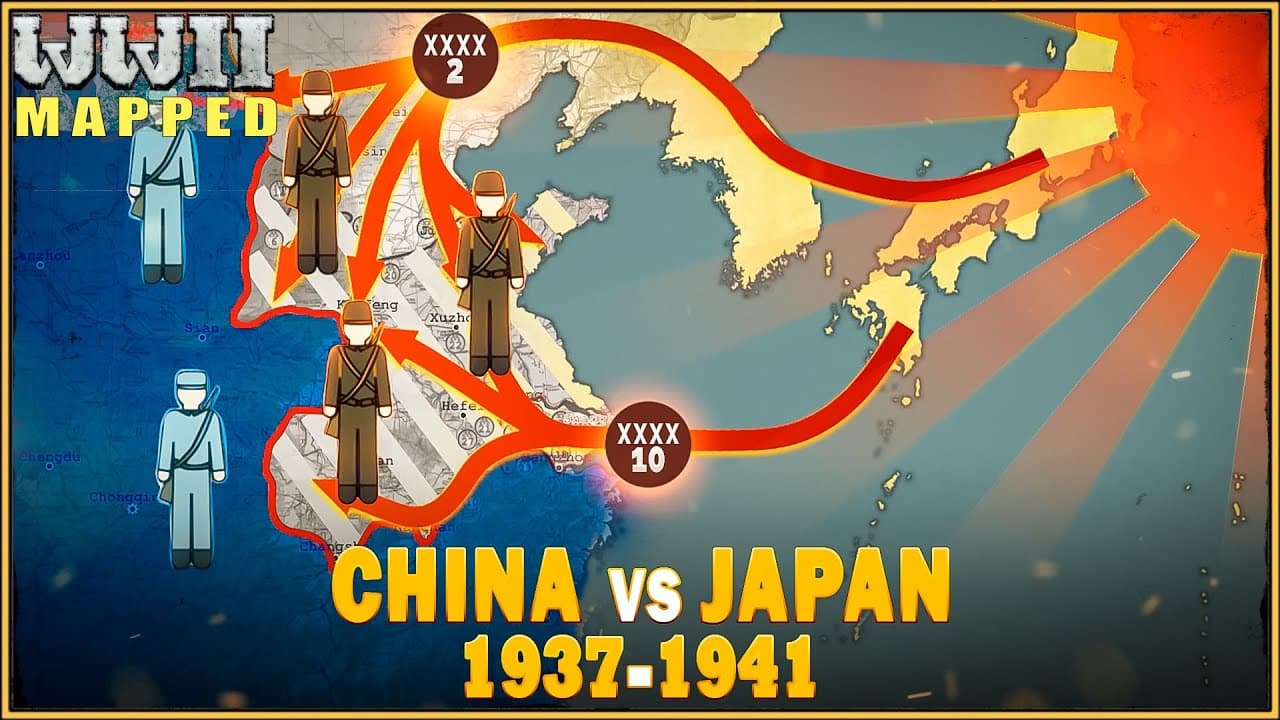
TL;DR
Japan's expansion into China during the Second Sino-Japanese War led to conflict and eventually prompted Japan to attack the United States.
Transcript
Have you ever wondered why did Japan attack the United States of America during World War Two? The United States had a much stronger economy and Japan did not have many chances of winning. The answer lies in the Second Sino-Japanese war. It all began ten years ago. China had been in relative stagnation for a long time, while Japan had star... Read More
Key Insights
- 🉐 Japan's modernization and strong military gave it an advantage over China's weak state.
- 🇨🇳 Japan's expansion into China was driven by the desire for resources and the need to neutralize China's military threat.
- 👹 The Second Sino-Japanese War resulted in the occupation of Chinese territories and the Nanjing massacre.
- 🇺🇸 The war led to a Chinese counteroffensive and increased tensions between Japan and the United States.
- 🇺🇸 Japan's attack on the United States was a result of the United States' embargo on oil and Japan's need for its own oil source.
Install to Summarize YouTube Videos and Get Transcripts
Explore YouTube Video Summarizer or Get YouTube Transcript Extractor
Questions & Answers
Q: Why did Japan attack the United States during World War II?
Japan's expansion into China led to conflict, and in order to secure its resources, Japan needed to attack the United States, which posed a threat to its access to oil and war materials.
Q: Why did Japan start its expansion in China?
Japan saw China's weak state as an opportunity for territorial expansion, taking advantage of China's weak military and lack of resistance.
Q: What were Japan's goals in occupying Chinese territories?
Japan aimed to occupy China's war industry and major ports to weaken its military, reduce its own forces in China, and cut off China's access to war materials from overseas.
Q: How did the Second Sino-Japanese War impact China?
The war inflicted a major defeat on China, leading to the occupation of its territories, the Nanjing massacre, and continued conflict with Japanese forces.
Key Insights:
- Japan's modernization and strong military gave it an advantage over China's weak state.
- Japan's expansion into China was driven by the desire for resources and the need to neutralize China's military threat.
- The Second Sino-Japanese War resulted in the occupation of Chinese territories and the Nanjing massacre.
- The war led to a Chinese counteroffensive and increased tensions between Japan and the United States.
- Japan's attack on the United States was a result of the United States' embargo on oil and Japan's need for its own oil source.
- The war in China did not turn in China's favor even after Japan attacked the United States, leading to a prolonged conflict.
Summary & Key Takeaways
-
Japan's modernization and strong military in contrast to China's weak state led to its expansion into Chinese territories, beginning with the seizure of Manchuria.
-
Japanese forces faced resistance from the Chinese military in Shanghai, but ultimately captured Nanjing, leading to the Nanjing massacre.
-
Japan aimed to neutralize China by occupying its war industry and major ports, leading to continued conflict and a Chinese counteroffensive.
Read in Other Languages (beta)
Share This Summary 📚
Summarize YouTube Videos and Get Video Transcripts with 1-Click
Try YouTube Summary with ChatGPT & Claude or YouTube Transcript Generator