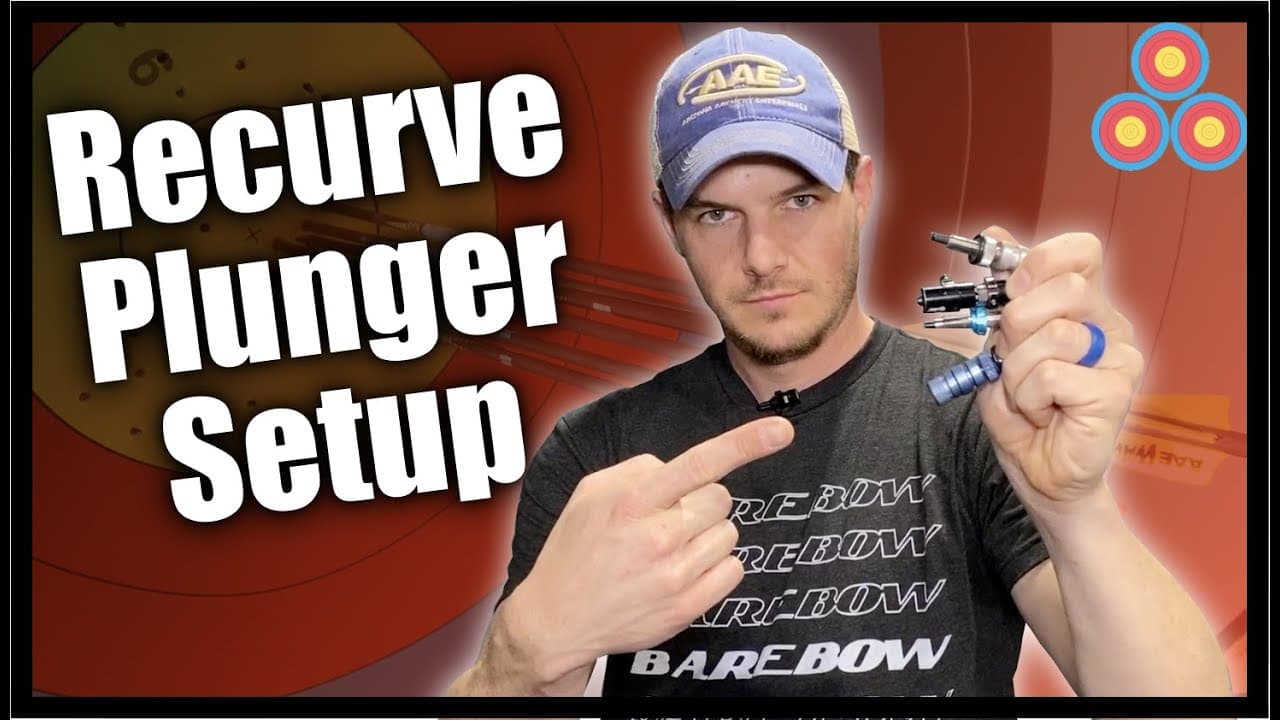
How to setup your Plunger | Recurve Plunger Setup | How to adjust and tune your plunger on your bow
TL;DR
Learn to adjust and tune your recurve bow plunger effectively.
Transcript
I'm finally doing the video that so many of you have asked for we're gonna be talking about plungers finally I will be answering your questions about plungers setting up and adjusting your plunger that's best for you to make you shoot the best in tightest groups is actually going to be easier than you think you're wa... Read More
Key Insights
- Plungers are crucial in recurve archery for setting the center shot and managing arrow flex, enhancing shooting accuracy.
- Understanding plunger components, like springs and tips, is essential for optimal setup and tuning.
- Different plunger types, such as Beiter and AAE Gold, offer varying features and benefits, impacting tuning outcomes.
- Spring tension in plungers should correspond to bow draw weight and arrow type, with stiffer springs for higher weights and carbon arrows.
- Fine-tuning involves adjusting plunger settings for group size and forgiveness rather than perfect arrow flight.
- Consistent medium spring tension is recommended for most setups, avoiding extreme adjustments that indicate other tuning issues.
- Fine-tuning should prioritize longer shooting distances for maximum point gain, even if it sacrifices some arrow flight quality.
- Backup plunger setup should mirror the primary to ensure consistent performance, allowing for seamless transitions during use.
Install to Summarize YouTube Videos and Get Transcripts
Explore YouTube Video Summarizer or Get YouTube Transcript Extractor
Questions & Answers
Q: What is the primary function of a plunger in recurve archery?
The primary function of a plunger in recurve archery is to aid in setting the center shot and controlling the arrow flex as it leaves the bow. This adjustment helps in achieving tighter groupings and enhances shooting accuracy by ensuring that the arrow is properly aligned and stabilized during its flight.
Q: How do different plunger types like Beiter and AAE Gold differ?
Beiter and AAE Gold plungers differ primarily in their construction and features. Beiter plungers have distinct length tips and offer tools for tightening, while AAE Gold plungers integrate some components, such as the o-ring, for easier manual adjustments. These differences affect the ease of use and the tuning process.
Q: Why is spring tension important in plunger setup?
Spring tension is crucial because it determines how much the plunger tip resists movement, impacting how the arrow flexes upon release. Proper tension ensures that the arrow's oscillation is controlled, which is vital for maintaining the bow's tune and achieving optimal shooting performance. Incorrect tension can lead to poor arrow flight and inaccurate shots.
Q: What factors influence the choice of spring tension in a plunger?
The choice of spring tension in a plunger is influenced by the bow's draw weight and the type of arrows used. Higher draw weights and carbon arrows typically require stiffer springs due to their higher oscillation frequencies. Conversely, aluminum arrows may need lighter tension because they flex at lower frequencies.
Q: How can one achieve optimal plunger tuning?
Optimal plunger tuning involves starting with a medium spring tension and making fine adjustments based on shooting performance. The focus should be on achieving the best group size and forgiveness rather than perfect arrow flight. Fine-tuning should consider the shooting distance, prioritizing longer distances for better scoring potential.
Q: What is the recommended starting point for plunger spring tension?
A recommended starting point for plunger spring tension is using a medium spring, which generally suits most setups. For Beiter plungers, a tension setting around 5.5 is suggested, while for AAE Gold plungers, a setting around 4.5 is recommended. These baselines provide a balanced approach to tuning.
Q: How does fine-tuning differ from initial plunger setup?
Fine-tuning differs from initial plunger setup by focusing on achieving the best possible group size and forgiveness at specific shooting distances, rather than merely setting the plunger for acceptable arrow flight. It involves making precise adjustments to spring tension and other factors to optimize performance based on individual shooting conditions.
Q: Why is it important to have a backup plunger setup?
Having a backup plunger setup identical to the primary one is important for maintaining consistent performance. It allows archers to switch between plungers without affecting their shooting accuracy, ensuring reliability during practice and competitions. This consistency is crucial for achieving optimal results and avoiding disruptions in performance.
Summary & Key Takeaways
-
The video provides a comprehensive guide to setting up and tuning a recurve bow plunger, emphasizing the importance of understanding plunger components and their functions. It covers the basics of center shot adjustment and spring tension settings, offering practical tips for achieving optimal shooting performance.
-
Different types of plungers, such as Beiter and AAE Gold, are discussed, highlighting their unique features and benefits. The video suggests using medium spring tension as a general starting point for most setups, with adjustments based on specific bow and arrow characteristics.
-
Fine-tuning focuses on achieving the best group size and forgiveness, prioritizing longer shooting distances for maximum point gain. The video also stresses the importance of setting up a backup plunger identical to the primary one to maintain consistent performance during archery practice and competitions.
Read in Other Languages (beta)
Share This Summary 📚
Summarize YouTube Videos and Get Video Transcripts with 1-Click
Try YouTube Summary with ChatGPT & Claude or YouTube Transcript Generator