Why Most People Are Training ABS WRONG! (BULLETPROOF CORE) Science Explained!
TL;DR
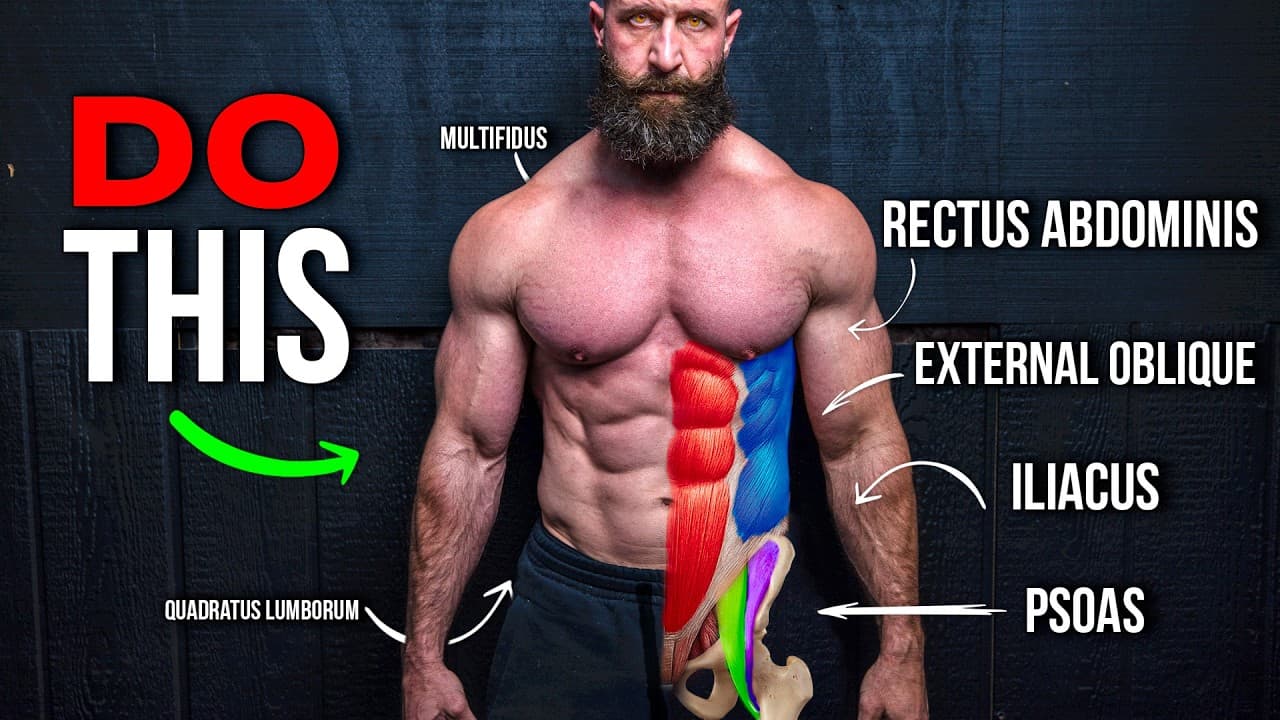
Effective core training requires targeting various muscles, not just abs.
Transcript
everyone wants their abs as peeled as possible and we all know they're made in the kitchen but we can target those superficial layers so that even when we're a little husky they still show through on top of that up until recently I would have taken a literal on an isometric exercise like this one but after injuring my back picking up my handicap do... Read More
Key Insights
- Training abs effectively involves more than just compound exercises; it requires targeting specific core muscles for strength and injury prevention.
- Dynamic flexion and extension movements are essential for training the rectus abdominis, especially for those without pre-existing disc injuries.
- Isometric exercises, while useful, are less effective than dynamic contractions for hypertrophy of the core muscles.
- Upper and lower abs can be targeted differently by adjusting the range of motion and focus on either the thorax or pelvis.
- Neglecting muscles like the quadratus lumborum and psoas can lead to injury; they need targeted exercises to strengthen them.
- Training the obliques is crucial despite the potential for increased waist thickness, as neglect can lead to core imbalance and injury.
- Exercises like cable crunches and reverse sit-ups are recommended for targeting upper abs, while hanging leg raises focus on lower abs.
- Incorporating isometric exercises like banded bird dogs and unsteady bridges can help in reducing and preventing low back pain.
Install to Summarize YouTube Videos and Get Transcripts
Explore YouTube Video Summarizer or Get YouTube Transcript Extractor
Questions & Answers
Q: Why is targeting specific core muscles important?
Targeting specific core muscles is crucial because it helps prevent injuries and enhances overall core strength and stability. While compound exercises are beneficial, they often neglect certain muscles, leading to imbalances and potential injuries. By focusing on muscles like the quadratus lumborum and psoas, you ensure a well-rounded and resilient core.
Q: What are the benefits of dynamic flexion and extension movements?
Dynamic flexion and extension movements are beneficial for training the rectus abdominis because they promote muscle growth and strength without the risks associated with static exercises. These movements are particularly effective for individuals without pre-existing disc injuries, providing a safe and effective way to enhance core strength and aesthetics.
Q: How can upper and lower abs be targeted differently?
Upper and lower abs can be targeted differently by adjusting the focus of the exercise. To target upper abs, keep the pelvis stationary and tilt the thorax. For lower abs, keep the thorax stationary and tilt the pelvis. This differentiation ensures that each segment of the rectus abdominis is effectively engaged and developed.
Q: What is the role of isometric exercises in core training?
Isometric exercises play a role in core training by enhancing stability and endurance. While they are less effective for hypertrophy compared to dynamic contractions, isometrics are valuable for maintaining muscle engagement and preventing injuries. They are particularly useful for individuals with existing injuries or those seeking to improve core stability.
Q: Why is training the obliques important despite potential waist thickening?
Training the obliques is important because they contribute to overall core stability and function. Neglecting these muscles can lead to imbalances and increase the risk of injury. Although training the obliques may lead to a thicker waist, the benefits of improved core strength and injury prevention outweigh the aesthetic concerns.
Q: What exercises are recommended for targeting the upper abs?
Exercises recommended for targeting the upper abs include cable crunches and modified reverse sit-ups. These exercises focus on engaging the rectus abdominis through dynamic contractions, providing effective muscle stimulation and growth. Proper form and controlled range of motion are essential to maximize the benefits and prevent injury.
Q: How can lower abs be effectively targeted?
Lower abs can be effectively targeted through exercises like hanging leg raises, which emphasize posterior pelvic tilt and control. This movement engages the lower segment of the rectus abdominis, promoting strength and definition. It's important to maintain proper form and control the negative phase to prevent injury and maximize results.
Q: What is the significance of incorporating isometric exercises like banded bird dogs?
Incorporating isometric exercises like banded bird dogs is significant because they help reduce and prevent low back pain by enhancing core stability and endurance. These exercises engage various core muscles, ensuring balanced development and resilience. They are particularly beneficial for individuals seeking to maintain core health and prevent future injuries.
Summary & Key Takeaways
-
Core training is essential for preventing injuries and enhancing performance, involving more than just abs workouts. The focus should be on targeting various muscles, including the quadratus lumborum and psoas, to ensure balanced strength and functionality.
-
Dynamic movements are key to effective abs training, particularly for the rectus abdominis. While compound exercises are beneficial, they often neglect other core muscles, making targeted exercises crucial for comprehensive core development.
-
Developing a strong core involves a combination of dynamic and isometric exercises, with emphasis on controlling the range of motion. This approach not only aids in hypertrophy but also in injury prevention, ensuring long-term core health and performance.
Read in Other Languages (beta)
Share This Summary 📚
Summarize YouTube Videos and Get Video Transcripts with 1-Click
Try YouTube Summary with ChatGPT & Claude or YouTube Transcript Generator
Explore More Summaries from Ryan Humiston 📚

Summarize YouTube Videos and Get Video Transcripts with 1-Click
Try YouTube Summary with ChatGPT & Claude or YouTube Transcript Generator