What Is Sound Recognition and Its Challenges?
TL;DR
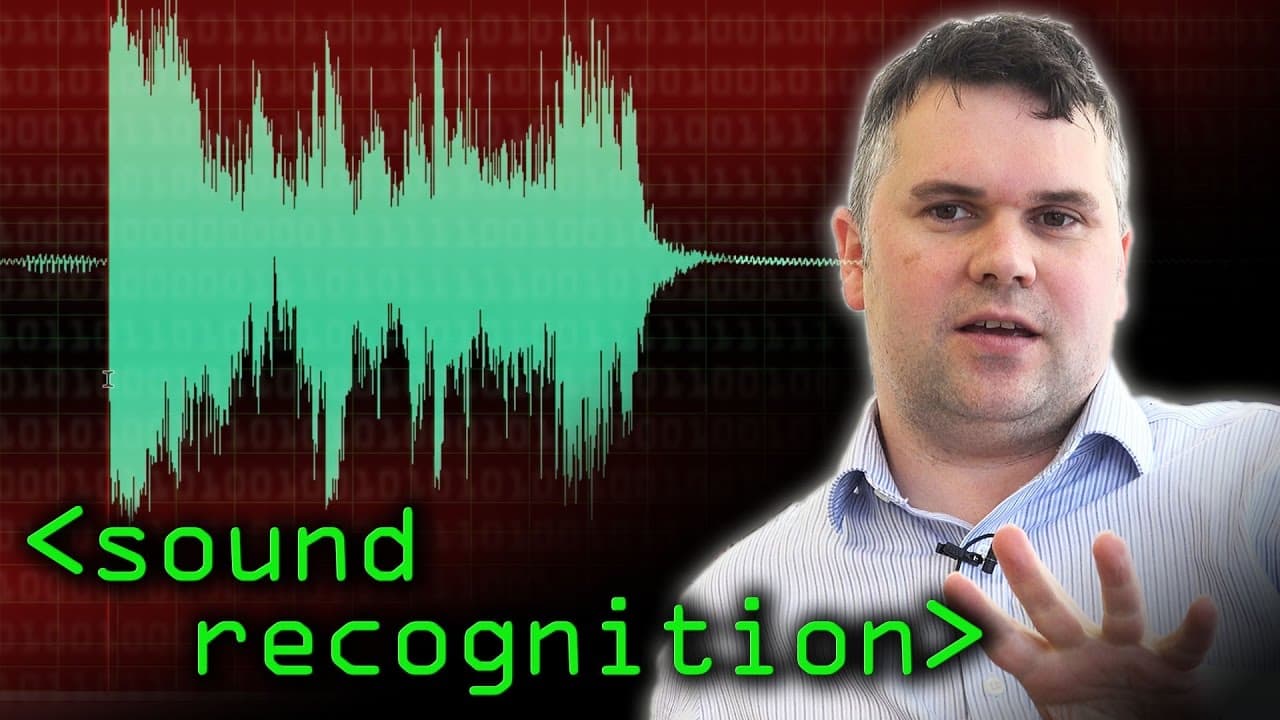
Sound recognition trains machines to identify non-speech sounds, like glass breaking or babies crying. This complex field faces challenges due to sound variability influenced by human perception and requires extensive data collection to ensure accurate recognition across different sound types.
Transcript
sound recognition is the art and science of having machines identify sounds and these are sounds beyond speech and music so dogs barking glass being broken babies crying etc this in itself is a new academic discipline as well as a new industrial discipline so has many elements we understand and has some elements that we don't understand yet. Sound ... Read More
Key Insights
- 👂 Sound recognition is a new academic and industrial discipline that involves training machines to identify non-speech and non-music sounds.
- 👂 Variability in sound data, influenced by preconceived notions and Hollywood portrayals, poses a challenge in accurately recognizing sounds.
- 😎 Collecting diverse data is crucial to account for variations in different sounds, such as the different types and thicknesses of glass.
- 👂 Defining and describing the characteristics of individual sound components require the creation of new terms and techniques.
- 😯 Sound recognition differs from speech and music recognition, as there is no language model or structured pattern to follow.
- 👂 Building a compact sound recognition system for devices requires understanding mathematical techniques and machine learning algorithms.
- 🤨 Streaming audio constantly from devices for sound recognition raises concerns about battery life and privacy implications.
Install to Summarize YouTube Videos and Get Transcripts
Explore YouTube Video Summarizer or Get YouTube Transcript Extractor
Questions & Answers
Q: Why is sound recognition considered an artificial intelligence subject?
Sound recognition relies on training machines to identify and differentiate sounds, which is inherently an AI technique. It involves using data variability and machine learning algorithms to accurately classify and recognize different sounds.
Q: How does the variability in sound data affect sound recognition?
Variability in sound data refers to the factors that make sounds different from one another, such as different types of glass, their thicknesses, and sizes. It is essential to collect diverse data to account for these variations and accurately train a sound recognition system.
Q: Why is it necessary for humans to go through the collected data for sound recognition?
Humans need to go through the collected audio data to label and define specific sounds, such as glass breaks or baby cries. Machines learn from these human-defined labels and use them to classify and recognize similar sounds in the future.
Q: What are some challenges faced in sound recognition?
Some challenges in sound recognition include accurately determining the beginning and end of sounds, handling the noise floor of different environments, defining and describing the characteristics of individual sound components, and dealing with the continuous nature of some sounds like a baby cry.
Summary & Key Takeaways
-
Sound recognition is a new academic and industrial discipline that involves training machines to identify sounds beyond speech and music, such as glass breaking or babies crying.
-
Variability in sound data poses a challenge, as people's preconceived notions and Hollywood portrayals influence our perception of certain sounds.
-
The different types of glass, their thicknesses, and sizes contribute to the overall sound of a glass break, making it crucial to collect diverse data for accurate recognition.
Read in Other Languages (beta)
Share This Summary 📚
Summarize YouTube Videos and Get Video Transcripts with 1-Click
Try YouTube Summary with ChatGPT & Claude or YouTube Transcript Generator
Explore More Summaries from Computerphile 📚





Summarize YouTube Videos and Get Video Transcripts with 1-Click
Try YouTube Summary with ChatGPT & Claude or YouTube Transcript Generator