War Games with Jim and Eugene | Brain Games
TL;DR
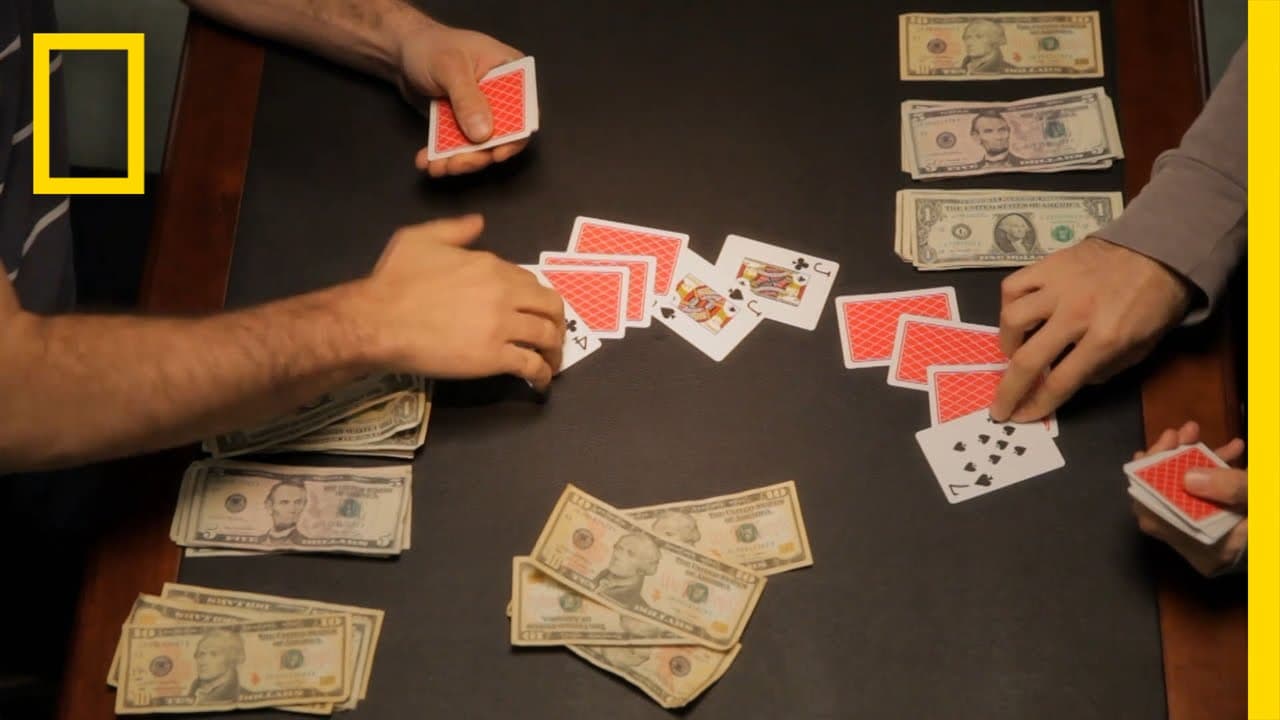
Volunteers play a game of war with same opponent but bet differently due to imagination, not luck.
Transcript
we've set up a game of war the rules are simple our volunteers can bet one five or ten dollars and whoever draws the highest card wins the pot of course war is just a simple game of chance so simple it doesn't feel like there's much room for imagination right so far our volunteers have been going against Jim strong the reigning war champion and the... Read More
Key Insights
- 🖐️ Imagination plays a significant role in influencing betting decisions in gambling scenarios.
- 🥺 Perception of opponents can lead to biased betting behaviors, even in games of pure chance.
- 😨 Confidence and fear based on imagination can impact how individuals approach gambling.
- 😒 The use of psychological tactics like intimidation can influence betting decisions.
- 😶🌫️ Participants' brains allow perception to cloud their judgment in gambling situations.
- 🎲 Understanding the role of perception and imagination is crucial for making informed decisions in gambling.
- 🥺 Lack of rational assessment of odds can lead to misguided betting behaviors.
Install to Summarize YouTube Videos and Get Transcripts
Explore YouTube Video Summarizer or Get YouTube Transcript Extractor
Questions & Answers
Q: Why do the volunteers bet differently against the novice and champion?
The volunteers bet differently due to their perception of the opponents' strengths and weaknesses, influenced by imagination rather than objective luck. The novice is perceived as easier to beat, leading to higher bets.
Q: How does imagination affect the volunteers' betting decisions?
Imagination leads the volunteers to have a false sense of confidence or fear based on their perceptions of the opponents, causing them to bet differently even in a game of pure chance like war.
Q: How does the use of the same actor as both opponents influence the outcome?
The use of the same actor as both opponents reveals that the participants' betting behavior is driven by their perception and imagination, rather than rational assessment of the game's randomness.
Q: What does this experiment reveal about human decision-making in gambling?
This experiment highlights how human decision-making in gambling is often influenced by psychological factors like perception, imagination, and false confidence, rather than rational assessment of odds.
Summary & Key Takeaways
-
Volunteers play a game of war against a novice and a reigning champion.
-
Despite both opponents being the same person, different betting behaviors are observed.
-
The participants' imagination and perception influence their betting decisions more than luck.
Read in Other Languages (beta)
Share This Summary 📚
Summarize YouTube Videos and Get Video Transcripts with 1-Click
Try YouTube Summary with ChatGPT & Claude or YouTube Transcript Generator
Explore More Summaries from National Geographic 📚


Summarize YouTube Videos and Get Video Transcripts with 1-Click
Try YouTube Summary with ChatGPT & Claude or YouTube Transcript Generator