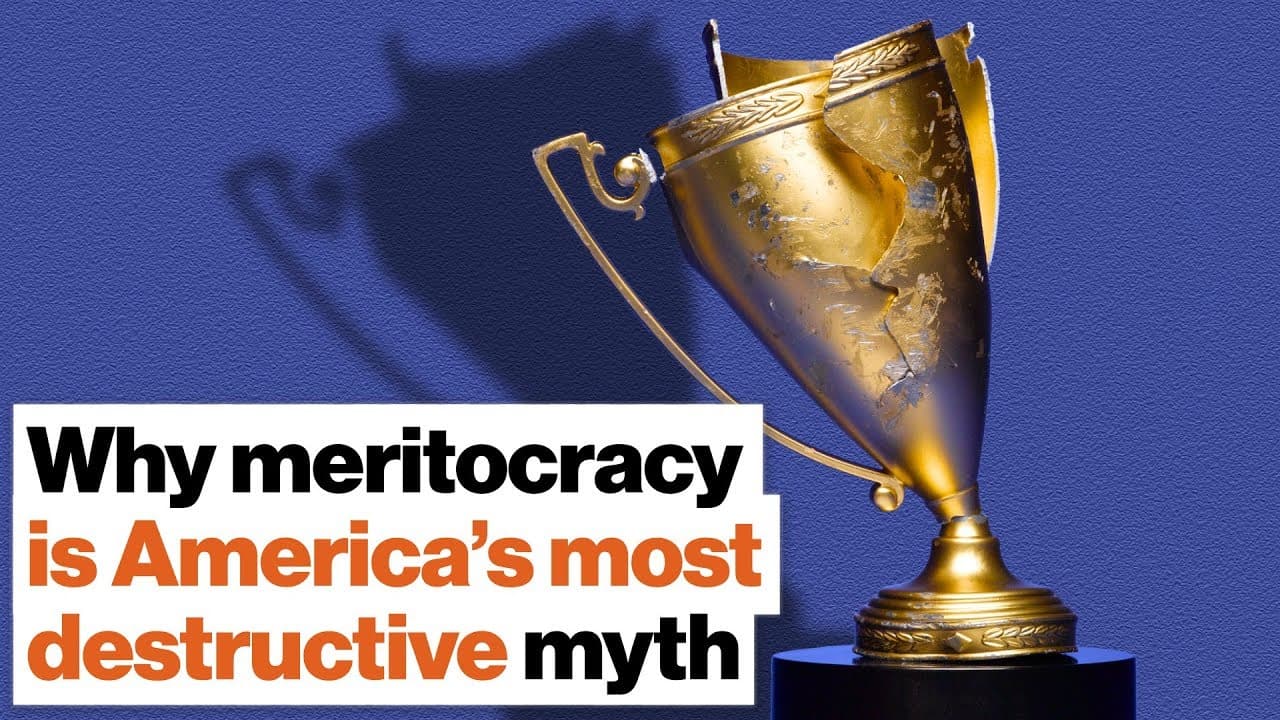
Why meritocracy is America’s most destructive myth | DeRay Mckesson | Big Think
TL;DR
Disparities in access to basic necessities highlight the need for equity over equality in society.
Transcript
I wanted to write about what it means that some people seemingly have to “earn” or do something to deserve access to things that we think about as basic necessities. So how hard can you work to earn access to a meal every night, or like what do you have to do to “deserve” a good education? What do you have to do to deserve to have housing? And that... Read More
Key Insights
- 🥺 Systemic racism and privilege create disparities in access to basic necessities, leading to inequalities in society.
- 🧚 The distinction between equality and equity is crucial for addressing systemic issues and providing fair opportunities for all individuals.
- 👨⚖️ Understanding the impact of privilege and dismantling systemic advantages are essential steps towards achieving social justice.
- ❓ Meritocracy can perpetuate harmful beliefs and blame on marginalized communities, instead of addressing systemic issues.
Install to Summarize YouTube Videos and Get Transcripts
Explore YouTube Video Summarizer or Get YouTube Transcript Extractor
Questions & Answers
Q: How do systemic issues like racism perpetuate disparities in access to basic necessities?
Systemic racism leads to marginalized communities having to work harder to access basic necessities like food and education, highlighting inequalities in society.
Q: Why is the concept of equity in resource distribution important for social justice?
Equity ensures that individuals receive what they need and deserve, taking into account factors like poverty and special needs that require different resources for quality living conditions.
Q: What is the danger of teaching meritocracy to children, according to the study mentioned?
Teaching meritocracy can negatively impact children of color, leading them to blame themselves for systemic outcomes and hindering their success due to institutional biases.
Q: How does privilege and systemic advantages contribute to disparities in wealth and resources?
Historical advantages, such as government subsidies and policies, have disproportionately benefited white individuals, creating wealth disparities that are perpetuated through privilege and systemic racism.
Summary & Key Takeaways
-
Some people are seen as inherently worthy of basic necessities, while others are made to feel like they have to earn them.
-
Disparities in access to things like education and housing stem from systemic issues like racism and privilege, affecting marginalized communities.
-
The distinction between equality (equal treatment) and equity (meeting individual needs) is crucial in addressing societal inequities.
Read in Other Languages (beta)
Share This Summary 📚
Summarize YouTube Videos and Get Video Transcripts with 1-Click
Try YouTube Summary with ChatGPT & Claude or YouTube Transcript Generator
Explore More Summaries from Big Think 📚




Summarize YouTube Videos and Get Video Transcripts with 1-Click
Try YouTube Summary with ChatGPT & Claude or YouTube Transcript Generator