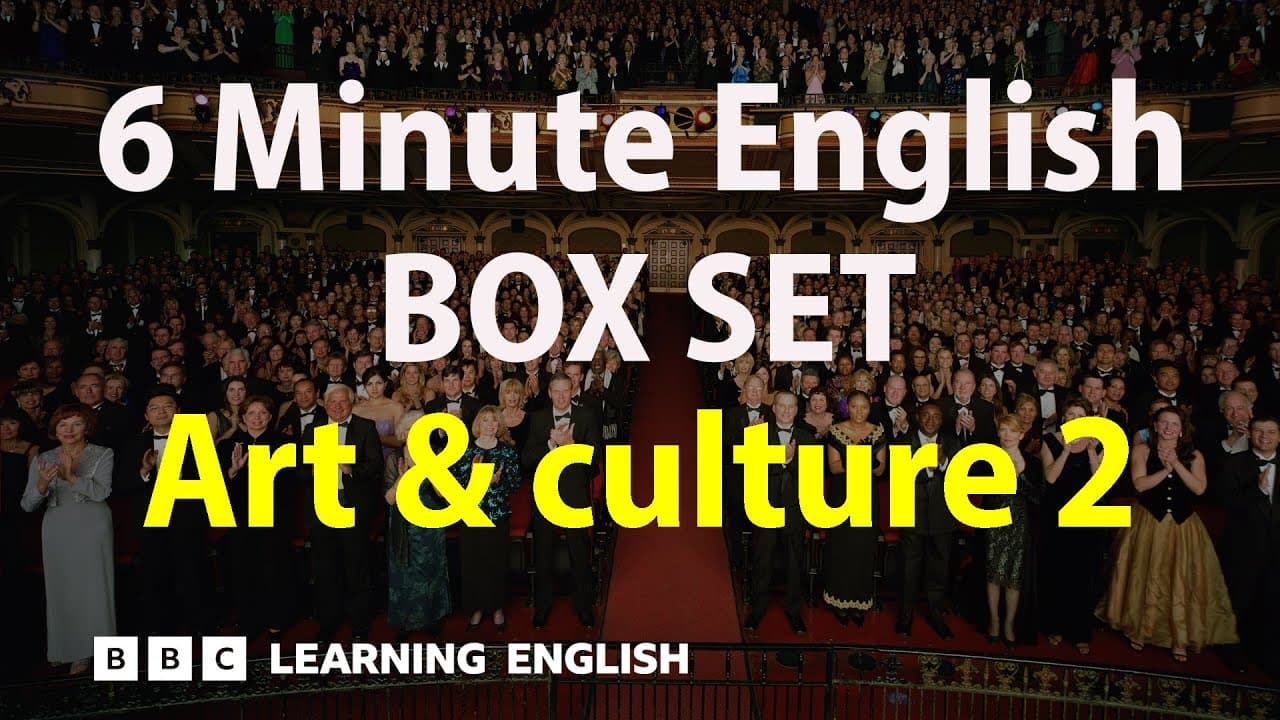
BOX SET: 6 Minute English - 'Art & culture 2' English mega-class! 30 minutes of new vocab!
TL;DR
Discussion on artistic brains, museums, libraries, and accessibility in arts.
Transcript
Hello. This is 6 Minute English from BBC Learning English. I'm Neil. And I'm Sam. Would you say you're artistic, Sam? Can you draw or paint? Do you dance or play music? I play the piano a bit. Yes, I'd say I'm quite artistic. How about you, Neil? Well, if you count playing football as artistic, then yes. But basically, no, I can't paint. We've ... Read More
Key Insights
- Artists' brains may process visual information differently, allowing them to see the 'gist' of images quickly.
- Artistic ability can be learned and is not solely an innate talent, as demonstrated by the experiences of self-taught artists.
- Museums face controversy over artefacts obtained during imperial times, with debates on whether these should be returned.
- The Great Library of Alexandria exemplified the power of knowledge as a form of 'soft power' in ancient times.
- Libraries are defined as any collection of books intentionally put together, serving as places of knowledge and power.
- New musical instruments are being designed to be accessible for disabled musicians, allowing them to express their unique experiences.
- The use of e-readers allows individuals to read without others knowing the content, reducing embarrassment over book choices.
- There is a shift towards reading more classic books, contrary to the belief that people are reading fewer classics.
Install to Summarize YouTube Videos and Get Transcripts
Explore YouTube Video Summarizer or Get YouTube Transcript Extractor
Questions & Answers
Q: Are artists' brains different from other people's?
Artists' brains may process visual information in a unique way, allowing them to see the 'gist' of images quickly through larger saccades and shorter fixations. This suggests a different visual processing approach compared to non-artists.
Q: What is the controversy surrounding museums?
Museums face criticism for holding artefacts taken during imperial times, with debates on whether these should be returned to their countries of origin. This raises questions about cultural heritage and the ethics of historical collections.
Q: What made the Great Library of Alexandria significant?
The Great Library of Alexandria was a center of knowledge, bringing together diverse cultures and ideas. It exemplified 'soft power' by establishing Alexandria as a hub of knowledge, influencing the region through cultural and intellectual means.
Q: How are libraries defined according to the program?
Libraries are defined as any collection of books intentionally put together by an owner. This can range from a few paperbacks to extensive collections, highlighting the personal and deliberate nature of library curation.
Q: How are new instruments helping disabled musicians?
New instruments are being designed to be accessible for disabled musicians, allowing them to express their experiences through music. These instruments can be bespoke or mass-produced, tailored to the needs of individual performers.
Q: What role do e-readers play in reading habits?
E-readers allow individuals to read without others knowing what they are reading, reducing potential embarrassment over book choices. This technology provides privacy and encourages reading a variety of genres.
Q: Is there a change in the types of books people are reading?
There is a shift towards reading more classic books, with sales of highbrow literature increasing. This trend suggests a growing interest in intellectual and traditional literature, contrary to the assumption that fewer classics are being read.
Q: What is the significance of 'soft power' in the context of libraries?
In the context of libraries, 'soft power' refers to the influence gained through knowledge and cultural exchange rather than military might. The Great Library of Alexandria is an example, using its vast collection to establish cultural dominance.
Summary & Key Takeaways
-
The program explores whether artists' brains are different, highlighting how they might process visual information differently and the ability to learn artistic skills.
-
The role of museums in the modern world is discussed, focusing on the controversy over artefacts taken during imperial times and the debate over returning them.
-
Libraries are explored as places of power and knowledge, with a historical look at the Great Library of Alexandria and modern views on what constitutes a library.
Read in Other Languages (beta)
Share This Summary 📚
Summarize YouTube Videos and Get Video Transcripts with 1-Click
Try YouTube Summary with ChatGPT & Claude or YouTube Transcript Generator
Explore More Summaries from BBC Learning English 📚
Summarize YouTube Videos and Get Video Transcripts with 1-Click
Try YouTube Summary with ChatGPT & Claude or YouTube Transcript Generator