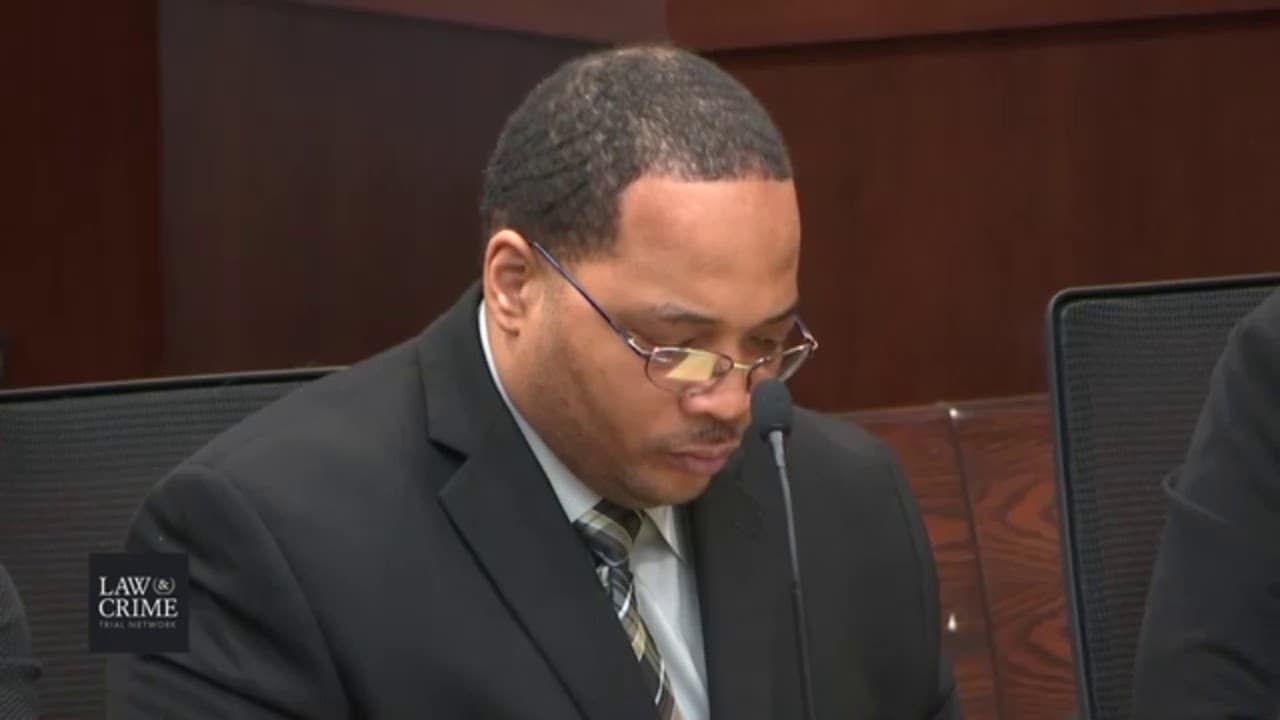
Henry Segura Penalty Phase - Jury Instructions Before Closing Arguments
TL;DR
Detailed instructions for a jury deciding on a death penalty sentence based on proven aggravating factors and mitigating circumstances.
Transcript
I realized they sent instructions into you not taking out the victim impact paragraph put up sent in previously any issue is very instructions from the site it's the same with what I've seen him perform this rivet they're not took out the victim that's a mistake yes what's that it's fine all right defense so we're ready for serious what I'm gonna d... Read More
Key Insights
- 👍 The jury must unanimously agree on the existence of proven aggravating factors to consider the death penalty.
- ❓ Establishing mitigating circumstances only requires a majority agreement among jurors.
- 🧑🏭 The decision-making process for the death penalty involves a systematic evaluation of aggravating factors and mitigating circumstances.
Install to Summarize YouTube Videos and Get Transcripts
Explore YouTube Video Summarizer or Get YouTube Transcript Extractor
Questions & Answers
Q: What factors must the jury consider in deciding between the death penalty and life imprisonment without parole?
The jury must consider proven aggravating factors, such as prior criminal activity and heinous nature of the crime, and weigh them against established mitigating circumstances that may support a life sentence.
Q: How does the jury determine the defendant's eligibility for the death penalty?
If the jury unanimously finds at least one proven aggravating factor, they proceed to evaluate the sufficiency of these factors and then determine if they outweigh the mitigating circumstances, ultimately deciding on the appropriate sentence.
Q: What role does unanimity play in the jury's decision-making process regarding the death penalty?
Unanimity is crucial at various stages, including finding aggravating factors, determining their sufficiency and weighing them against mitigating circumstances, and finally deciding on imposing the death penalty.
Q: How does the jury handle cases where they cannot unanimously agree on the appropriate sentence?
If the jury's decision on the sentence is less than unanimous, the defendant will be sentenced to life in prison without the possibility of parole, highlighting the importance of unanimity in death penalty cases.
Summary & Key Takeaways
-
Detailed instructions given to a jury on how to decide whether a defendant should receive the death penalty or life imprisonment without parole.
-
Emphasizes the need for unanimous agreement on aggravating factors and weighing them against mitigating circumstances.
-
Explains the process step by step, from determining aggravating factors to reaching a unanimous decision on the appropriate sentence.
Read in Other Languages (beta)
Share This Summary 📚
Summarize YouTube Videos and Get Video Transcripts with 1-Click
Try YouTube Summary with ChatGPT & Claude or YouTube Transcript Generator
Explore More Summaries from Law&Crime Network 📚





Summarize YouTube Videos and Get Video Transcripts with 1-Click
Try YouTube Summary with ChatGPT & Claude or YouTube Transcript Generator