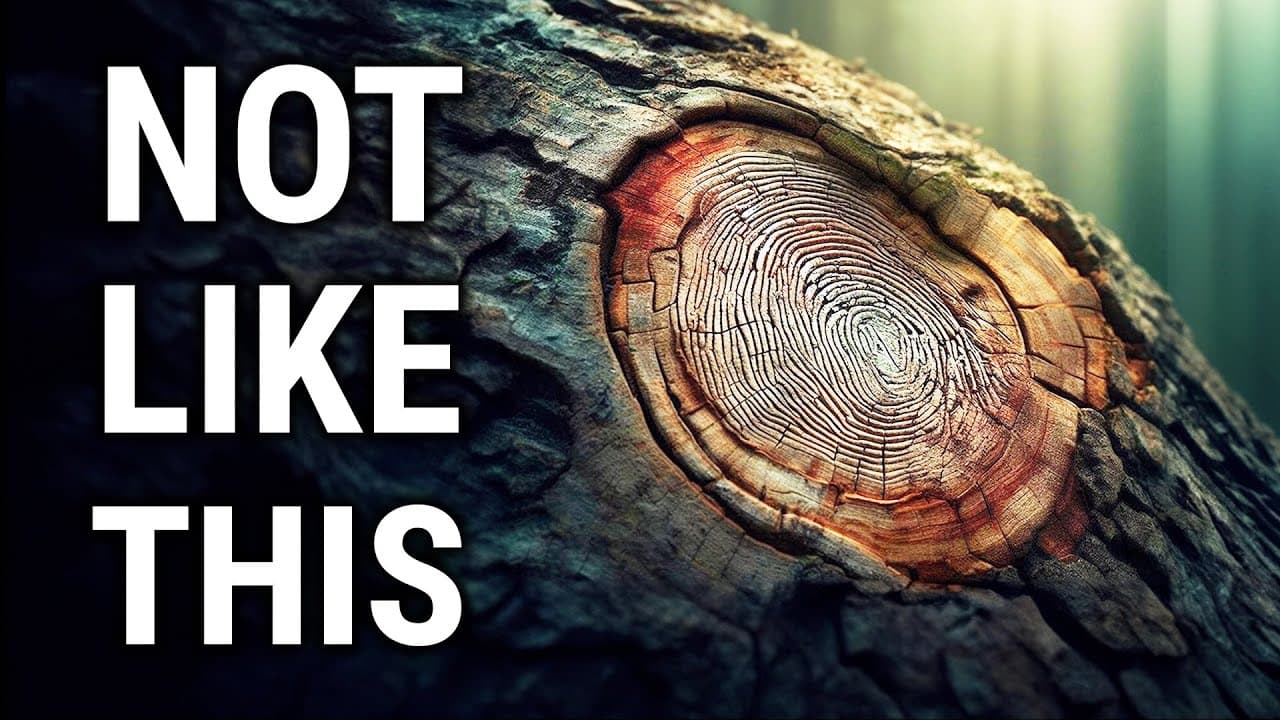
Apparently tree FINGERPRINTS are a thing
TL;DR
Unique spectral fingerprints help identify plant and animal species for conservation purposes.
Transcript
Thanks to tiny differences in the swirls and whorls of humans’ fingerprints, it’s possible to identify the specific person a set of fingerprints belongs to. And we can do something similar with the various species of plants and animals out there – even though most of them don’t actually have fingers. Hi, I’m Kate and this is MinuteEarth. The kind o... Read More
Key Insights
- 🌱 Spectral fingerprints help identify plant and animal species.
- ❓ Unique characteristics reflect in spectral fingerprints.
- ❓ Conservation efforts benefit from understanding spectral fingerprints.
- 😒 ASCEND project uses spectral fingerprints for biodiversity research.
- 🦻 Remote sensing technologies aid in conservation efforts.
- 🧑⚕️ Spectral fingerprints offer insights into ecosystem health.
- ❓ Training biologists in spectral fingerprint analysis is crucial.
Install to Summarize YouTube Videos and Get Transcripts
Explore YouTube Video Summarizer or Get YouTube Transcript Extractor
Questions & Answers
Q: How do scientists use spectral fingerprints to identify tree species?
Scientists can analyze the unique spectral fingerprints of tree species based on their chemical composition, crown structure, and water content to determine their species and health status.
Q: What are the implications of using spectral fingerprints for conservation?
Spectral fingerprints help scientists quickly and easily collect data on specific species, track biodiversity changes, and implement conservation efforts to protect plants and animals more effectively.
Q: How can spectral fingerprints be used to study species beyond trees?
Scientists are exploring the unique spectral fingerprints of various species, from corals to polar bears, to assist in tasks like finding animals in remote areas and assessing ecosystem health.
Q: What is the ASCEND project and how does it use spectral fingerprints?
The ASCEND project, funded by the National Science Foundation, utilizes spectroscopy to monitor and map sick trees, track biodiversity changes, and train biologists to understand global biodiversity challenges.
Summary & Key Takeaways
-
Light hitting plants creates unique spectral fingerprints.
-
These fingerprints help identify tree species and their health.
-
Scientists are using spectral fingerprints to study and conserve biodiversity.
Read in Other Languages (beta)
Share This Summary 📚
Summarize YouTube Videos and Get Video Transcripts with 1-Click
Try YouTube Summary with ChatGPT & Claude or YouTube Transcript Generator
Explore More Summaries from MinuteEarth 📚





Summarize YouTube Videos and Get Video Transcripts with 1-Click
Try YouTube Summary with ChatGPT & Claude or YouTube Transcript Generator