The Sudden Demise of the Khmer Empire Explained
TL;DR
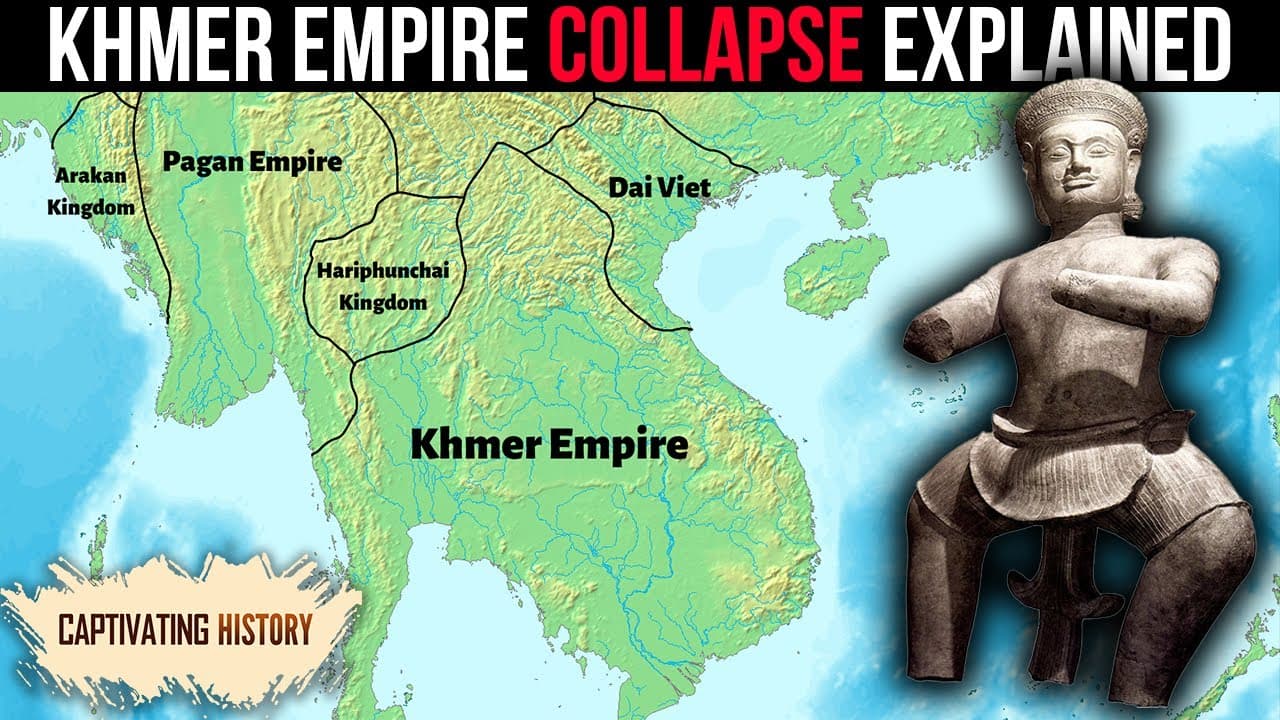
The Khmer Empire was a powerful civilization in Southeast Asia, known for its impressive stone monuments and cultural achievements. It experienced periods of chaos, religious shifts, and eventually declined due to wars, overpopulation, trade changes, and climate issues.
Transcript
this video is brought to you by captivating history the khmer empire also known as the ankorian empire ruled over a large part of southeast asia between the 9th and 15th centuries if you've heard of the khmer empire you're likely to think of angkor wat the biggest religious structure in the world located in anchor the capital of the old empire is a... Read More
Key Insights
- 🥳 The Khmer Empire ruled over most of mainland Southeast Asia and parts of southern China from the 9th to the 15th centuries.
- 🖐️ Religion played a crucial role in the empire, with a blend of Hindu and Buddhist influences, and changing religious dynamics over time.
- 🥺 The empire faced challenges such as wars, overpopulation, ecological issues, and changes in trade routes, leading to its decline.
Install to Summarize YouTube Videos and Get Transcripts
Explore YouTube Video Summarizer or Get YouTube Transcript Extractor
Questions & Answers
Q: Who was the founder of the Khmer Empire?
The founder of the Khmer Empire was Jayavarman II, who crowned himself king and established the empire by conquering other kings in the region.
Q: How did the religious dynamics change in the Khmer Empire?
Initially, Hinduism was the dominant religion, but Buddhism gained prominence in the 12th century. Temples often showcased a blend of Hindu and Buddhist elements, reflecting the evolving religious trends of the kings.
Q: What led to the decline of the Khmer Empire?
Wars with neighboring kingdoms, overpopulation, conversion to Theravada Buddhism, changes in maritime trade, and climate changes, including prolonged droughts, all contributed to the decline of the empire.
Q: What impact did Jayavarman VII have on the Khmer Empire?
Jayavarman VII was a significant ruler who made Buddhism the state religion, established strong infrastructure, built hospitals, and introduced social reforms during his reign.
Key Insights:
- The Khmer Empire ruled over most of mainland Southeast Asia and parts of southern China from the 9th to the 15th centuries.
- Religion played a crucial role in the empire, with a blend of Hindu and Buddhist influences, and changing religious dynamics over time.
- The empire faced challenges such as wars, overpopulation, ecological issues, and changes in trade routes, leading to its decline.
- Despite the decline of the empire, remnants of the Khmer Empire continue to fascinate and draw people's attention in modern-day Cambodia.
Summary & Key Takeaways
-
The Khmer Empire, also known as the Ankorian Empire, ruled over a large part of Southeast Asia from the 9th to the 15th centuries.
-
The empire built impressive stone monuments like Angkor Wat and Banteay Srei, showcasing its wealth and cultural achievements.
-
The Khmer Empire had a strict hierarchy of power, a combination of Hindu and Buddhist influences, and engaged in diplomatic relationships with neighboring countries.
Read in Other Languages (beta)
Share This Summary 📚
Summarize YouTube Videos and Get Video Transcripts with 1-Click
Try YouTube Summary with ChatGPT & Claude or YouTube Transcript Generator
Explore More Summaries from Captivating History 📚





Summarize YouTube Videos and Get Video Transcripts with 1-Click
Try YouTube Summary with ChatGPT & Claude or YouTube Transcript Generator