The Origin of the Universe’s Heaviest Elements
TL;DR
Astrophysicist Maria Drout explains how neutron star mergers produce heavy elements and the excitement of discovering new space explosions.
Transcript
at some point maybe in high school i started reading more and more books about space and astronomy and got really engaged in that i think part of it also was i realized i really liked math but also really liked art i mean space is beautiful and the sort of combination of that was something that drew me so there are different types of light that we ... Read More
Key Insights
- 🛰️ Maria Drout's interest in space and astronomy began in high school, driven by a mix of math and art.
- 📤 Different types of light in space, from visible to x-rays, offer astronomers a broad spectrum to study.
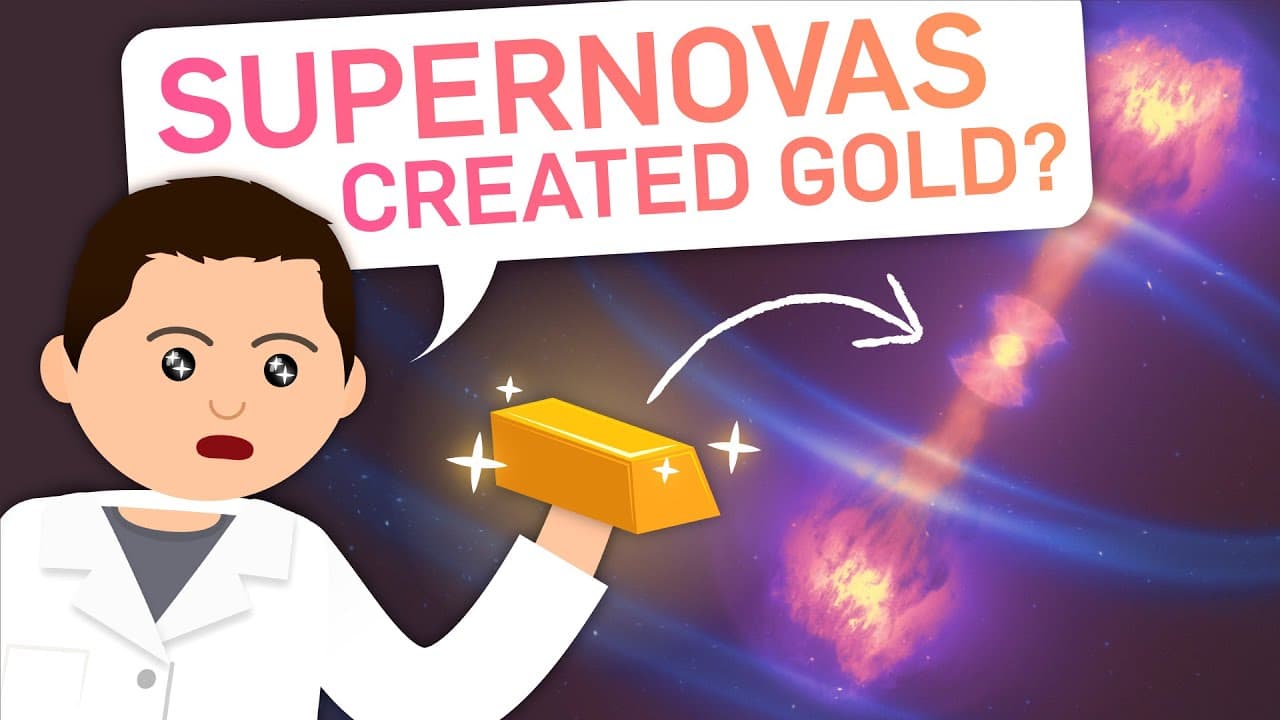
- 🤩 Neutron star mergers have been confirmed as a source of heavy elements, like gold and platinum, shaping planets and life.
- 🤩 LIGO's detection of a neutron star merger in 2017 marked a significant advancement in astronomy.
- 🥺 The rapid response to the unique event led to the observation and understanding of an unprecedented space explosion.
- 🤨 Earth's formation and the presence of heavy elements in the galaxy raise intriguing questions about the origins of our planet.
- 🙂 Maria Drout's work sheds light on space explosions, contributing to a deeper understanding of the universe.
Install to Summarize YouTube Videos and Get Transcripts
Explore YouTube Video Summarizer or Get YouTube Transcript Extractor
Questions & Answers
Q: How did Maria Drout become interested in space and astronomy?
Maria Drout's interest in space and astronomy sparked in high school as she delved into books on space and realized her love for math and art, finding the beauty of space captivating and inspiring.
Q: What are some types of space explosions that astronomers study?
Astronomers like Maria Drout study various space explosions, with supernovae being a common focus, where massive stars collapse and trigger an explosion throwing out material, including elements like iron and nickel.
Q: Why are neutron star mergers significant in astronomy?
Neutron star mergers are crucial as they produce heavy elements like gold and platinum, vital in forming planets like Earth and supporting life, expanding our understanding of where these elements come from.
Q: Describe the excitement of the discovery made by LIGO in 2017.
In August 2017, LIGO detected a neutron star merger, a first in history, leading to a rapid response from astronomers like Maria Drout to capture the rare event, changing our understanding of the universe.
Summary & Key Takeaways
-
Maria Drout's passion for space and astronomy began in high school, blending her love for math and art.
-
She studies various types of light in space and focuses on finding and understanding different space explosions, like supernovae.
-
Drout talks about the significance of neutron star mergers in producing heavy elements and the exciting discovery in 2017.
Read in Other Languages (beta)
Share This Summary 📚
Summarize YouTube Videos and Get Video Transcripts with 1-Click
Try YouTube Summary with ChatGPT & Claude or YouTube Transcript Generator
Explore More Summaries from Thought Café + 📚



Summarize YouTube Videos and Get Video Transcripts with 1-Click
Try YouTube Summary with ChatGPT & Claude or YouTube Transcript Generator