Space Station One Year Crew Members Share Thoughts About Mission
TL;DR
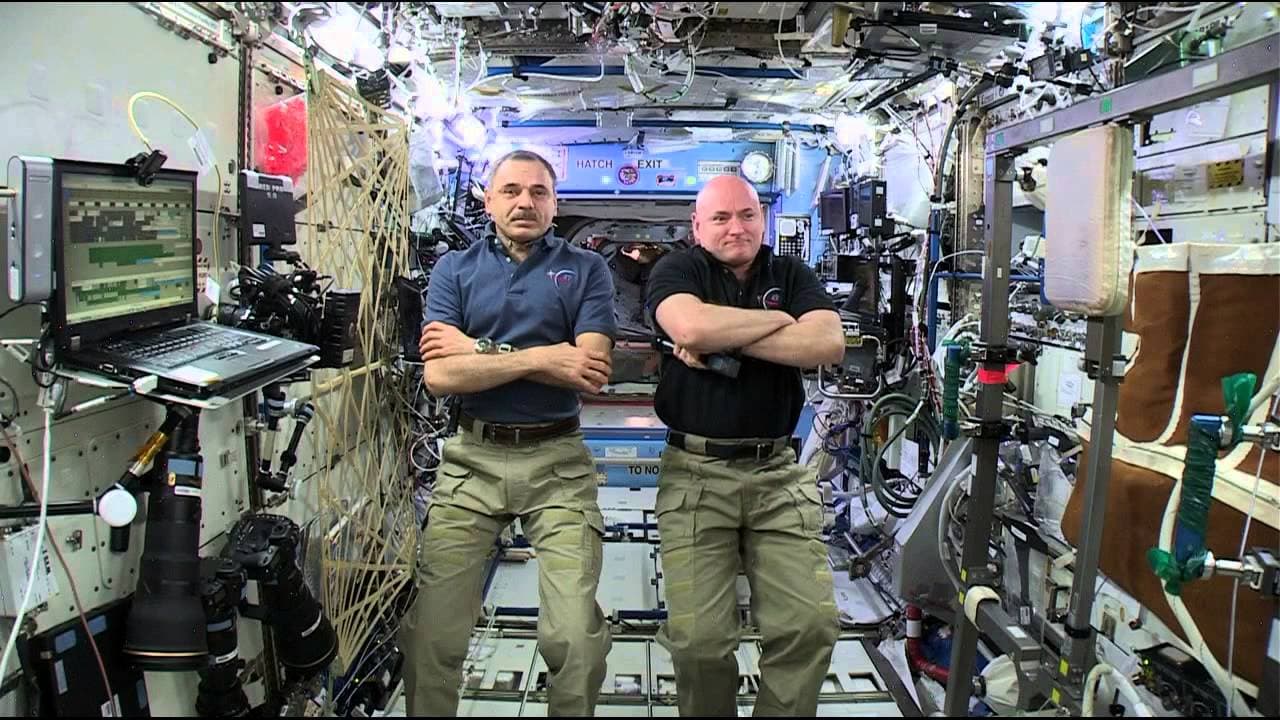
Astronauts discuss their experiences on the International Space Station, including the arrival of the Cygnus spacecraft, the use of augmented reality with Microsoft HoloLens, daily maintenance and repairs, the Twin Study, the importance of space exploration, and the view of global climate change from space.
Transcript
station this is houston are you ready for the event yeah we're ready for the event popular science this is mission control houston please call station for a voice check station this is popular science how do you hear me hey we have you uh loud and clear welcome aboard the space station little echo thank you we're delighted to be here with you this ... Read More
Key Insights
- 👨🚀 The arrival of the Cygnus spacecraft is an exciting event for the astronauts on the space station, as it brings new supplies and equipment.
- 👨🚀 Augmented reality, particularly with Microsoft HoloLens, holds potential for enhancing tasks and collaboration on the space station, such as providing accessible procedures and allowing experts on the ground to guide astronauts.
- 👨🚀 Daily maintenance and repairs are crucial for the operation of the space station, and astronauts often have to be creative in fixing issues that arise.
- 👾 The Twin Study, involving samples and tests on Scott Kelly and his twin brother Mark, aims to understand the effects of long-duration space travel on the human body.
- 👾 Exploration and colonization of Mars are seen as natural progressions for humanity's expansion, with the International Space Station serving as a stepping stone for deep space exploration.
- 👾 The view of Earth from space highlights the fragility of the atmosphere and the need to address global climate change.
Install to Summarize YouTube Videos and Get Transcripts
Explore YouTube Video Summarizer or Get YouTube Transcript Extractor
Questions & Answers
Q: How did the astronauts grapple with the Cygnus spacecraft?
Scott Kelly explains that he assisted, but Chell did most of the hard work using the robotic arm. They were both excited to see a new vehicle arrive safely on the space station.
Q: How will augmented reality be used on the space station with Microsoft HoloLens?
Scott Kelly explains that augmented reality can provide procedures in astronauts' field of view, making them easily accessible and controllable with voice commands. It can also allow experts on the ground to see what astronauts see and provide guidance and annotations.
Q: Have the astronauts experienced any unique hacks to fix something in a pinch on the space station?
Mikhail Kornienko states that maintaining and fixing various systems on the space station is a daily occurrence. They often have to be creative in fixing issues due to its complex nature.
Q: What kind of sampling do the astronauts do as part of the Twin Study?
Scott Kelly mentions various bodily fluid samples, such as urine, saliva, and blood, that are collected and frozen for analysis. They also use imaging technology and perform cognitive tests to track changes in the body and mind over time.
Q: Why is it important for humans to go beyond low Earth orbit and explore Mars?
Mikhail Kornienko states that as humanity expands, it is necessary to explore and colonize Mars. He believes the current mission on the International Space Station is a crucial step towards future exploration of the solar system.
Q: What does Scott Kelly want negotiators at the global climate talks in Paris to know about Earth from his perspective in space?
Scott Kelly believes that being in space offers a unique perspective on Earth's fragility and the need to protect the atmosphere. He hopes that negotiators recognize the critical importance of addressing climate change.
Q: Are the astronauts growing any more food on the space station?
Mikhail Kornienko explains that they have a greenhouse in the Columbus module where they are currently growing food. While they haven't seen real fruits yet, they are still in the process of experimentation.
Summary & Key Takeaways
-
Astronaut Scott Kelly and cosmonaut Mikhail Kornienko discuss the arrival of the Cygnus spacecraft and the excitement of receiving a holiday delivery.
-
Scott Kelly talks about the potential uses of augmented reality with Microsoft HoloLens on the space station, including improved access to procedures and collaboration with experts on the ground.
-
Mikhail Kornienko emphasizes the constant maintenance and repairs required on the space station, as well as the importance of creativity in fixing issues.
-
Scott Kelly shares details about the Twin Study, including various bodily fluid samples and cognitive tests, to understand the effects of space travel on the human body.
-
Mikhail Kornienko explains the importance of space exploration and colonization, stating that it is a natural process for humanity's expansion.
-
Scott Kelly describes the unique perspective from space, highlighting the fragility of Earth's atmosphere and the need to address climate change.
-
Mikhail Kornienko discusses the ongoing efforts to grow food on the space station, with a greenhouse present in the Columbus module.
Read in Other Languages (beta)
Share This Summary 📚
Summarize YouTube Videos and Get Video Transcripts with 1-Click
Try YouTube Summary with ChatGPT & Claude or YouTube Transcript Generator
Explore More Summaries from NASA 📚
Summarize YouTube Videos and Get Video Transcripts with 1-Click
Try YouTube Summary with ChatGPT & Claude or YouTube Transcript Generator