What Is the Origin of Human Language?
TL;DR
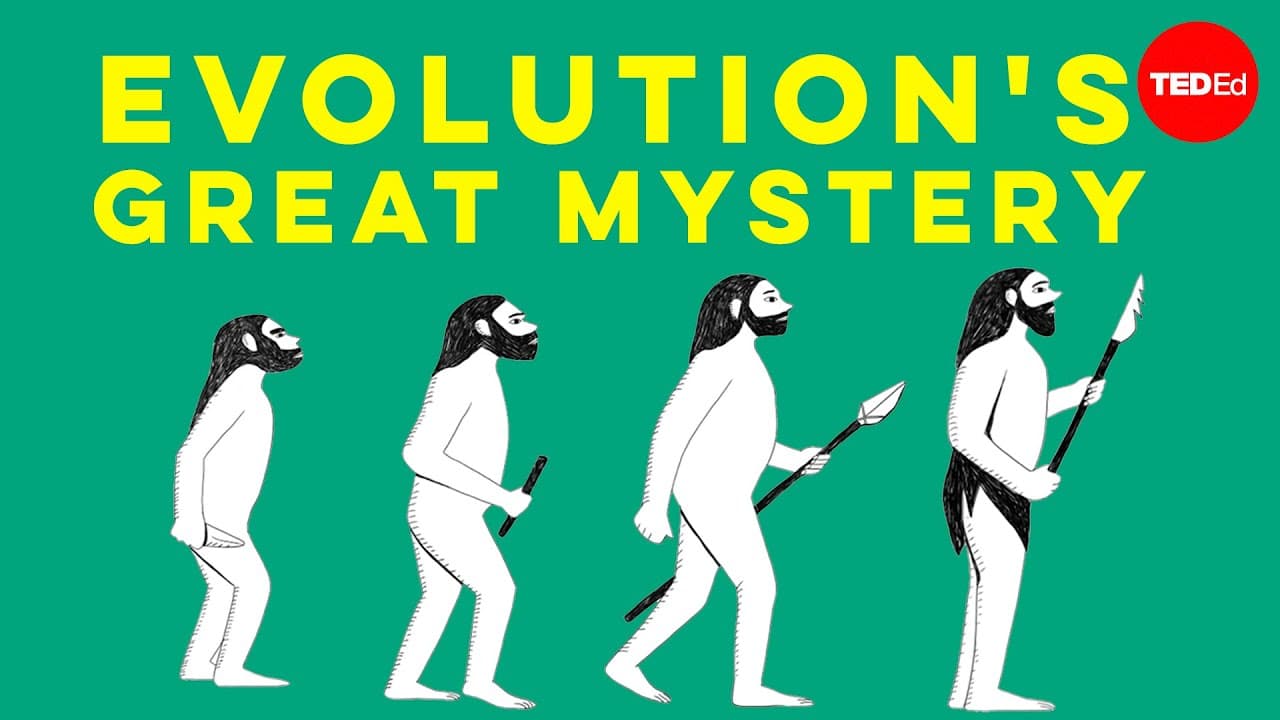
The origin of human language likely began with gestural communication, evolving to abstract symbols and eventually to spoken language. Unlike animal communication, which is limited and specific, human language is open-ended, allowing the sharing of complex thoughts and ideas. This evolution reflects a deeper connection between language and human cognitive abilities, though many questions about its precise origins remain unanswered.
Transcript
In the 1980s, a bonobo named Kanzi learned to communicate with humans to an unprecedented extent— not through speech or gestures, but using a keyboard of abstract symbols representing objects and actions. By pointing to several of these in order, he created sequences to make requests, answer verbal questions from human researchers, and refer to ob... Read More
Key Insights
- 💭 Language involves sharing thoughts beyond basic communication.
- 🤗 Human language is open-ended, unlike specific animal messages.
- ❓ Gestural communication may have been an early stage in language evolution.
- 👻 Speech allowed humans to engage in complex activities.
- ❓ Language's biological origins remain mysterious.
- 😯 The transition from gestures to speech likely shaped human dominance.
- ❓ Extinct species complicate the understanding of language evolution.
Install to Summarize YouTube Videos and Get Transcripts
Explore YouTube Video Summarizer or Get YouTube Transcript Extractor
Questions & Answers
Q: How did Kanzi communicate with humans?
Kanzi used abstract symbols on a keyboard to create sequences, enabling him to make requests, answer questions, and refer to absent objects.
Q: What distinguishes human language from animal communication?
Human language is open-ended, allowing unlimited expression of ideas, whereas animal communication generally conveys specific messages without complex combinations.
Q: What role did gestural communication play in the evolution of language?
Gestural communication, possibly originating from signaling objects and actions, may have laid the foundation for the development of abstract signing and, eventually, spoken language.
Q: How did the emergence of speech impact human evolution?
Speech, with an optimal vocal tract in humans, freed hands for complex activities like tool use, potentially contributing to the dominance of our species.
Summary & Key Takeaways
-
Kanzi, a bonobo, learned to communicate using symbols to form sequences for requests, answers, and reference.
-
Human language encompasses sharing thoughts, stories, and ideas, while other species' communication lacks open-endedness.
-
The origins of language may have begun as gestural communication before evolving into spoken language.
Read in Other Languages (beta)
Share This Summary 📚
Summarize YouTube Videos and Get Video Transcripts with 1-Click
Try YouTube Summary with ChatGPT & Claude or YouTube Transcript Generator
Explore More Summaries from TED-Ed 📚


Summarize YouTube Videos and Get Video Transcripts with 1-Click
Try YouTube Summary with ChatGPT & Claude or YouTube Transcript Generator