Understanding the Supply Curve: Shifts and Producer Surplus
TL;DR
Explains supply curves, producer surplus, and factors affecting supply shifts.
Transcript
♪ [music] ♪ - [Alex] Today we turn to look at the supply curve. I'm going to move through this material a little bit more quickly than through demand because many of the ideas are similar. The supply curve represents the behavior of sellers and the supply curve is a function that shows the quantity supplied at different prices. The quantity supplie... Read More
Key Insights
- The supply curve illustrates the relationship between price and quantity supplied, showing how much producers are willing to sell at different prices.
- Horizontal reading of the supply curve indicates the quantity supplied at each price, while vertical reading shows the minimum price for a given quantity.
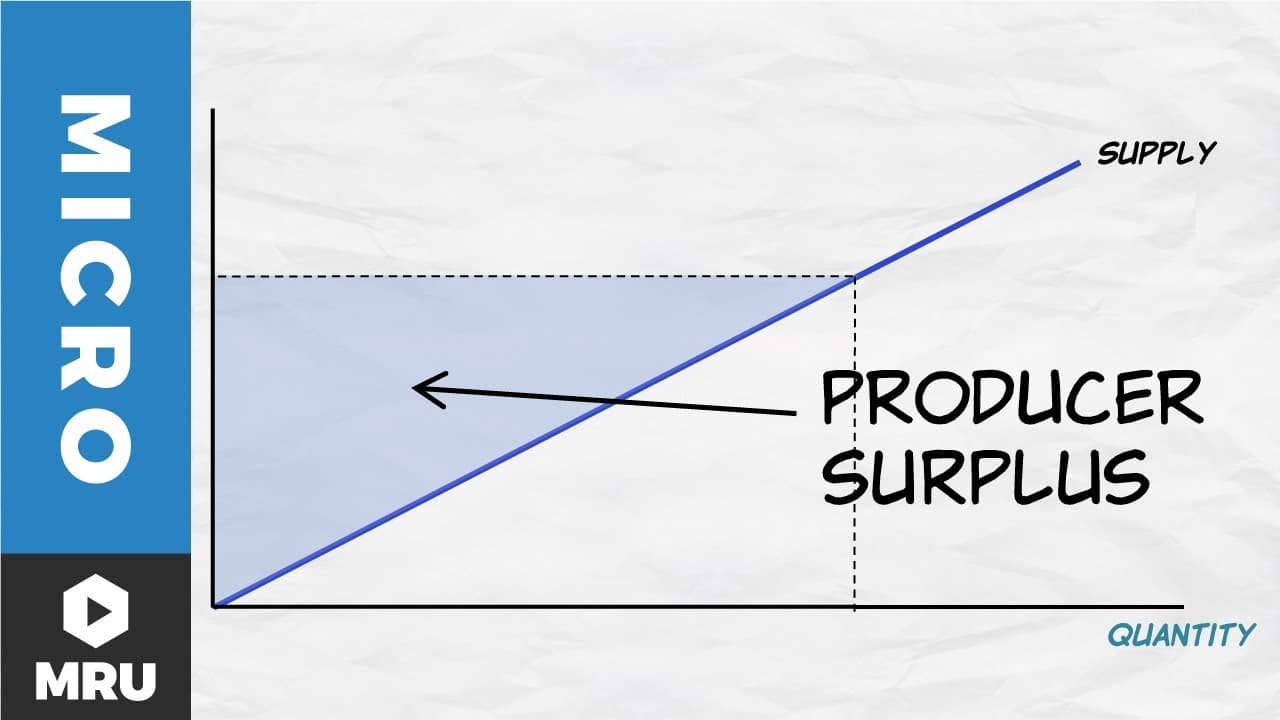
- Producer surplus is the difference between the market price and the minimum price producers are willing to accept, represented graphically as the area above the supply curve and below the price.
- An increase in supply shifts the supply curve to the right, indicating that producers can supply more at the same price due to reduced costs.
- A decrease in supply shifts the supply curve to the left, meaning producers require a higher price to supply the same quantity due to increased costs.
- Supply shifts are primarily driven by changes in production costs, which can be influenced by technological innovations, input prices, taxes, and subsidies.
- Understanding supply curve shifts helps in predicting how changes in the market environment affect the quantity of goods supplied.
- The video emphasizes the importance of understanding rather than memorizing the factors that shift supply, as they are fundamentally linked to changes in costs.
Install to Summarize YouTube Videos and Get Transcripts
Explore YouTube Video Summarizer or Get YouTube Transcript Extractor
Questions & Answers
Q: What does the supply curve represent?
The supply curve represents the relationship between the price of a good and the quantity supplied by producers. It shows how much producers are willing and able to sell at different prices. The curve helps in understanding the behavior of sellers in the market and the quantity of goods they supply at various price levels.
Q: How is producer surplus defined?
Producer surplus is defined as the difference between the market price and the minimum price at which producers are willing to sell a given quantity. It represents the gain producers receive from selling at a market price higher than their minimum acceptable price. Graphically, it's the area above the supply curve and below the market price.
Q: What happens when there is an increase in supply?
An increase in supply shifts the supply curve to the right, indicating that producers are willing to supply more at the same price. This shift is often due to a reduction in production costs, allowing producers to offer more goods without increasing prices. It reflects an overall improvement in production efficiency or lower input costs.
Q: What causes a decrease in supply?
A decrease in supply occurs when the supply curve shifts to the left. This means that producers require a higher price to supply the same quantity of goods, often due to increased production costs. Factors such as higher input prices, increased taxes, or unfavorable changes in technology can lead to a decrease in supply.
Q: How does the vertical reading of the supply curve help?
The vertical reading of the supply curve helps determine the minimum price at which producers are willing to sell a specific quantity of goods. This perspective is useful for understanding the cost structure of production and the price floor necessary for producers to supply a given amount in the market.
Q: What are some factors that can shift the supply curve?
Factors that can shift the supply curve include changes in production costs, technological innovations, input prices, taxes, subsidies, and expectations about future prices. These factors influence the cost of production, thereby affecting the quantity of goods producers are willing to supply at various prices.
Q: Why is it important to understand supply curve shifts?
Understanding supply curve shifts is important because it helps predict how changes in market conditions affect the quantity of goods supplied. It provides insights into how producers respond to cost changes, allowing for better market analysis and economic forecasting. This knowledge is crucial for making informed business and policy decisions.
Q: What role do costs play in supply curve shifts?
Costs play a central role in supply curve shifts. A reduction in production costs typically leads to an increase in supply, shifting the curve to the right. Conversely, an increase in costs results in a decrease in supply, shifting the curve to the left. Understanding cost dynamics is essential for analyzing supply changes in the market.
Summary & Key Takeaways
-
The video explains the supply curve, highlighting how it represents the behavior of sellers and the quantity supplied at different prices. Key concepts include horizontal and vertical readings of the curve, which help understand the quantity supplied and the minimum price for a given quantity.
-
Producer surplus is introduced as the producers' gain from exchange, calculated as the difference between market price and the minimum price producers are willing to accept. Graphically, it's the area above the supply curve and below the price line.
-
Supply curve shifts are discussed in detail, with increases in supply shown as shifts to the right due to cost reductions. Decreases in supply shift the curve left, indicating higher costs. Various factors affecting these shifts, such as technology and input prices, are outlined.
Read in Other Languages (beta)
Share This Summary 📚
Summarize YouTube Videos and Get Video Transcripts with 1-Click
Try YouTube Summary with ChatGPT & Claude or YouTube Transcript Generator
Explore More Summaries from Marginal Revolution University 📚


Summarize YouTube Videos and Get Video Transcripts with 1-Click
Try YouTube Summary with ChatGPT & Claude or YouTube Transcript Generator