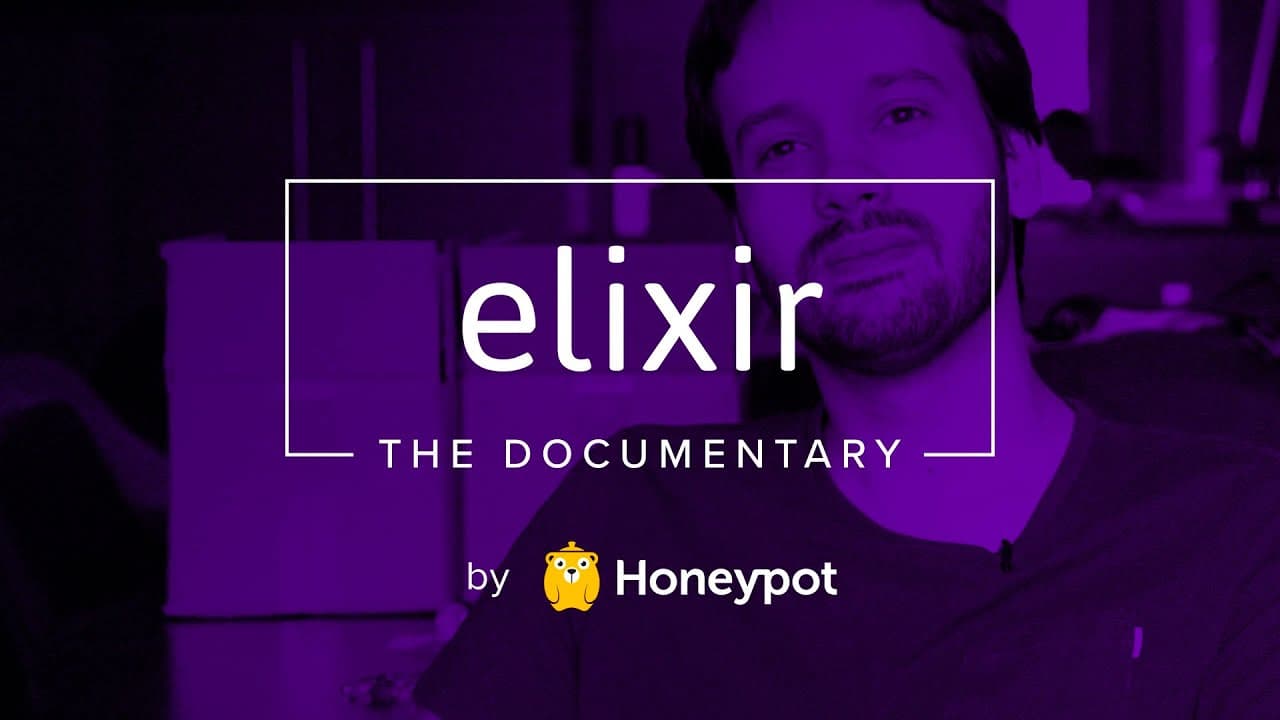
Elixir: The Documentary
TL;DR
Elixir revolutionizes programming with concurrency and scalability.
Transcript
I remember like my first computer was a Pentium 100 megahertz. I would be in school and then a friend in school say 'I got a computer that's like 233 megahertz' and then like 'how! I just bought mine - mine is new and then now you have something that is like twice and a little bit more faster'. But that&#... Read More
Key Insights
- The documentary highlights the rapid evolution of hardware, necessitating changes in software development practices to leverage multi-core processors.
- Erlang, developed by Ericsson in the 1980s, is identified as a solution for modern concurrency issues, leading to the creation of Elixir.
- Elixir was developed to enhance the Erlang virtual machine, addressing missing features and improving programming efficiency.
- The transition to Elixir was driven by the need for scalable technology to manage numerous concurrent connections efficiently.
- Elixir's open-source development model encouraged community involvement, leading to widespread adoption and continuous improvement.
- The Phoenix web framework, built on Elixir, significantly enhances scalability, supporting millions of concurrent users with minimal resources.
- Elixir's community-driven growth is evident through global conferences and diverse applications across various industries.
- The documentary emphasizes Elixir's potential in Internet of Things connectivity, enabling millions of devices to connect seamlessly.
Install to Summarize YouTube Videos and Get Transcripts
Explore YouTube Video Summarizer or Get YouTube Transcript Extractor
Questions & Answers
Q: How did the evolution of hardware influence software development?
The evolution of hardware, with processors doubling in speed every two years, initially allowed software to run faster without changes. However, the shift to multi-core processors necessitated changes in software development to effectively utilize multiple CPUs, leading to the need for languages like Elixir that handle concurrency efficiently.
Q: What role did Erlang play in the development of Elixir?
Erlang, developed by Ericsson in the 1980s to manage telecommunication systems, was identified as a solution for modern concurrency issues. Elixir was created to build on the robust Erlang virtual machine, addressing its limitations and enhancing programming efficiency for contemporary software challenges.
Q: Why was Elixir developed as an open-source language?
Elixir was developed as an open-source language to foster community involvement, allowing developers to contribute ideas, improvements, and innovations. This approach has led to rapid adoption, continuous improvement, and the creation of a supportive community that drives the language's evolution and application across industries.
Q: What makes Elixir suitable for handling concurrent connections?
Elixir is designed to efficiently manage tens of thousands of concurrent connections, making it ideal for applications requiring high scalability and low resource consumption. Its ability to handle distributed systems and concurrent processes seamlessly is a key factor in its suitability for modern web and IoT applications.
Q: How does the Phoenix framework enhance Elixir's capabilities?
The Phoenix framework enhances Elixir's capabilities by providing a scalable web framework that supports millions of concurrent users with minimal server resources. It includes features like Pub/Sub and presence mechanisms, allowing developers to build distributed applications without additional dependencies, significantly improving scalability and efficiency.
Q: What impact has Elixir had on the Internet of Things (IoT)?
Elixir has significantly impacted the IoT industry by enabling seamless connectivity for millions of devices. Its scalability and efficient management of concurrent processes make it an ideal choice for IoT applications, allowing developers to create innovative solutions that were previously too complex or costly to implement.
Q: How has Elixir's community contributed to its success?
Elixir's community has been instrumental in its success by actively participating in its open-source development, contributing ideas, and sharing use cases. Global conferences and community events have facilitated knowledge exchange, fostering innovation and driving the language's adoption across diverse industries.
Q: What future potential does Elixir hold for various industries?
Elixir holds significant future potential for various industries due to its scalability, efficiency, and ability to handle complex problems with simplicity. Its application in web development, IoT, and distributed systems opens opportunities for innovation, enabling developers to create solutions that were previously impossible or prohibitively expensive.
Summary & Key Takeaways
-
The documentary explores the creation and growth of the Elixir programming language, designed to address concurrency challenges by building on the Erlang virtual machine. It highlights how Elixir's open-source model and community involvement have driven its rapid adoption and adaptation across various industries.
-
Elixir's scalability and efficiency in handling concurrent connections make it ideal for modern web development and Internet of Things applications. The Phoenix framework, a key component of Elixir, supports millions of users with minimal server resources, enabling innovative solutions previously deemed impossible or too expensive.
-
Elixir's success is attributed to its strong community support, open-source development, and its ability to solve complex problems with simplicity and efficiency. The documentary showcases the language's growth through global conferences and its potential to revolutionize industries with scalable, distributed software solutions.
Read in Other Languages (beta)
Share This Summary 📚
Summarize YouTube Videos and Get Video Transcripts with 1-Click
Try YouTube Summary with ChatGPT & Claude or YouTube Transcript Generator
Explore More Summaries from Honeypot 📚
Summarize YouTube Videos and Get Video Transcripts with 1-Click
Try YouTube Summary with ChatGPT & Claude or YouTube Transcript Generator