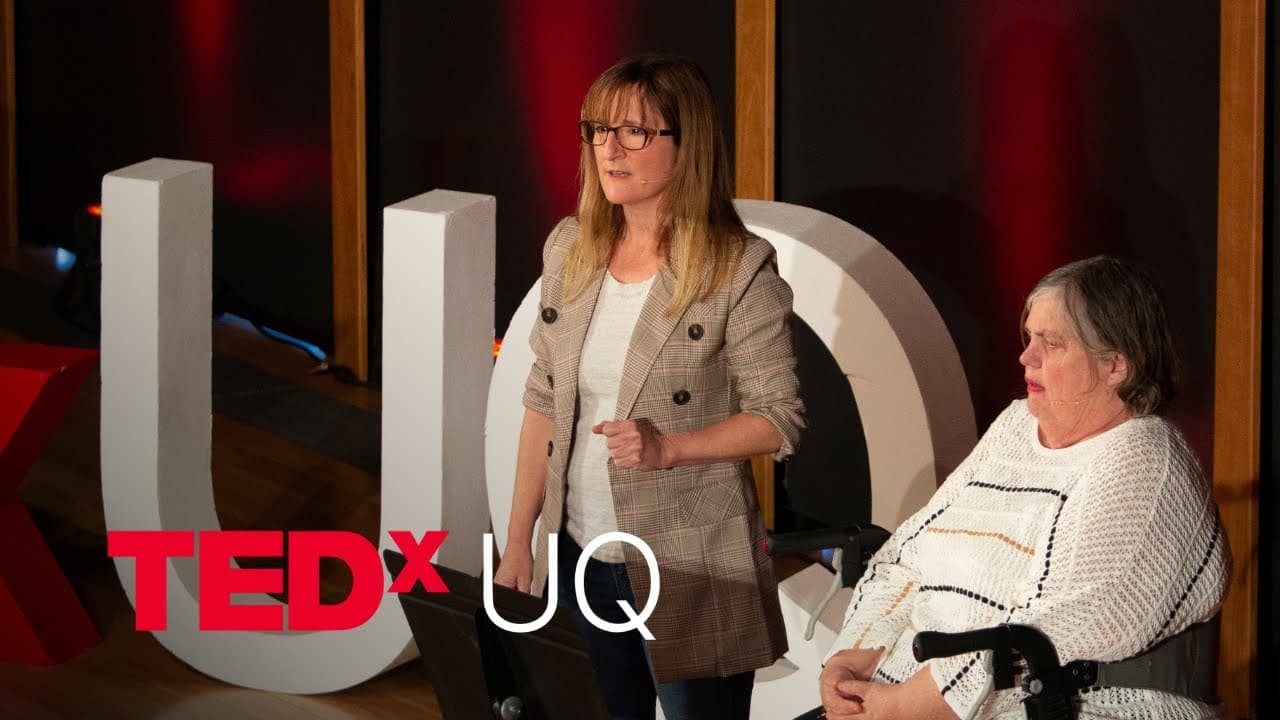
Self advocacy and why we need it | Kathy Ellem & Donna Best | TEDxUQ
TL;DR
Donna Best shares her journey, fighting for the rights of people with intellectual disabilities through self-advocacy.
Transcript
[Applause] if you ever get a chance to go to ipswitch to visit the University of Southern Queensland you'll see the grounds of what was once the challal center a place where people with intellectual disability were institutionalized from 1968 onwards the chalenor center was the so-called home of up to 530 people with intellectual disability it was ... Read More
Key Insights
- 💖 The mistreatment at the Challenor Center sparked a movement for self-advocacy.
- 💦 Donna Best's early advocacy work laid the foundation for creating a voice for people with disabilities.
- 🫡 Self-advocacy empowers individuals to speak up, challenge stigma, and demand respect.
- 🥺 Advocacy efforts have led to progress, but challenges like access to essential services persist.
- 👂 People with intellectual disabilities deserve to be listened to and included in society.
- 😌 The power of self-advocacy lies in individuals working together towards a common goal.
- 🫡 Advocacy efforts have resulted in increased recognition and respect for individuals with intellectual disabilities.
Install to Summarize YouTube Videos and Get Transcripts
Explore YouTube Video Summarizer or Get YouTube Transcript Extractor
Questions & Answers
Q: How did the mistreatment at the Challenor Center lead to the rise of self-advocacy?
The inhumane treatment at the Challenor Center sparked residents to speak out against their conditions, forming a group of self-advocates and initiating a movement for change.
Q: What role did Donna Best play in advocating for people with intellectual disabilities?
Donna Best became a prominent figure in advocating for the rights of individuals with intellectual disabilities by actively participating in groups, supporting other advocacy organizations, and inspiring others to speak up.
Q: How did the closure of the Challenor Center impact the advocacy landscape for people with intellectual disabilities?
The closure of the Challenor Center signaled a shift towards better options for individuals with intellectual disabilities, prompting the need for continued advocacy efforts to address remaining challenges.
Q: Why is self-advocacy crucial for individuals with intellectual disabilities?
Self-advocacy empowers individuals to have a voice, advocate for their rights, and challenge societal assumptions, ultimately leading to greater inclusion and respect for people with intellectual disabilities.
Summary & Key Takeaways
-
The history of the Challenor Center, where people with intellectual disabilities were mistreated and institutionalized, led to the rise of self-advocacy.
-
Donna Best's early advocacy work in groups like GUP paved the way for creating a voice for people with disabilities in Queensland.
-
The importance of self-advocacy is highlighted through Donna's continued efforts and the empowerment of individuals to speak up.
Read in Other Languages (beta)
Share This Summary 📚
Summarize YouTube Videos and Get Video Transcripts with 1-Click
Try YouTube Summary with ChatGPT & Claude or YouTube Transcript Generator
Explore More Summaries from TEDx Talks 📚





Summarize YouTube Videos and Get Video Transcripts with 1-Click
Try YouTube Summary with ChatGPT & Claude or YouTube Transcript Generator