How to Ace A-Level Chemistry: Effective Study Tips
TL;DR
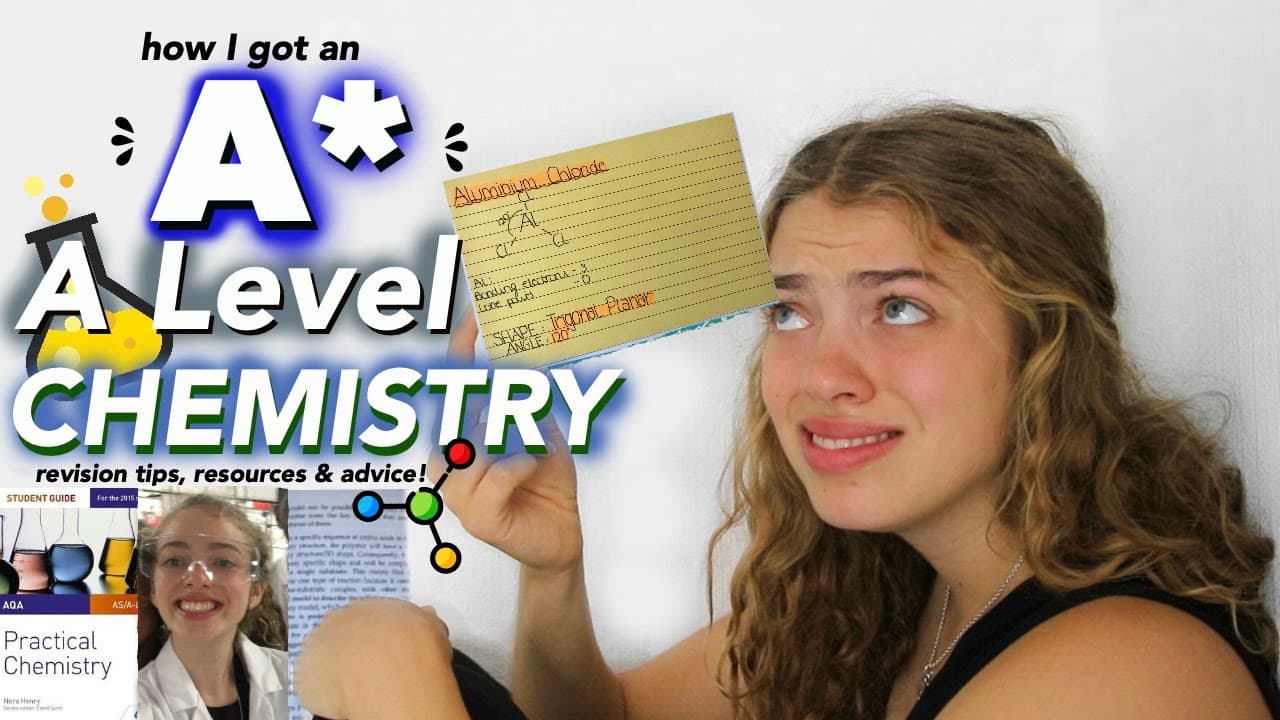
To excel in A-Level Chemistry, utilize active recall methods like flashcards and the 'blurting' technique to reinforce knowledge. Focus on practicals and consistently practice past paper questions to become familiar with exam formats. Additionally, don't hesitate to seek help from teachers or peers when grappling with complex topics, especially in Organic Chemistry.
Transcript
hey there guys and welcome back to unshaded Jade okay so if you have no idea who I am hi my name is Jude I am 19 I'm on a gap year and last year I finished my a levels in the UK I did math biology chemistry and English Lit yes somehow your girl managed to get three eight stars so yeah I just want to give you some advice for things that help me beca... Read More
Key Insights
- 🧑🎓 Students should print and follow their exam board specifications to ensure comprehensive subject knowledge and effective study prioritization.
- ☢️ Active recall techniques, like flashcards and blurting, are essential for reinforcing memory and understanding fundamental concepts.
- ⁉️ Consistent practice with past paper questions enhances familiarity and reduces anxiety during exams, as students learn to recognize question patterns.
- 🦻 Online educational resources can complement traditional study methods and provide diverse approaches to difficult topics, aiding comprehension.
- 🧑🎓 Practical skills are crucial; students should focus on the practical aspects of Chemistry, which often reflect the knowledge tested in exams.
- 🆘 Seeking help from teachers and tutors is vital when struggling with complex material; help can provide clarity and foster better understanding.
- 🧑🎓 Students should engage with peer study groups, promoting collaborative learning to tackle difficult subjects like Organic Chemistry.
Install to Summarize YouTube Videos and Get Transcripts
Explore YouTube Video Summarizer or Get YouTube Transcript Extractor
Questions & Answers
Q: What are some key techniques Jude recommends for studying Chemistry effectively?
Jude emphasizes the use of flashcards to summarize and review class notes, alongside the 'blurting' method which involves recalling information from memory and then comparing it against notes. These techniques help identify knowledge gaps and reinforce memory retention through active recall.
Q: How did Jude suggest handling the difficult aspects of Organic Chemistry?
Jude found Organic Chemistry particularly challenging and advised students to practice mechanisms repeatedly until they become second nature. She recommended seeking guidance from teachers for feedback on mechanism drawings and collaborating with peers to explain concepts, which can reinforce understanding.
Q: Why does Jude recommend using past paper questions for exam preparation?
Jude believes that practicing past paper questions is crucial for familiarizing oneself with the exam format and types of questions asked. This practice helps to build confidence and ensures that students understand the specific mark schemes, fostering a deeper comprehension of the material.
Q: What role do online resources play in Jude's study strategy?
Jude highly encourages the use of online resources, stating that platforms like YouTube and educational websites offer a wealth of information on Chemistry topics. They can provide alternative explanations and help clarify difficult concepts, making them valuable supplements to traditional study methods.
Q: How important are practical experiments in preparing for A-Level Chemistry exams?
Jude highlights the significance of practical experiments in Chemistry, noting that many exam questions rely on students’ understanding of practical applications. She advises thoroughly reviewing required practicals and using resources that include past practical questions to enhance learning.
Q: What does Jude mean by 'application' in the context of Chemistry exams?
Jude discusses 'application' as the ability to connect theoretical knowledge to practical questions that may not directly reference the specification. She recommends underlining key terms in questions to help identify relevant concepts and improve comprehension regarding how to apply learned materials.
Q: What is the 'blurting' technique, and how can it help students?
The 'blurting' technique involves recalling everything you can remember from a study chapter and writing it down without reference materials. Afterward, students compare their responses with their notes, thus highlighting areas of confusion. This method enhances memory and active recall, making it easier to consolidate knowledge.
Q: Can stress management impact a student’s performance in Chemistry?
Jude acknowledges that stress is a common factor among students, particularly during challenging studies like Chemistry. She stresses the importance of addressing stress by seeking help and continually practicing, stating that overcoming obstacles leads to the satisfying moment of understanding complex topics.
Summary & Key Takeaways
-
Jude, a high-achieving A-Level student, offers valuable advice for mastering Chemistry, particularly focusing on practical applications and exam preparation strategies.
-
Techniques such as creating flashcards, using the 'blurting' method, and consistently practicing past paper questions are highlighted as essential for retaining knowledge and improving performance.
-
Jude emphasizes the importance of understanding challenging concepts in Organic Chemistry and encourages seeking help from teachers and utilizing online resources for additional support.
Read in Other Languages (beta)
Share This Summary 📚
Summarize YouTube Videos and Get Video Transcripts with 1-Click
Try YouTube Summary with ChatGPT & Claude or YouTube Transcript Generator
Explore More Summaries from UnJaded Jade 📚






Summarize YouTube Videos and Get Video Transcripts with 1-Click
Try YouTube Summary with ChatGPT & Claude or YouTube Transcript Generator