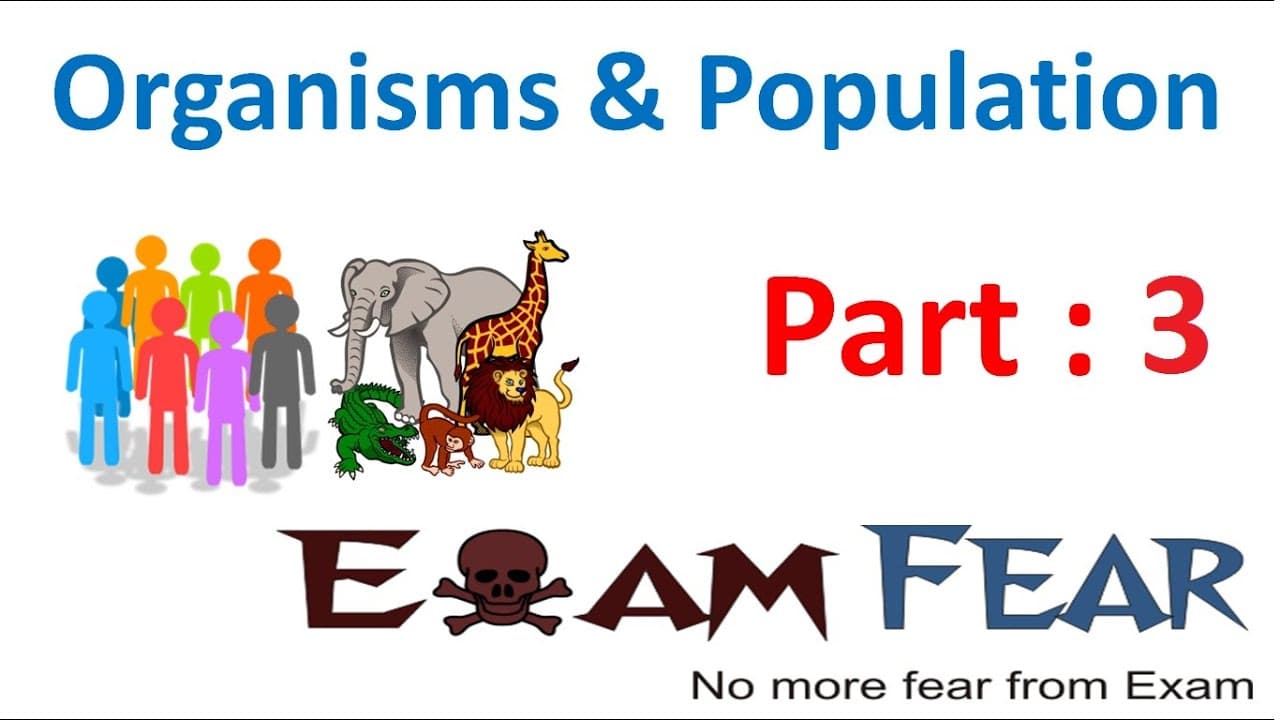
Biology Organisms & Population part 3 (Ecology: Community, Biome) class 12 XII
TL;DR
This video explores the different levels of ecology, including organisms, populations, communities, and biomes, and discusses the importance of biomes in supporting diverse life forms.
Transcript
hello friends this video on organisms and population part 3 is brought to you by examper.com no more fear from exam so the third level is community so community again is group of populations of different species living in the same area at a particular time so it's like again a level ahead so it's like group of populations in a particular area at a ... Read More
Key Insights
- 🎚️ Ecology is studied at different levels, including organisms, populations, communities, and biomes.
- ❓ Communities consist of populations of different species interacting in the same area.
- 🌱 Biomes are large areas with similar climate, plants, animals, and non-living components.
- ❓ Different ecosystems can exist within one biome.
- 🐪 Terrestrial biomes include deserts, grasslands, rainforests, and temperate forests.
- 🪸 Aquatic biomes include marine, freshwater, estuaries, and coral reefs.
- 💁 Biomes support diverse life forms and provide oxygen, regulate carbon dioxide levels, and influence climate patterns.
Install to Summarize YouTube Videos and Get Transcripts
Explore YouTube Video Summarizer or Get YouTube Transcript Extractor
Questions & Answers
Q: What is a community in ecology?
A community consists of different populations of species living in the same area at the same time and interacting with each other.
Q: Can populations in a community belong to different species?
Yes, populations in a community can belong to different species and may have different characteristics, such as food habits and appearance.
Q: How do populations in a community interact?
Populations in a community can interact in various ways, including mutualistic interactions, competitive interactions, and predation.
Q: What is a biome?
A biome is a large area on Earth with similar climate, plants, animals, and even non-living components such as air, water, and soil.
Q: Can multiple ecosystems exist within one biome?
Yes, multiple ecosystems can exist within one biome, with each ecosystem being a smaller unit within the larger biome.
Q: What are some examples of terrestrial biomes?
Examples of terrestrial biomes include deserts, grasslands, rainforests, and temperate forests.
Q: What are some examples of aquatic biomes?
Examples of aquatic biomes include marine biomes (oceans), freshwater biomes (lakes, rivers), estuaries, and coral reefs.
Q: What is the importance of biomes?
Biomes provide diverse habitats for numerous organisms, support oxygen production and carbon dioxide regulation through plants, and help regulate climate patterns and water resources.
Summary & Key Takeaways
-
Ecology is studied at four levels: organisms, populations, communities, and biomes.
-
A community is a group of populations of different species living in the same area at a particular time.
-
Biomes are large areas on Earth with similar climate, plants, and animals.
Read in Other Languages (beta)
Share This Summary 📚
Summarize YouTube Videos and Get Video Transcripts with 1-Click
Try YouTube Summary with ChatGPT & Claude or YouTube Transcript Generator
Explore More Summaries from LearnoHub - Class 11, 12 📚


Summarize YouTube Videos and Get Video Transcripts with 1-Click
Try YouTube Summary with ChatGPT & Claude or YouTube Transcript Generator