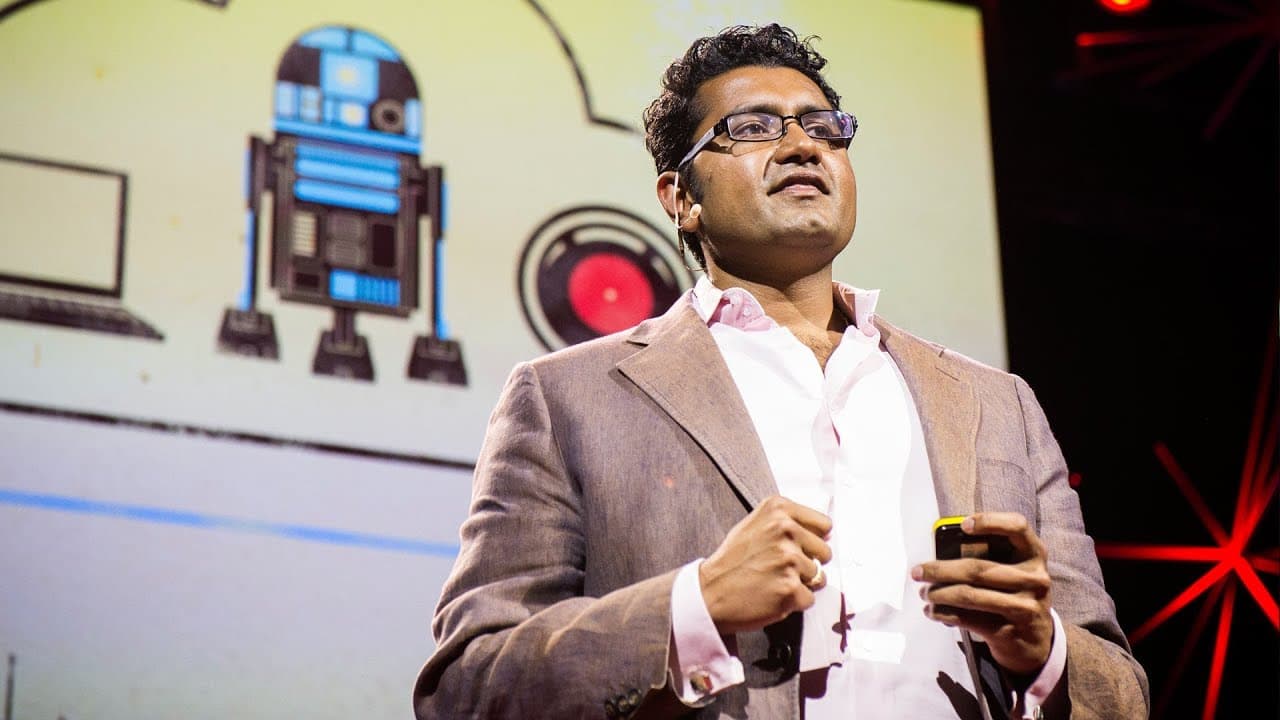
The rise of human-computer cooperation - Shyam Sankar
TL;DR
Overcoming chess, protein folding, and terrorism with the power of cooperation between humans and computers.
Transcript
I'd like to tell you about two games of chess the first happened in 1997 which Garry Kasparov a human lost a deep-blue a machine to many this was the dawn of a new era one where man would be dominated by machine but here we are 20 years on and the greatest change in how we relate to computers is the iPad not how the second game was a freestyle ches... Read More
Key Insights
- 🏑 Human-computer cooperation has evolved from competition to collaboration in various fields like chess and counterterrorism.
- 🎰 JCR Licklider's vision of intelligence augmentation emphasizes the complementary strengths of humans and machines.
- 🙏 Applications of human-computer symbiosis include breakthroughs in protein folding and counterterrorism efforts.
- 💻 Minimizing friction at the interface between humans and computers is crucial for successful collaboration.
- 😃 Leveraging human intuition and designed solutions can enhance the effectiveness of big data analysis.
- 🕵️ Adaptive adversaries like terrorists require human insight and innovation to detect patterns effectively.
- ❓ Data mining alone is insufficient for addressing complex problems without repeatable patterns.
Install to Summarize YouTube Videos and Get Transcripts
Explore YouTube Video Summarizer or Get YouTube Transcript Extractor
Questions & Answers
Q: How has the relationship between humans and computers evolved in the past two decades?
The relationship has shifted from competition to cooperation, as exemplified by chess tournaments where amateurs using laptops outperform grandmasters with supercomputers.
Q: What is JCR Licklider's vision of human-computer symbiosis?
Licklider's vision emphasizes intelligence augmentation, highlighting how humans and computers can work together to make decisions and solve complex problems effectively.
Q: What are some practical applications of human-computer symbiosis?
Practical applications include breakthroughs in protein folding and counterterrorism efforts, where the collaboration between humans and computers leads to significant advancements.
Q: Why is minimizing friction at the interface between humans and computers crucial for successful collaboration?
Minimizing friction allows for smoother interactions between humans and computers, ultimately enhancing the overall capability of the symbiotic relationship.
Summary & Key Takeaways
-
In the past 20 years, the relationship between humans and computers has evolved from competition to cooperation, as seen in chess tournaments where amateurs using laptops beat grandmasters with supercomputers.
-
JCR Licklider's vision of human-computer symbiosis, focusing on intelligence augmentation, emphasizes the complementary strengths of humans and machines.
-
Applications of this symbiosis include protein folding breakthroughs and counterterrorism efforts, showcasing the power of collaboration between humans and computers.
Read in Other Languages (beta)
Share This Summary 📚
Summarize YouTube Videos and Get Video Transcripts with 1-Click
Try YouTube Summary with ChatGPT & Claude or YouTube Transcript Generator
Explore More Summaries from TED-Ed 📚





Summarize YouTube Videos and Get Video Transcripts with 1-Click
Try YouTube Summary with ChatGPT & Claude or YouTube Transcript Generator