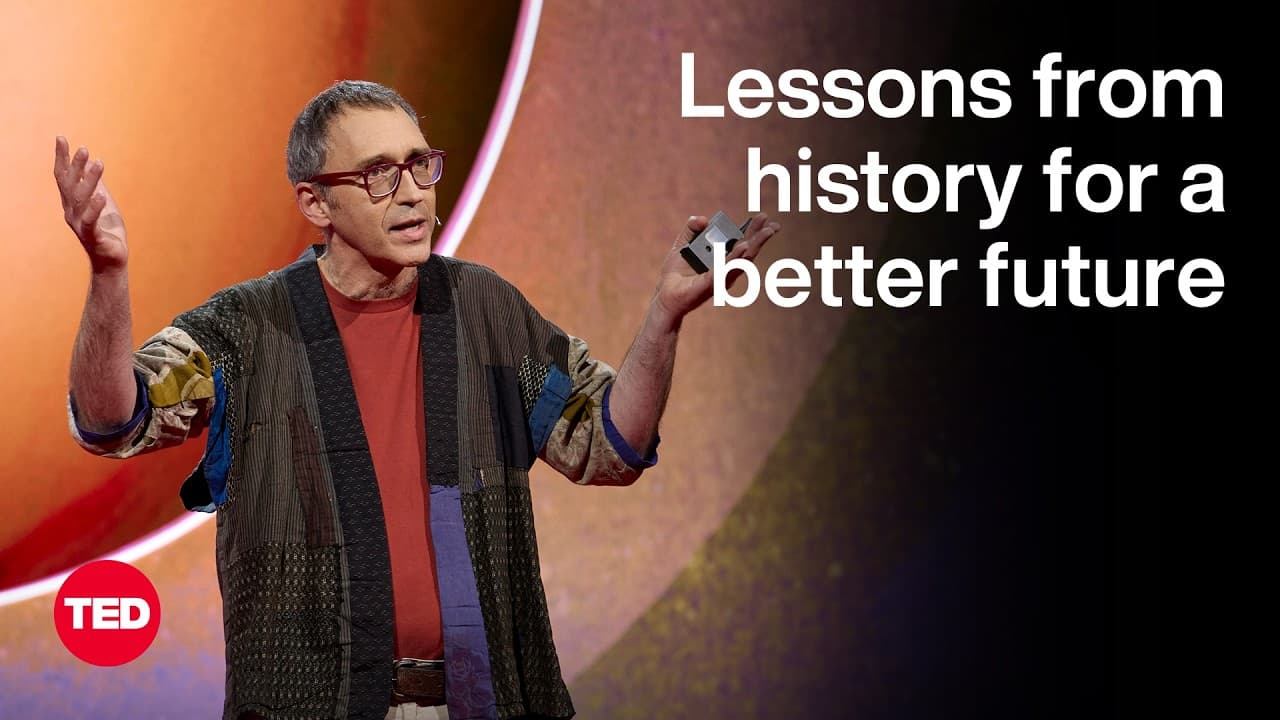
Lessons From History for a Better Future | Roman Krznaric | TED
TL;DR
Edo Japan exemplified a sustainable circular economy that offers valuable lessons for modern society.
Transcript
Imagine you're standing on the old, wooden Nihonbashi Bridge in the ancient Japanese city of Edo, now known as Tokyo. It's around 1750, in the era of the Tokugawa shoguns. People are chatting. Laborers are pushing cartloads of rice. Seafood traders are rushing across to the fish market. Now Edo wasn’t just remarkable for being a huge city of over a... Read More
Key Insights
- 💖 Edo Japan's sustainable practices show that resource scarcity can spark innovation in recycling and reuse long before modern sustainability became a global discourse.
- 😑 The flourishing of cultural and artistic expressions in Edo demonstrates that sustainability and cultural vitality can coexist, providing a model for today's economies.
- 🍔 Córdoba's convivencia serves as a historical reminder of the benefits of multicultural integration, urging modern societies to foster inclusive environments.
- 😑 The role of disruptive movements in shaping history underscores the necessity of radical activism to address entrenched systemic issues, advocating for immediate action against pressing challenges like climate change.
- 🦮 Learning from history can guide current policymakers, helping avoid repeating past mistakes while also drawing inspiration for progressive societal changes.
- 🧑🏫 Encouraging educators to teach applied history may equip future generations with the knowledge to implement sustainable practices learned from historical context.
- 💍 Engaging with historical examples can inspire modern solutions, highlighting the importance of community and collective action in overcoming challenges.
Install to Summarize YouTube Videos and Get Transcripts
Explore YouTube Video Summarizer or Get YouTube Transcript Extractor
Questions & Answers
Q: What elements characterized the circular economy of Edo Japan?
Edo Japan operated a circular economy where nearly everything was reused or recycled, due to resource scarcity caused by isolationist policies. Items like clothing were repurposed through generations until they could no longer be used, showcasing a deep cultural respect for materials and sustainability long before modern concepts emerged.
Q: How does the convivencia period in Córdoba provide hope for today's society?
The convivencia in Córdoba illustrates that diverse cultures can coexist peacefully, despite occasional tensions. This historical example encourages contemporary societies to embrace multiculturalism and work together, especially vital in addressing rising xenophobia and the upcoming challenges posed by environmental migration.
Q: How can disruptive movements change societal norms, as shown by historical context?
Historical disruptions, such as the Jamaica Slave Revolt, demonstrate that radical actions can shift societal norms and prompt legislative changes faster than gradual approaches. This legacy urges today's climate movements to act boldly, as they play a crucial role in raising awareness and forcing political action on urgent issues.
Q: What is 'temporal intelligence,' and why is it important for our future?
Temporal intelligence refers to the ability to consider both past experiences and future possibilities in decision-making. It is crucial in developing sustainable solutions to contemporary crises, allowing societies to learn from historical successes and failures to navigate today's complex socio-political landscape effectively.
Summary & Key Takeaways
-
Edo, Japan, during the Tokugawa era, exemplified a circular economy where resources were reused, repaired, and recycled, reflecting a high degree of environmental awareness and resource conservation amidst resource scarcity.
-
The historical interactions in Córdoba during the convivencia period illustrate how multicultural coexistence can thrive, emphasizing the importance of communal relationships in overcoming modern xenophobia and fostering societal resilience.
-
Disruptive historical movements, such as the Jamaica Slave Revolt, have consistently played a critical role in challenging the status quo, illustrating the potential of radical activism to catalyze significant change and urging contemporary movements to continue this legacy.
Read in Other Languages (beta)
Share This Summary 📚
Summarize YouTube Videos and Get Video Transcripts with 1-Click
Try YouTube Summary with ChatGPT & Claude or YouTube Transcript Generator
Explore More Summaries from TED 📚





Summarize YouTube Videos and Get Video Transcripts with 1-Click
Try YouTube Summary with ChatGPT & Claude or YouTube Transcript Generator