What Is Socialism and Its Key Concepts?
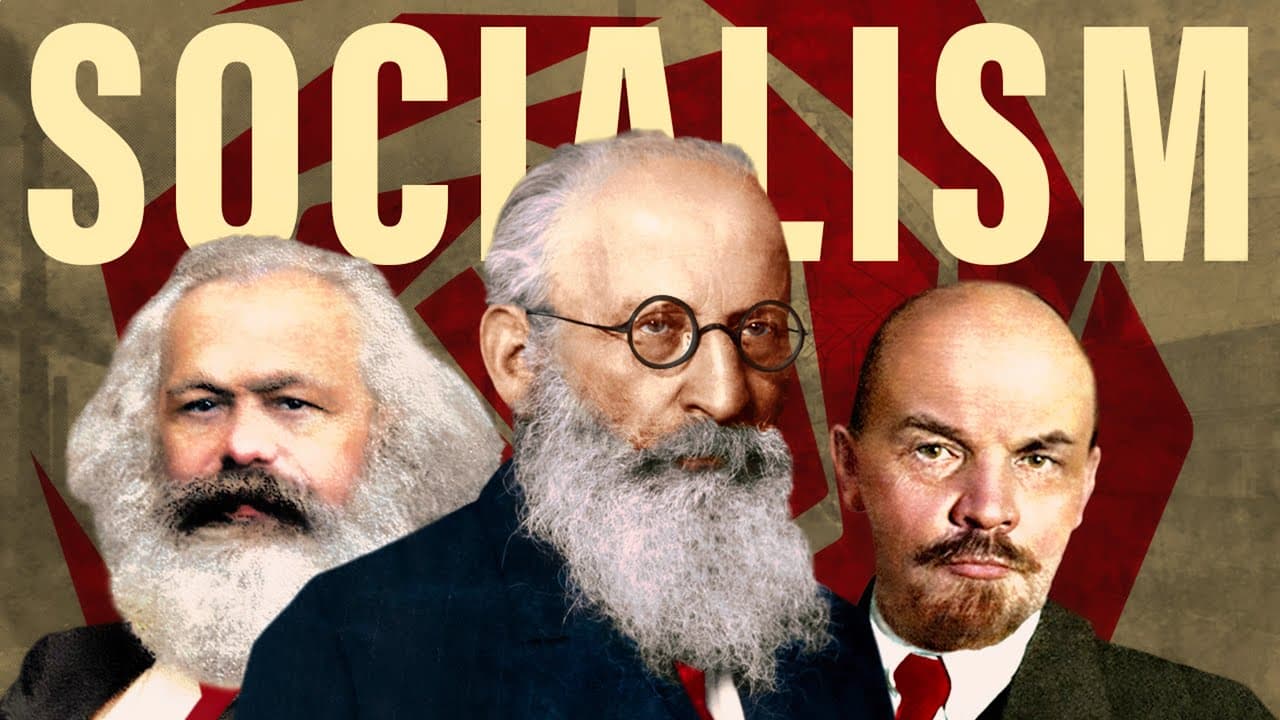
TL;DR
Socialism originated as a reaction against the inequalities of liberalism during the Industrial Revolution. Key figures like Marx introduced the idea of class struggle, predicting capitalism's fall and communism's rise, while debates on reformism versus revolution have shaped socialism's evolution. Today, democratic socialism seeks to achieve goals through gradual reforms within democratic systems.
Transcript
few ideas can polarize like socialism many see it as the path to freedom many others see it as the path to tyranny this video won't pick sides in that debate we're only here to answer the question what is it what is socialism many would say that the answer is simple and they'd open a dictionary and read a definition about socialism being the govern... Read More
Key Insights
- 🚨 Socialism emerged as a reaction against liberalism and the inequalities brought about by the industrial revolution.
- 💡 Early socialist thinkers proposed ideas like collective ownership and equalitarianism to address the negative effects of capitalism.
- 🍂 Karl Marx revolutionized socialism by combining it with Hegelian philosophy and emphasizing class conflict and the eventual fall of capitalism.
- 💠 The debate between reformism and revolution within socialism has shaped the development of socialist movements.
- 🉐 Democratic socialism gained popularity as socialists sought compromises and piecemeal reforms within democratic systems.
- ⌛ Socialist ideologies have evolved over time, with different interpretations and approaches to achieving equality and addressing socioeconomic issues.
- 🥅 Socialism is a complex and multifaceted political tradition, with various theories, strategies, and goals.
Install to Summarize YouTube Videos and Get Transcripts
Explore YouTube Video Summarizer or Get YouTube Transcript Extractor
Questions & Answers
Q: What are some key differences between liberalism and socialism?
Liberalism focuses on individual freedoms, property rights, and a free market economy, while socialism prioritizes equalitarianism, collective ownership, and addressing concentrations of economic power.
Q: How did early socialist thinkers like Saint-Simon and Fourier contribute to the development of socialism?
They critiqued unregulated capitalism and advocated for collective ownership and a more efficient organization of society to address inequality, inefficient production, and depressing work conditions.
Q: What was Karl Marx's contribution to socialism?
Marx combined socialism with Hegelian philosophy, emphasizing class conflict, the eventual fall of capitalism, and the rise of communism. His economic theory in "Capital" analyzed capitalism and predicted its inherent contradictions and demise.
Q: What is the difference between reformism and revolution within socialism?
Reformists believe in gradually implementing socialist policies through democratic means and working within the existing system, while revolutionaries argue for a violent overthrow of the bourgeoisie to establish a socialist society.
Q: How did democratic socialism differ from other socialist ideologies?
Democratic socialists aimed for compromises and gradual reforms within democratic systems, endorsing welfare programs, regulation of capitalism, and social policies to reduce inequality and address social issues.
Key Insights:
- Socialism emerged as a reaction against liberalism and the inequalities brought about by the industrial revolution.
- Early socialist thinkers proposed ideas like collective ownership and equalitarianism to address the negative effects of capitalism.
- Karl Marx revolutionized socialism by combining it with Hegelian philosophy and emphasizing class conflict and the eventual fall of capitalism.
- The debate between reformism and revolution within socialism has shaped the development of socialist movements.
- Democratic socialism gained popularity as socialists sought compromises and piecemeal reforms within democratic systems.
- Socialist ideologies have evolved over time, with different interpretations and approaches to achieving equality and addressing socioeconomic issues.
- Socialism is a complex and multifaceted political tradition, with various theories, strategies, and goals.
- The definition of socialism has evolved over time, and different socialist movements have emerged with differing priorities and strategies.
Summary & Key Takeaways
-
Socialism emerged as a political reaction against liberalism, specifically the inequalities and concentration of power brought about by the industrial revolution.
-
Early socialist thinkers like Saint-Simon, Fourier, and Owen proposed ideas to address the negative effects of capitalism, such as advocating for collective ownership, equalitarianism, and redistribution of wealth.
-
Karl Marx revolutionized socialism by combining it with Hegelian philosophy, focusing on class conflict, and predicting the eventual fall of capitalism and rise of communism.
-
The debate between reformism and revolution within socialism emerged, with figures like Bernstein advocating for gradual reforms within the existing system while Lenin promoted revolution as the necessary means to implement socialism.
-
Democratic socialism gained popularity as socialists aimed for compromises and piecemeal reforms within democratic systems, emphasizing welfare and social policies.
Read in Other Languages (beta)
Share This Summary 📚
Summarize YouTube Videos and Get Video Transcripts with 1-Click
Try YouTube Summary with ChatGPT & Claude or YouTube Transcript Generator
Explore More Summaries from Ryan Chapman 📚



Summarize YouTube Videos and Get Video Transcripts with 1-Click
Try YouTube Summary with ChatGPT & Claude or YouTube Transcript Generator