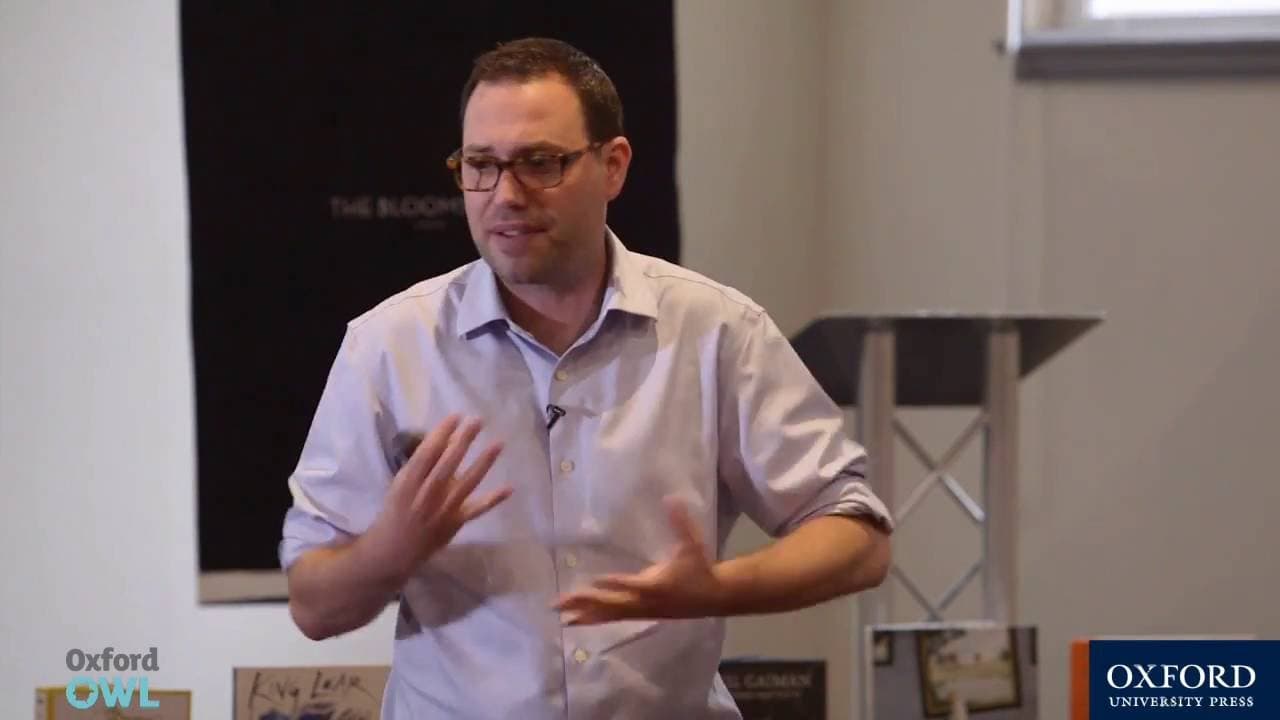
2016: Space for the Odyssey? - James Clements (Session)
TL;DR
Encouraging children to read challenging books expands their minds and sparks creativity.
Transcript
but the flowers to will airfare points you know some of the language in the book sounds really really challenging some of the books are quite tough we're going to introduce children to Lord of the Flies or to the call of the wild sometimes they're quite difficult but I would argue that one person is kind of difficult or too hard is another person's... Read More
Key Insights
- 🫠 Reading challenging literature enhances critical thinking skills and expands vocabulary.
- 😃 The joy of reading comes from exploring new worlds and perspectives through diverse books.
- 🫠 The National Curriculum emphasizes the importance of reading for pleasure and studying challenging literature.
- 💦 Teachers can create units of work centered around challenging books to engage students effectively.
- 💦 Shakespeare's works, like "Julius Caesar," can be made accessible for primary school students to appreciate language and storytelling.
- 🥰 Encouraging students to explore a range of literature broadens their understanding and fosters a love for reading.
- 💦 The process of writing, editing, and publishing work based on challenging books can boost student engagement and pride in their work.
Install to Summarize YouTube Videos and Get Transcripts
Explore YouTube Video Summarizer or Get YouTube Transcript Extractor
Questions & Answers
Q: Why is it important to introduce children to challenging literature?
Introducing children to challenging literature helps them develop critical thinking skills, expand their vocabulary, and explore new ideas and perspectives. It also fosters a love for reading and learning.
Q: How can teachers incorporate challenging books into their curriculum effectively?
Teachers can create units of work focused on specific challenging books, giving students time to delve deep into the text, analyze characters and themes, and engage in creative writing and discussions.
Q: What are the benefits of studying classic literature in schools?
Studying classic literature exposes students to timeless themes, complex characters, and rich language. It helps them develop a deeper appreciation for storytelling and language use.
Q: How can teachers make Shakespeare accessible to primary school students?
Teachers can choose age-appropriate plays like "Julius Caesar" to introduce students to Shakespeare. By focusing on engaging scenes and themes, children can appreciate the beauty of Shakespearean language.
Summary & Key Takeaways
-
Introducing children to challenging literature can activate different parts of their brains and enhance critical thinking skills.
-
The joy of reading lies in exploring new worlds and perspectives through literature, rather than sticking to relevant or easily accessible material.
-
The National Curriculum advocates for reading challenging books to improve English teaching and promote literacy.
Read in Other Languages (beta)
Share This Summary 📚
Summarize YouTube Videos and Get Video Transcripts with 1-Click
Try YouTube Summary with ChatGPT & Claude or YouTube Transcript Generator
Explore More Summaries from Oxford Education 📚


Summarize YouTube Videos and Get Video Transcripts with 1-Click
Try YouTube Summary with ChatGPT & Claude or YouTube Transcript Generator