Hannah Arendt on the nature of evil | Diana Walsh Pasulka and Lex Fridman
TL;DR
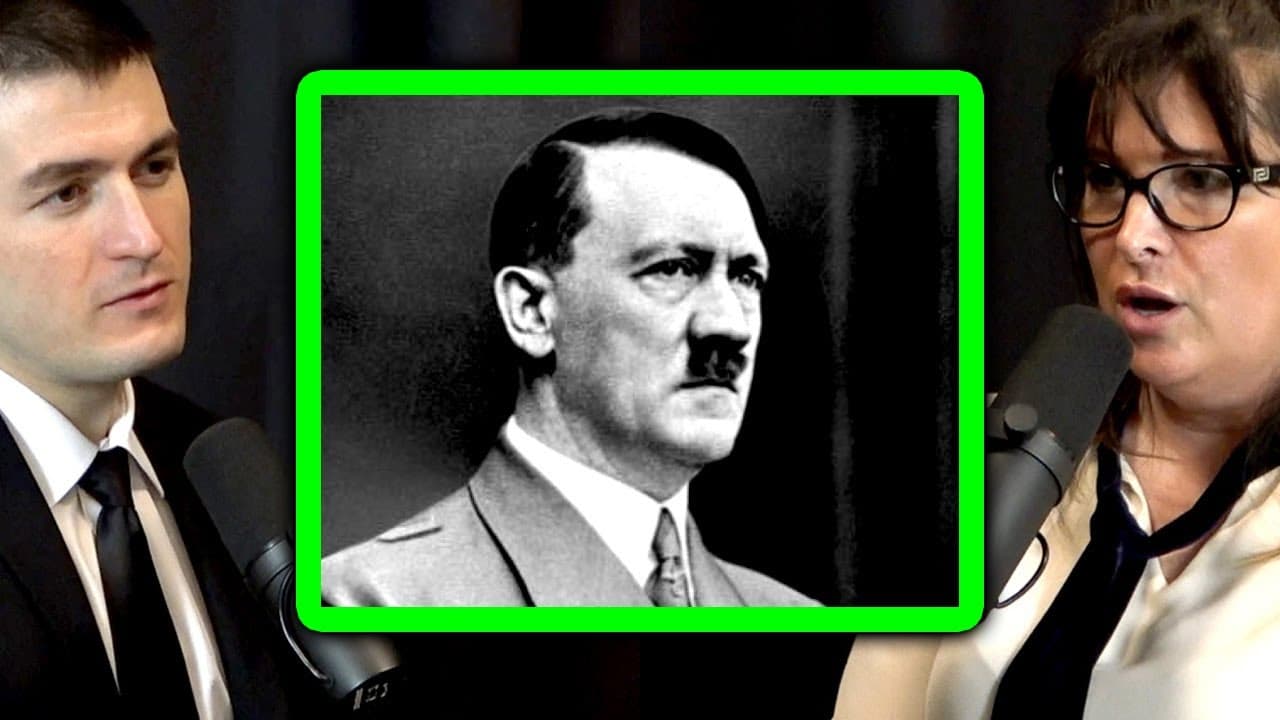
Philosopher Hannah Arendt's work explores the nature of evil, including her observations on Adolf Eichmann and the role of thoughtlessness in perpetrating evil acts.
Transcript
what other books yeah okay so hannah rent she is a philosopher that not a lot of people know about but she was a jewish woman during the holocaust and she was in turn interned at bergen-belsen which was uh basically auschwitz for women and she escaped she came to the united states and she had worked with heidegger even though he's supposed to be an... Read More
Key Insights
- 😈 Hannah Arendt, a philosopher and Holocaust survivor, writes about the complexity of evil and challenges the assumption that evil acts are solely the result of inherently evil individuals.
- 😒 Arendt's observations on Adolf Eichmann highlight the role of thoughtlessness and the use of stereotypes in perpetrating evil.
- 😪 Her exploration of the absence of conscience in evil-doers suggests that bad people may sleep well at night because they lack the internal struggle and moral questioning that comes with a conscience.
- 😈 Arendt's writings on evil and memes anticipate the modern phenomenon of memetic warfare and the ability of memes to sway populations.
Install to Summarize YouTube Videos and Get Transcripts
Explore YouTube Video Summarizer or Get YouTube Transcript Extractor
Questions & Answers
Q: Who is Hannah Arendt and what are her notable contributions to philosophy?
Hannah Arendt was a Jewish philosopher who survived the Holocaust and taught philosophy at Columbia University. She wrote "Eichmann in Jerusalem" and "The Life of the Mind," making astute observations about evil and the absence of conscience in perpetrators.
Q: What does Hannah Arendt mean by thoughtlessness and its role in evil acts?
Arendt suggests that thoughtlessness is not just a lack of thinking but also a distinct mindset that enables individuals to follow rules without considering the consequences or ethical implications of their actions. She believes this thoughtlessness is inherent in perpetrating evil acts.
Q: What is the controversy surrounding Hannah Arendt's work?
Some people find Arendt's work controversial because she argued that evil acts are often committed by regular people who follow rules without critically thinking. This perspective challenges the notion that evil is solely the result of inherently evil individuals or groups.
Q: How does Hannah Arendt connect memes and evil?
In "Eichmann in Jerusalem," Arendt argues that Adolf Eichmann used stereotypes and simplistic thinking, which can be likened to contemporary memes, to perpetrate evil acts. She suggests that these simplistic ideas can influence and manipulate entire populations.
Summary & Key Takeaways
-
Hannah Arendt, a Jewish woman and philosopher, survived internment in Bergen-Belsen during the Holocaust and later taught philosophy at Columbia University in the United States.
-
Arendt's book "Eichmann in Jerusalem" discusses her astute observation that Adolf Eichmann, a key figure in sending Jews to concentration camps, appeared thoughtless and used stereotypes like memes to perpetrate evil.
-
In "The Life of the Mind," Arendt delves into the question of why people do bad things, exploring the absence of conscience in those who commit evil acts.
Read in Other Languages (beta)
Share This Summary 📚
Summarize YouTube Videos and Get Video Transcripts with 1-Click
Try YouTube Summary with ChatGPT & Claude or YouTube Transcript Generator
Explore More Summaries from Lex Clips 📚



Summarize YouTube Videos and Get Video Transcripts with 1-Click
Try YouTube Summary with ChatGPT & Claude or YouTube Transcript Generator