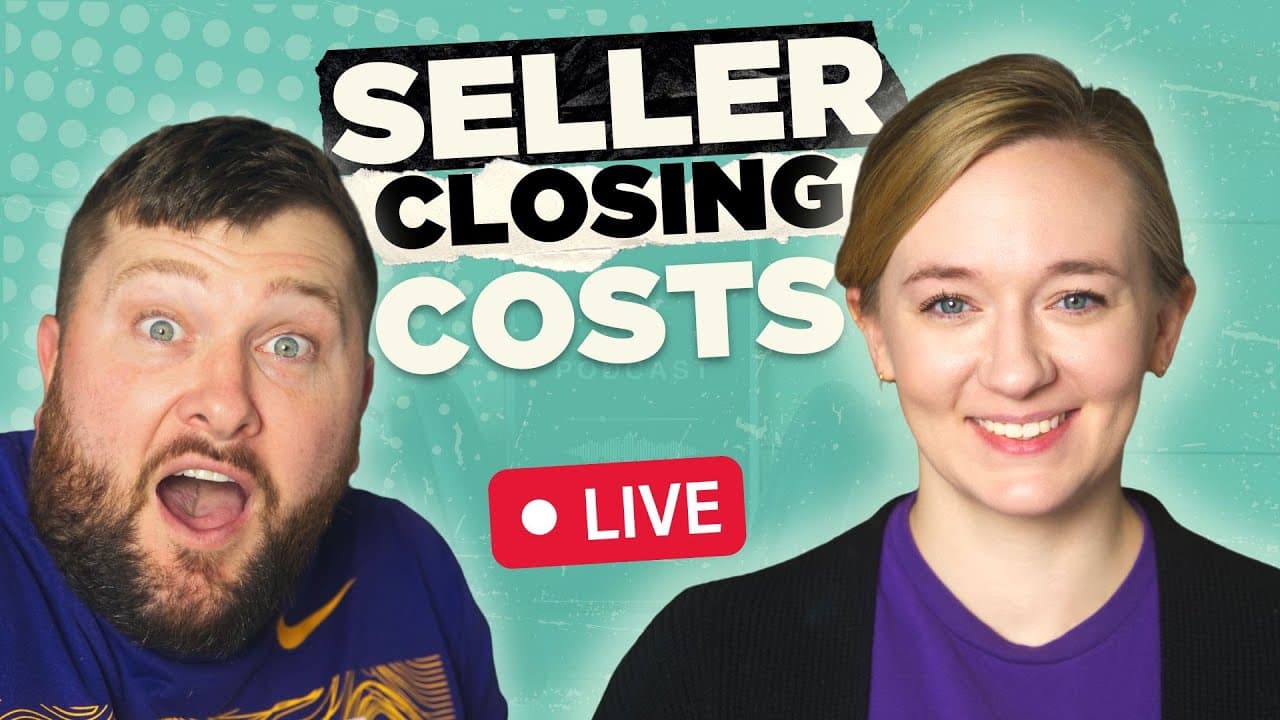
What Are The Closing Costs When Selling A House In North Carolina? LIVE.
TL;DR
Learn about the various seller closing costs in North Carolina, including deed preparation fees, prorated taxes, HOA costs, commissions, and more.
Transcript
are going on all right Tiff you are live for the first time first time very very long time we've done this before like once on our Channel or on someone else's I think you've done it one time but way way way way back yeah it's been a while yeah uh nice to see you all I'm Tiffany whoever I'm a real estate attorney in Mooresville North Carolina at Th... Read More
Key Insights
- 🇰🇵 Seller closing costs in North Carolina are outlined in paragraph 8 of the North Carolina standard offer to purchase.
- 🤱 Sellers may be responsible for deed preparation fees, prorated taxes, deferred or discounted tax repayments, conveyance fees, and more.
- 🤱 Sellers can negotiate to pay a portion of the buyer's closing costs, and may also be responsible for HOA fees, fees for repairs or improvements, and other miscellaneous fees.
- ❓ Real estate agent commissions are typically paid by the seller.
- 🇨🇷 Sellers should review the closing disclosure to see a breakdown of their closing costs and their proceeds from the sale.
- 😚 It is possible for sellers to have to bring money to closing if their closing costs exceed the proceeds from the sale.
- ✈️ Clapping after a routine flight landing is not necessary, unless there were extenuating circumstances during the flight.
Install to Summarize YouTube Videos and Get Transcripts
Explore YouTube Video Summarizer or Get YouTube Transcript Extractor
Questions & Answers
Q: What are some common seller closing costs in North Carolina?
Common seller closing costs in North Carolina include deed preparation fees, prorated taxes, deferred or discounted tax repayments, conveyance fees, HOA costs, and fees for negotiated repairs or improvements.
Q: Who pays the real estate agent commissions in a real estate transaction?
In a typical real estate transaction, the seller pays the real estate agent commissions. This is usually a percentage (such as 6%) of the sales price, which is split between the buyer's agent and the seller's agent.
Q: Can sellers negotiate to pay a portion of the buyer's closing costs?
Yes, sellers can negotiate to pay a portion of the buyer's closing costs. This should be specified in the contract and will be reflected in the closing disclosure.
Q: Are sellers ever required to bring money to closing?
While it doesn't happen often, there are cases where sellers may be required to bring money to closing to satisfy all their obligations. This can occur if the closing costs and commissions exceed the proceeds from the sale.
Summary & Key Takeaways
-
Seller closing costs in North Carolina are outlined in paragraph 8 of the North Carolina standard offer to purchase. These costs include deed preparation fees, prorated taxes, deferred or discounted tax repayments, conveyance fees, and more.
-
Sellers may also be responsible for paying a portion of the buyer's closing costs if negotiated in the contract.
-
Additional costs include HOA fees, fees for negotiated repairs or improvements, home warranties, and any fees not specifically required to be paid by the buyer.
Read in Other Languages (beta)
Share This Summary 📚
Summarize YouTube Videos and Get Video Transcripts with 1-Click
Try YouTube Summary with ChatGPT & Claude or YouTube Transcript Generator
Explore More Summaries from The Real Estate Lawyer 📚

Summarize YouTube Videos and Get Video Transcripts with 1-Click
Try YouTube Summary with ChatGPT & Claude or YouTube Transcript Generator