What Is Quantitative Easing and How Does It Work?
TL;DR
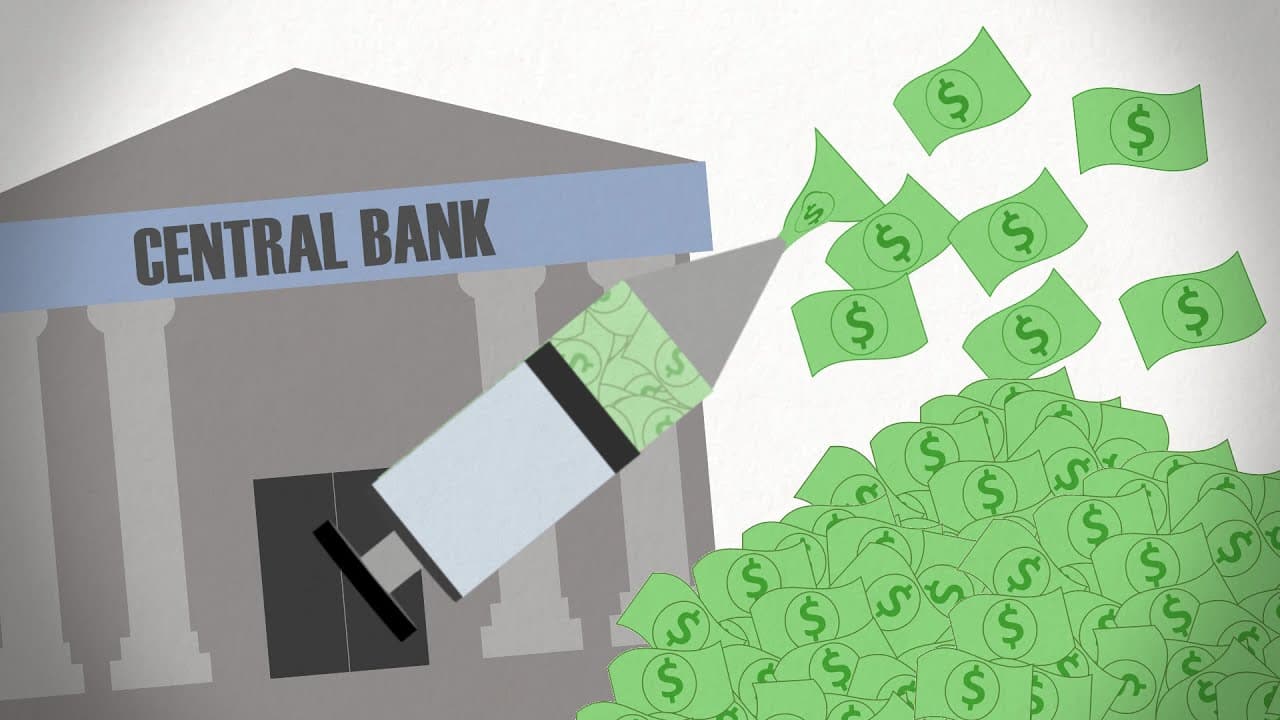
Quantitative easing (QE) is a monetary policy where central banks digitally create money to buy financial assets, primarily government bonds, to stimulate economic activity. The goal is to increase money supply, lower borrowing costs, and encourage lending, but it can also lead to inflation and may not guarantee business activity if economic confidence is low.
Transcript
this video is sponsored by skillshare go to skl.sh the plain bagel 5 to get a free two-month premium trial quantitative easing is something we've seen pop up around the world ever since the 2008 financial crisis the us uk eurozone and japan are just some of the countries that have implemented the unconventional monetary policy as a way of helping t... Read More
Key Insights
- 💵 Quantitative easing involves the central bank digitally creating money and using it to buy assets, mainly government bills and bonds.
- 💐 The main objective of quantitative easing is to lower borrowing costs, encourage lending, and stimulate economic activity.
- 🥺 QE can lead to inflation and may not guarantee increased business activity if confidence in the economy is lacking.
- ⌛ Timing the reversal of quantitative easing is crucial to avoid creating further economic problems.
- 🙈 Quantitative easing has been seen as beneficial for post-recession recovery, but its long-term impact is still uncertain.
- 😄 Central banks, such as the Federal Reserve, still hold a significant amount of assets acquired through quantitative easing programs.
- 👨💼 QE programs aim to support the economy and bring liquidity to businesses but require caution and careful management.
Install to Summarize YouTube Videos and Get Transcripts
Explore YouTube Video Summarizer or Get YouTube Transcript Extractor
Questions & Answers
Q: What is quantitative easing?
Quantitative easing is an unconventional monetary policy used by central banks to inject money into the economy by buying assets, mainly government bills and bonds.
Q: How does quantitative easing stimulate the economy?
By increasing the money supply, quantitative easing aims to lower borrowing costs, encourage lending, and stimulate economic activity.
Q: What are the risks and downsides of quantitative easing?
Quantitative easing can lead to inflation if not managed properly, and there is a risk that the injected money may not be used for business activity if banks and businesses lack confidence in the economy. Additionally, the timing of reversing the program is crucial to avoid worsening economic conditions.
Q: Has quantitative easing been successful in stimulating economies?
Quantitative easing has been generally seen as helpful in the post-2008 recovery, but countries have yet to fully reverse the programs they implemented. Its long-term impact and effectiveness are still subjects of debate.
Summary & Key Takeaways
-
Quantitative easing (QE) is a policy used by central banks around the world, such as the Federal Reserve and Bank of Canada, to boost business activity during economic slowdowns.
-
Instead of physically printing money, QE involves the central bank digitally creating money and using it to buy assets, mainly government bills and bonds.
-
The increased money supply from QE aims to lower borrowing costs, encourage lending, and stimulate economic growth.
Read in Other Languages (beta)
Share This Summary 📚
Summarize YouTube Videos and Get Video Transcripts with 1-Click
Try YouTube Summary with ChatGPT & Claude or YouTube Transcript Generator
Explore More Summaries from The Plain Bagel 📚





Summarize YouTube Videos and Get Video Transcripts with 1-Click
Try YouTube Summary with ChatGPT & Claude or YouTube Transcript Generator