8. Natural Language Processing (NLP), Part 2
TL;DR
Recent advancements in natural language processing have led to the development of powerful models like BERT and GPT-2, which have significantly improved language understanding and text generation capabilities.
Transcript
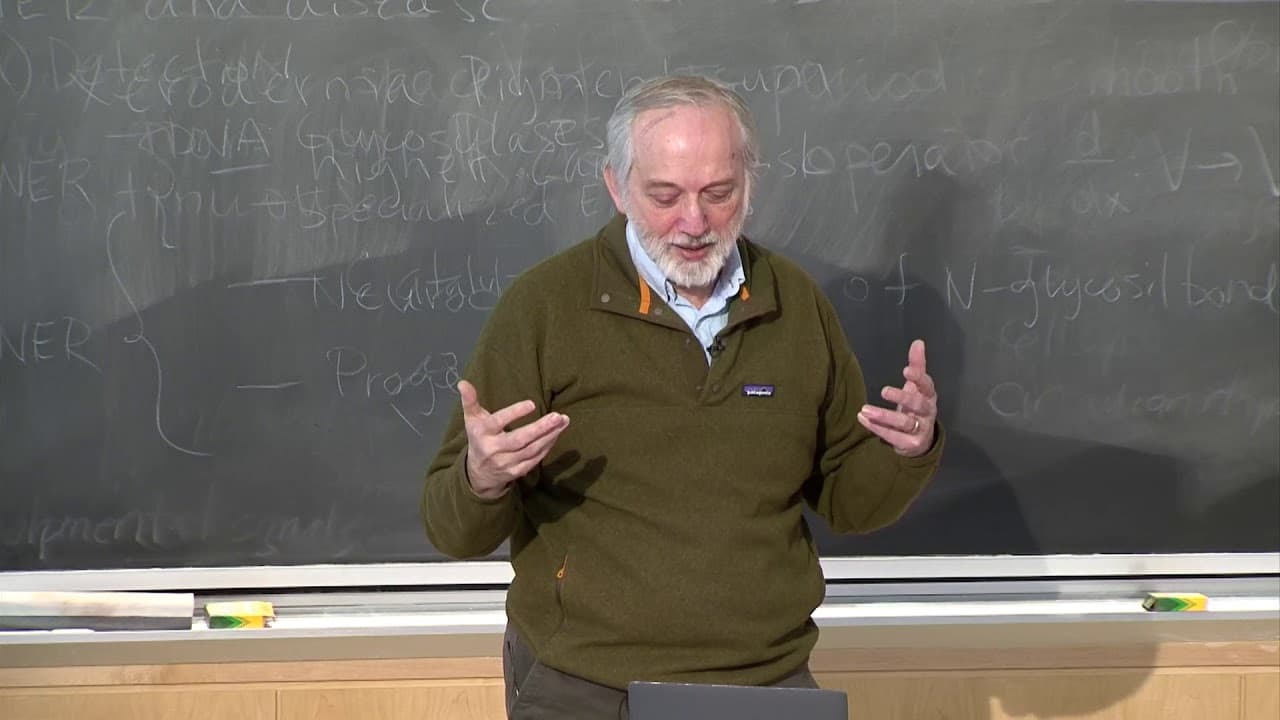
PETER SZOLOVITS: All right. Let's get started. Good afternoon. So last time, I started talking about the use of natural language processing to process clinical data. And things went a little bit slowly. And so we didn't get through a lot of the material. I'm going to try to rush a bit more today. And as a result, I have a lot of stuff to cover. So ... Read More
Key Insights
- ❓ NLP has evolved tremendously in recent years with the introduction of models like Word2Vec, ELMo, BERT, and GPT-2.
- ❓ The Transformer architecture, used in BERT and GPT-2, has become the preferred choice for many NLP tasks due to its ability to capture context and dependencies effectively.
Install to Summarize YouTube Videos and Get Transcripts
Explore YouTube Video Summarizer or Get YouTube Transcript Extractor
Questions & Answers
Q: How does BERT improve language understanding and generation?
BERT incorporates a bi-directional attention mechanism that allows it to consider the entire context of a word or sentence, resulting in more accurate meaning representation and contextual understanding. This enhanced understanding enables BERT to generate more coherent and contextually relevant text.
Q: What benefits does the Transformer architecture offer over traditional LSTM models?
The Transformer model eliminates the need for recurrent connections, making it faster to train and allowing for parallel processing. Additionally, the attention mechanism in Transformers captures global dependencies between words more effectively, improving performance on various NLP tasks.
Q: How is the GPT-2 model different from previous language models like Word2Vec and ELMo?
GPT-2 is a more advanced model that uses a Transformer architecture to generate highly coherent text. It has been trained on a large corpus of data and has shown improved performance compared to previous models in language generation tasks.
Q: How are these NLP models trained and what data sources are used?
NLP models are typically trained on large corpora of text data, such as Wikipedia articles, news articles, and other publicly available sources. The models learn to predict the next word or sentence given the preceding context, allowing them to capture semantic and syntactic relationships in language.
Summary & Key Takeaways
-
NLP techniques like Word2Vec, ELMo, and BERT have revolutionized language modeling by capturing word and sentence meaning in vector representations.
-
The Transformer model, used in BERT and GPT-2, has shown superior performance on various NLP tasks and has significantly advanced the field.
-
These models have achieved state-of-the-art results on tasks such as translation, text classification, and text generation, outperforming previous methods.
Read in Other Languages (beta)
Share This Summary 📚
Summarize YouTube Videos and Get Video Transcripts with 1-Click
Try YouTube Summary with ChatGPT & Claude or YouTube Transcript Generator
Explore More Summaries from MIT OpenCourseWare 📚



Summarize YouTube Videos and Get Video Transcripts with 1-Click
Try YouTube Summary with ChatGPT & Claude or YouTube Transcript Generator