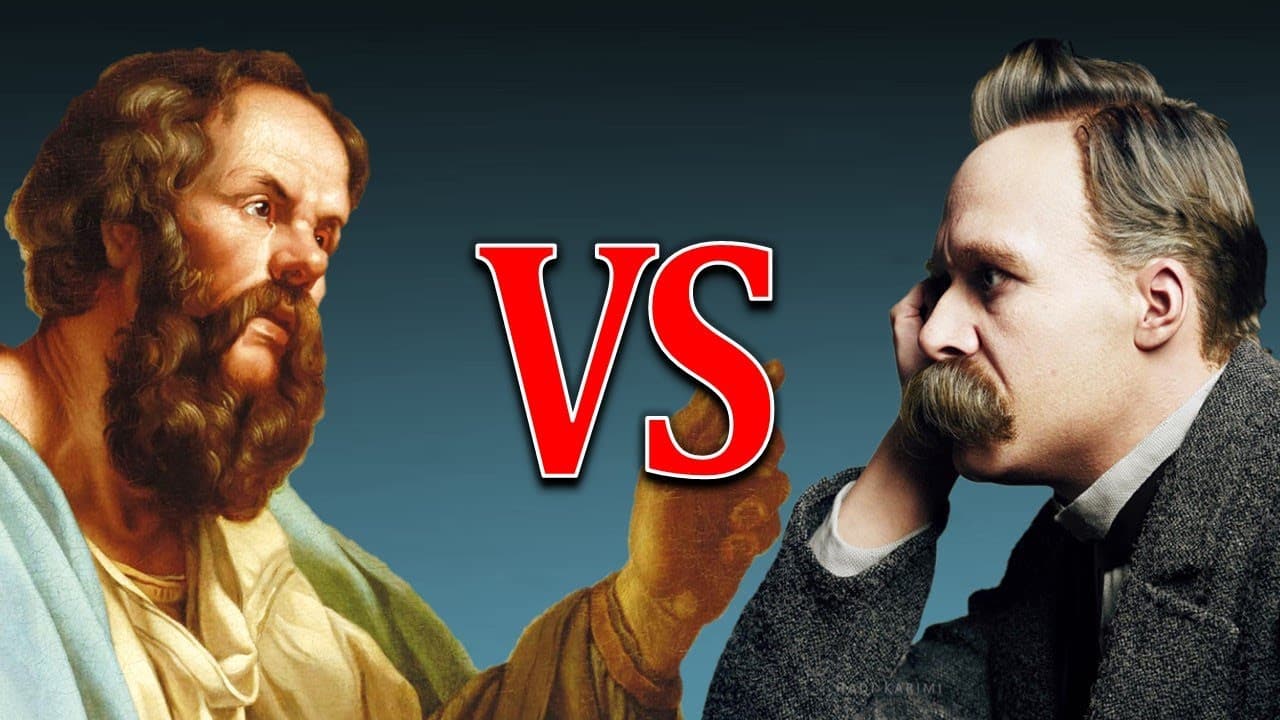
Socrates was the Death of Greek Culture, says Nietzsche
TL;DR
Nietzsche viewed Socrates as a deconstructive force in Greek culture.
Transcript
Most know Socrates as the celebrated thinker who birthed Western philosophy. But Friedrich Nietzsche called him “anti-Greek” and a “symptom of decline” — a critic who deconstructed Greek culture… What was Nietzche talking about? 🧵 Socrates is widely regarded as a crucial figure in Western civilization. Rising to fame in the 5th century BC, he ... Read More
Key Insights
- Socrates is celebrated for his contributions to Western philosophy, emphasizing rationality and intellectual self-reflection as paths to happiness and virtue.
- Nietzsche criticized Socrates for deconstructing Greek culture, viewing his rationalism as a symptom of cultural decline and a detractor from traditional values.
- Nietzsche saw Socrates’ rationalism as anti-creative, hindering progress by prioritizing intellect over passion and instinct, which are vital for cultural vitality.
- Socrates' rationalism replaced the Greek values of myth and enchantment with a focus on reason, which Nietzsche considered a disease rather than a return to virtue.
- Nietzsche argued that Socrates' approach was a necessary response to the decadence of ancient Athens, though it ultimately contributed to cultural erosion.
- Oswald Spengler and other thinkers echoed Nietzsche’s view, suggesting that rationalism leads to cultural shifts and erosion of traditions.
- The Enlightenment mirrored Socratic rationalism, emphasizing reason and empiricism, which led to the questioning and discarding of traditional Western cultural foundations.
- John Glubb highlighted the dangers of intellectualism, suggesting that intellectual debates lead to division and inaction, undermining societal stability and progress.
Install to Summarize YouTube Videos and Get Transcripts
Explore YouTube Video Summarizer or Get YouTube Transcript Extractor
Questions & Answers
Q: What was Socrates' main philosophical contribution according to the transcript?
Socrates' main philosophical contribution was his emphasis on rationality and intellectual self-reflection as essential components of a virtuous life. He believed that the pursuit of 'eudaimonia,' or happiness, motivated all human action, and that virtue and knowledge were linked to this ultimate state of happiness. Socrates prioritized intellect over irrational beliefs and passions, advocating that understanding one's desires and ignoring unexplained impulses were key to living a good life.
Q: Why did Nietzsche criticize Socrates according to the transcript?
Nietzsche criticized Socrates because he believed Socrates' rationalism deconstructed Greek culture by undermining its traditional values of myth, passion, and enchantment. Nietzsche viewed Socratic rationalism as a symptom of cultural decline, arguing that it placed intellect above all other values, which hindered cultural vitality and progress. Nietzsche saw Socrates as a cultural corrupter whose rational approach contributed to the erosion of Greek cultural foundations.
Q: How did Nietzsche view the role of Socrates in Athenian society?
Nietzsche viewed Socrates as a necessary response to the decadence of ancient Athens, arguing that his rationalism was a final answer to the problem of cultural degeneracy. However, Nietzsche believed that while Socrates provided a solution, it was one that deconstructed the Greek soul rather than preserving it. Socrates' emphasis on reason over traditional values was seen by Nietzsche as a cultural shift that contributed to the decline of Athenian society.
Q: What similarities did Nietzsche draw between Socratic rationalism and the Enlightenment?
Nietzsche drew parallels between Socratic rationalism and the Enlightenment, noting that both movements emphasized reason and empiricism, leading to the questioning and eventual discarding of traditional cultural foundations. The Enlightenment, like Socratic philosophy, focused on building knowledge from first principles, which undermined Western cultural traditions, including its Christian moral foundations. This rationalist approach led to significant cultural and political shifts, such as the revolutions of the 18th and 19th centuries.
Q: What was Oswald Spengler's view on Socrates' impact on Greek culture?
Oswald Spengler, influenced by Nietzsche, viewed Socrates as a major force in the cultural shift of the antique world. He believed that Socrates represented an archetypal figure who heralded a major change in civilization. Spengler argued that Socratic rationalism led to the transvaluation of classical existence ideals, eroding cultural traditions and values. He saw Socratic philosophy as a rebellion against the intuitive and mythic aspects of Greek culture, contributing to its decline.
Q: How did John Glubb describe the impact of intellectualism on society?
John Glubb described intellectualism as a dangerous by-product of the 'Age of Intellect,' which he believed led to division and inaction within society. He argued that intellectual debates rarely lead to agreement, fostering an environment of endless discussion and argument. This focus on intellectualism, according to Glubb, undermines the power of action and threatens societal stability, as it creates a false impression that mental cleverness alone can solve societal problems without the need for self-sacrifice and dedication.
Q: What role did Socrates play in the shift away from mythic heroism according to the transcript?
According to the transcript, Socrates played a pivotal role in shifting away from mythic heroism towards a focus on rational contemplation and debate. His philosophy marked a departure from the traditional values of heroism, which emphasized deeds and action. Socrates' rationalism prioritized intellect and self-reflection, leading to the erosion of the unsophisticated, self-dedicated hero-myth that had previously been central to Greek culture. This shift contributed to the cultural and intellectual transformation of Athens.
Q: What was Nietzsche's view on the necessity of Socratic rationalism in ancient Athens?
Nietzsche believed that Socratic rationalism was a necessary response to the critical condition of ancient Athens, which he viewed as already in decline. He argued that the fanaticism with which Greek thought embraced reason indicated a dire situation where society faced the choice between perishing or becoming absurdly rational. Socratic rationalism was seen as a last resort, a means of self-preservation for a decadent culture, even though it ultimately contributed to the deconstruction of Greek cultural values.
Summary & Key Takeaways
-
Socrates is known for his rational philosophy, which emphasized intellectual self-reflection as essential for a virtuous life. However, Friedrich Nietzsche criticized Socrates for undermining Greek culture by prioritizing reason over traditional values of myth and passion, viewing this as a sign of cultural decline.
-
Nietzsche saw Socrates' rationalism as anti-creative, arguing that it hindered cultural progress by deconstructing foundational values. He believed that Socrates' focus on intellect over instinct and passion contributed to the decline of Athenian society, a view shared by other philosophers like Oswald Spengler.
-
The Enlightenment, with its emphasis on rationalism and empiricism, mirrored Socratic philosophy, leading to the questioning of traditional Western culture, including its Christian moral foundations. John Glubb warned that intellectualism fosters division and inaction, threatening societal stability and progress.
Read in Other Languages (beta)
Share This Summary 📚
Summarize YouTube Videos and Get Video Transcripts with 1-Click
Try YouTube Summary with ChatGPT & Claude or YouTube Transcript Generator
Explore More Summaries from ThinkingWest 📚

Summarize YouTube Videos and Get Video Transcripts with 1-Click
Try YouTube Summary with ChatGPT & Claude or YouTube Transcript Generator