Christiane Nord (translation scholar)

TL;DR
Theoretical application of translation theory, emphasizing the importance of loyalty and practicality in translator training.
Transcript
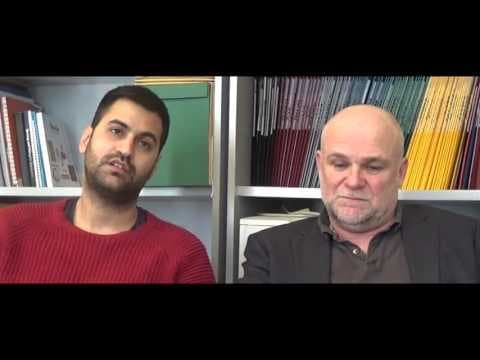
this is the 23rd of May 2006 we're in terracotta with Cristiano not Christiana you're noted as translator trainer and theorist within the school is known as scope of tailfin does that label fit to you are you a theorist of the functionalist because of course I'm drawing on Scopus theory but I'm not really a theorist myself I'm a person who applies ... Read More
Key Insights
- 🎯 Loyalty in translation involves considering the expectations of both target text receivers and source text authors while maintaining professional ethics.
- 🪡 Practical application of translation theory is essential for translator training, focusing on client needs and ethical principles.
- 🫡 Translation work should align with client expectations while respecting personal and professional ethics.
- 💦 Theoretical ideas in translation studies should be empirically tested to validate their applicability in practical translation work.
- 😀 Translation studies in Germany face challenges due to its historical connection with philological studies, requiring recognition as a separate discipline.
- ❓ The interviewee's approach combines practical experience with theoretical knowledge, emphasizing the importance of applying translation theory in training.
- 💦 Translator training should focus on preparing students for the real-world challenges of translation work, integrating client needs and ethical considerations.
Install to Summarize YouTube Videos and Get Transcripts
Explore YouTube Video Summarizer or Get YouTube Transcript Extractor
Questions & Answers
Q: How does loyalty play a role in translation according to the interviewee?
Loyalty in translation involves considering the expectations of the target text receivers and the source text author while maintaining professional ethics and personal integrity.
Q: What advice does the interviewee give to young translators?
The interviewee advises young translators to align their translation work with client needs, ensuring that the translated text achieves the intended purposes while respecting ethical considerations.
Q: Why does the interviewee emphasize the functional viewpoint in translation?
The interviewee believes in understanding client needs to produce translations that align with professional ethics and translator's personal viewpoints, emphasizing practical application over theoretical abstraction.
Q: How does the interviewee view the development of translation theory in Germany?
The interviewee notes challenges in recognizing translation theory as a discipline in Germany due to its historical connection with philological studies, emphasizing the need for empirical research in translation studies.
Summary & Key Takeaways
-
The interviewee is a translator, trainer, and functionalist, emphasizing the application of translation theory rather than just theorizing.
-
Loyalty in translation is essential for considering the expectations of target text receivers while maintaining professional ethics.
-
Practical translation work is highlighted, urging students to align their translations with client needs and their own ethical principles.
Read in Other Languages (beta)
Share This Summary 📚
Summarize YouTube Videos and Get Video Transcripts with 1-Click
Try YouTube Summary with ChatGPT & Claude or YouTube Transcript Generator
Explore More Summaries from Anthony Pym 📚
Summarize YouTube Videos and Get Video Transcripts with 1-Click
Try YouTube Summary with ChatGPT & Claude or YouTube Transcript Generator