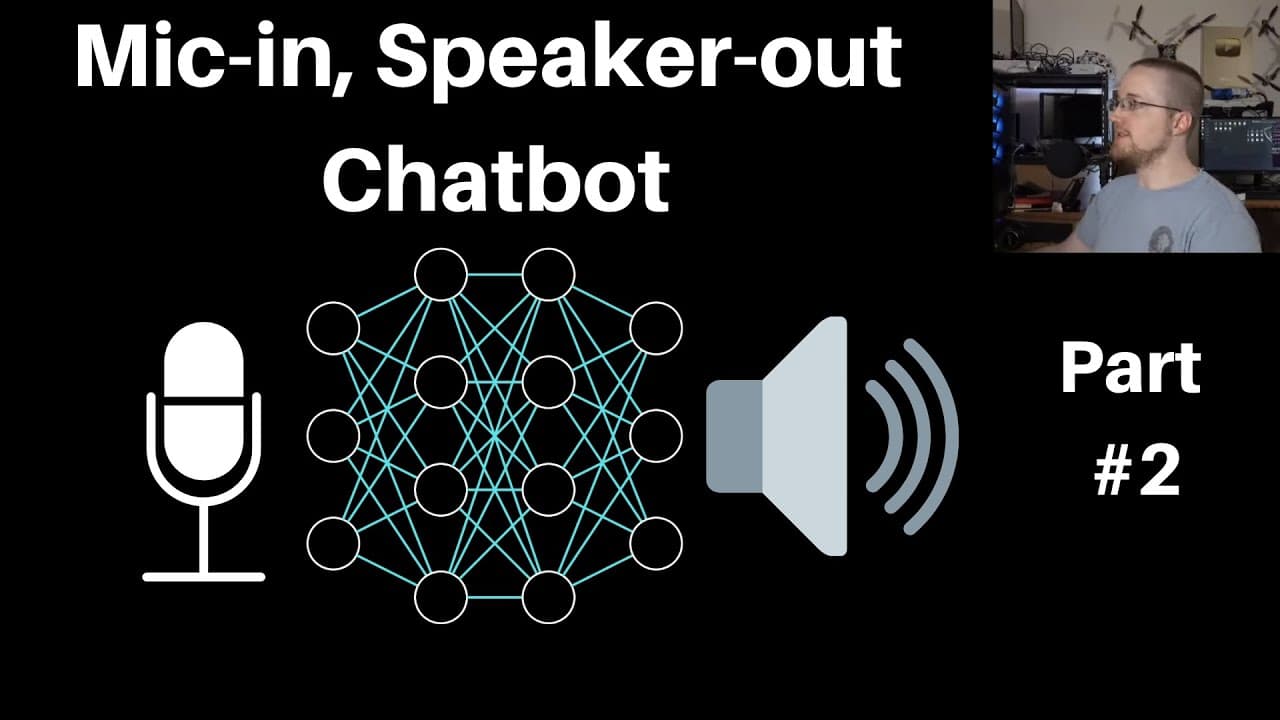
P.2 Chatbot with Mic input/Speaker output using Python, Jarvis, and DialoGPT
TL;DR
Implementing text-to-speech feature in a chatbot for interactive conversations, exploring voice responses with potential future developments.
Transcript
hey how are you doing i'm doing great thanks for asking what's the weather like cloudy with a chance of rain that sounds very boring it's not boring it's just not as fun what do you think of this current chatbot i think they were all right what is a chap lot a lot of chat welcome everybody to another centex tankers episode where we left off we were... Read More
Key Insights
- 😯 Implementing text-to-speech in chatbots enhances user interaction with voice-based responses.
- 😯 Technical challenges like audio loopback and streaming audio for text-to-speech require consideration for smoother user experience.
- 😯 Future developments could include integrating diverse voice options and exploring faster text-to-speech solutions like Google Text-to-Speech.
- 👤 Expanding chatbot capabilities to platforms like Discord for voice interactions can offer a unique user engagement experience.
- 👤 Rapid advancements in technology have made real-time voice interactions in chatbots more feasible and user-friendly.
- 😯 Consideration for disabling microphone input while the chatbot provides text-to-speech responses for enhanced audio quality.
- 😯 Text-to-speech features can lead to broader applications beyond chatbots, including voice channels in social platforms for interactive user experiences.
Install to Summarize YouTube Videos and Get Transcripts
Explore YouTube Video Summarizer or Get YouTube Transcript Extractor
Questions & Answers
Q: How is the transition from text-based chatbot interactions to incorporating text-to-speech improving user engagement?
By adding text-to-speech functionality, users can now have more interactive conversations, enhancing user experience and engagement with the chatbot.
Q: What voice options are currently available for text-to-speech in the developed chatbot?
The chatbot currently offers LJ Speech as the default voice option for text-to-speech, with potential future integrations for additional voices under consideration.
Q: What challenges are faced in implementing text-to-speech features in the chatbot, as mentioned in the video?
Challenges like audio loopback while recording and streaming output through the microphone pose technical hurdles in ensuring a seamless text-to-speech experience.
Q: How does the narrator plan on improving the chatbot's text-to-speech functionality in future iterations?
Future enhancements may include integrating multiple voices, exploring faster text-to-speech alternatives like Google Text-to-Speech, and possibly extending the chatbot to voice channels in platforms like Discord for broader user interaction.
Summary & Key Takeaways
-
Progressing from text-based interactions to incorporating text-to-speech functionality in a chatbot.
-
Exploring the use of jarvis for text-to-speech with initial voice options limitations.
-
Discussing the potential of integrating multiple voices and applications like Discord for enhanced user experience.
Read in Other Languages (beta)
Share This Summary 📚
Summarize YouTube Videos and Get Video Transcripts with 1-Click
Try YouTube Summary with ChatGPT & Claude or YouTube Transcript Generator
Explore More Summaries from sentdex 📚

Summarize YouTube Videos and Get Video Transcripts with 1-Click
Try YouTube Summary with ChatGPT & Claude or YouTube Transcript Generator