Learn European Portuguese While Baking Folar! Easter in Portugal [Portuguese with Subtitles]
TL;DR
Learn to bake Portuguese folar with baker Carolina.
Transcript
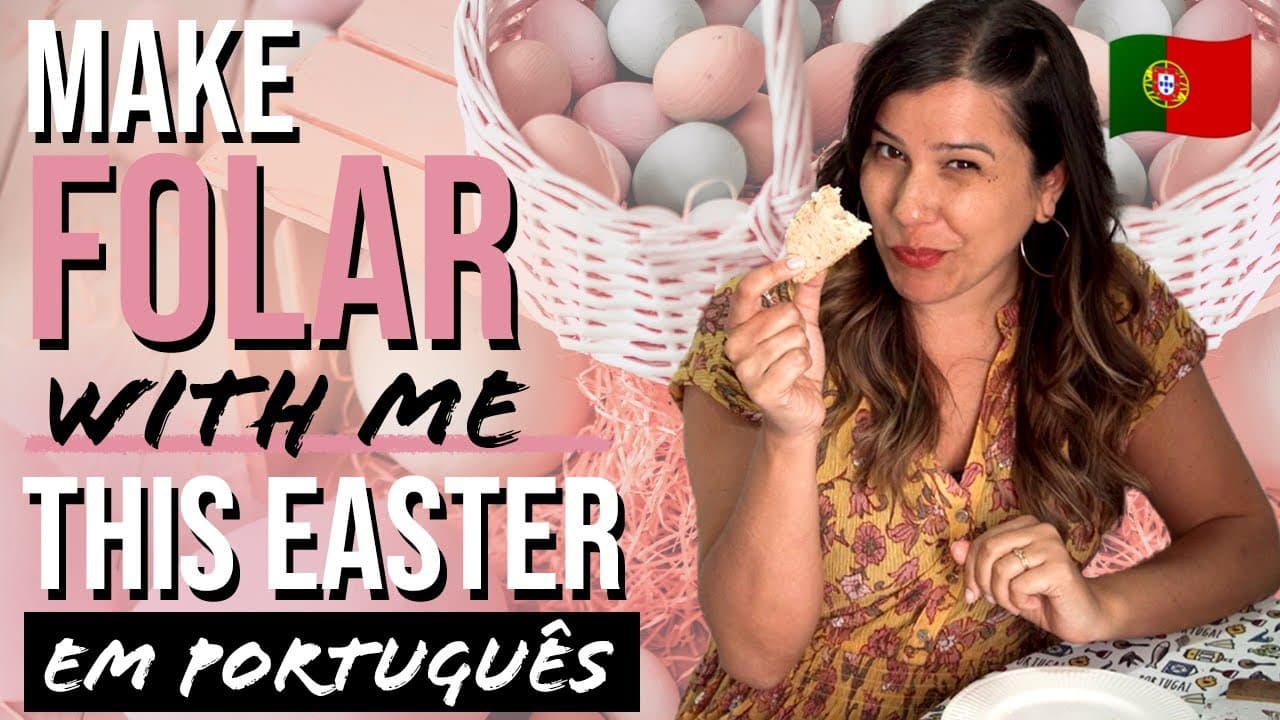
What do Portuguese people eat during Easter? In today's video, I have the answer! Special events always require special food. So, during Easter, Portuguese people eat folar. So I invited Carolina, a baker, to show you how to make this traditional, seasonal bread. This video is 100% in Portuguese, so click the settings if you need subtitles in Portu... Read More
Key Insights
- Folar is a traditional Portuguese bread enjoyed during Easter, with variations depending on the region.
- Carolina, a baker and food engineering student, guides viewers through the folar-making process.
- The folar recipe includes ingredients like flour, yellow sugar, butter, lard, whole milk, water, and spices like anise and cinnamon.
- Lard is a traditional fat used in Portuguese cooking, easily found in supermarkets and has a long shelf life.
- The folar dough requires kneading until it reaches 'ponto de véu,' indicating the right elasticity.
- After proofing, the dough is braided and formed into a circle, then proofed again before baking.
- The folar is brushed with egg and sprinkled with a special sugar for shine and crunchiness before baking.
- Folar is typically served with coffee, tea, or milk due to its drier texture.
Install to Summarize YouTube Videos and Get Transcripts
Explore YouTube Video Summarizer or Get YouTube Transcript Extractor
Questions & Answers
Q: What is folar and when is it typically eaten?
Folar is a traditional Portuguese bread that is typically eaten during Easter. It is a seasonal pastry that comes in various regional variations across Portugal. Folar is characterized by its rich flavors, often incorporating spices such as anise and cinnamon, and is a staple on Easter Sunday tables.
Q: Who is Carolina and what role does she play in the video?
Carolina is a baker featured in the video who guides viewers through the process of making folar. She is also a food engineering student and runs an online bakery called 'O Grão de Cacau.' Carolina provides expertise in baking and demonstrates the step-by-step method to prepare this traditional Portuguese bread.
Q: What ingredients are needed to make folar?
To make folar, the ingredients required include flour, yellow sugar, butter, lard, whole milk, water, half an egg, anise, cinnamon, and a pinch of salt. These ingredients are combined and kneaded to form the dough, which is then proofed, braided, and baked to create the final product.
Q: What is 'ponto de véu' and why is it important in making folar?
'Ponto de véu' refers to the point at which the dough is elastic enough to be stretched thinly without tearing, almost allowing light to pass through. Achieving this texture is crucial in making folar as it indicates that the dough has been kneaded sufficiently and is ready for proofing and shaping.
Q: How is folar traditionally shaped before baking?
Traditionally, folar is shaped by dividing the dough into three equal parts, rolling them into strands, and then braiding them together. The braided dough is formed into a circle, resembling a braided wreath. This shape is then proofed again before being brushed with egg and sprinkled with sugar for baking.
Q: What special sugar is used on folar, and what is its purpose?
The special sugar used on folar is known as 'açúcar prelado' or 'sugar nº10.' It is a thicker sugar that does not melt in the oven, providing extra crunchiness and texture to the folar. This sugar is typically found in baking or cake design stores and is used to enhance the visual appeal and taste of the pastry.
Q: What are common beverages to pair with folar?
Folar, being a drier type of cake, is commonly paired with beverages such as coffee, tea, or milk. These drinks complement the texture of folar, making it a delightful experience during Easter celebrations or any time it is enjoyed.
Q: What additional resources does the video offer for learning Portuguese?
The video offers additional resources for learning Portuguese through links to free lessons and guides. These include a free Portuguese lesson for beginners and a pronunciation guide with tips to improve European Portuguese pronunciation. The host also provides links to follow Carolina and explore more Portuguese language content.
Summary & Key Takeaways
-
In this video, viewers learn to make folar, a traditional Portuguese Easter bread, with the help of baker Carolina. The recipe features ingredients like flour, yellow sugar, and spices. The dough is kneaded, proofed, braided, and baked, resulting in a delicious pastry.
-
Carolina explains the use of traditional ingredients such as lard and special sugar for folar. She demonstrates kneading techniques to achieve the right dough texture and gives tips on proofing and baking for the best results.
-
The video, conducted entirely in Portuguese, offers subtitles for non-native speakers. It encourages viewers to try the recipe at home and enjoy the folar with coffee or tea. The host also promotes additional Portuguese language resources.
Read in Other Languages (beta)
Share This Summary 📚
Summarize YouTube Videos and Get Video Transcripts with 1-Click
Try YouTube Summary with ChatGPT & Claude or YouTube Transcript Generator
Explore More Summaries from Talk the Streets 📚
![Practice Portuguese with Mixologist Fábio Guerreiro! [English & Portuguese Subtitles] thumbnail](/_next/image?url=https%3A%2F%2Fi.ytimg.com%2Fvi%2F1-T2PNWuiWY%2Fhqdefault.jpg&w=750&q=75)





Summarize YouTube Videos and Get Video Transcripts with 1-Click
Try YouTube Summary with ChatGPT & Claude or YouTube Transcript Generator