A Filmmaker + a Therapist on People-Pleasing | TED Intersections
TL;DR
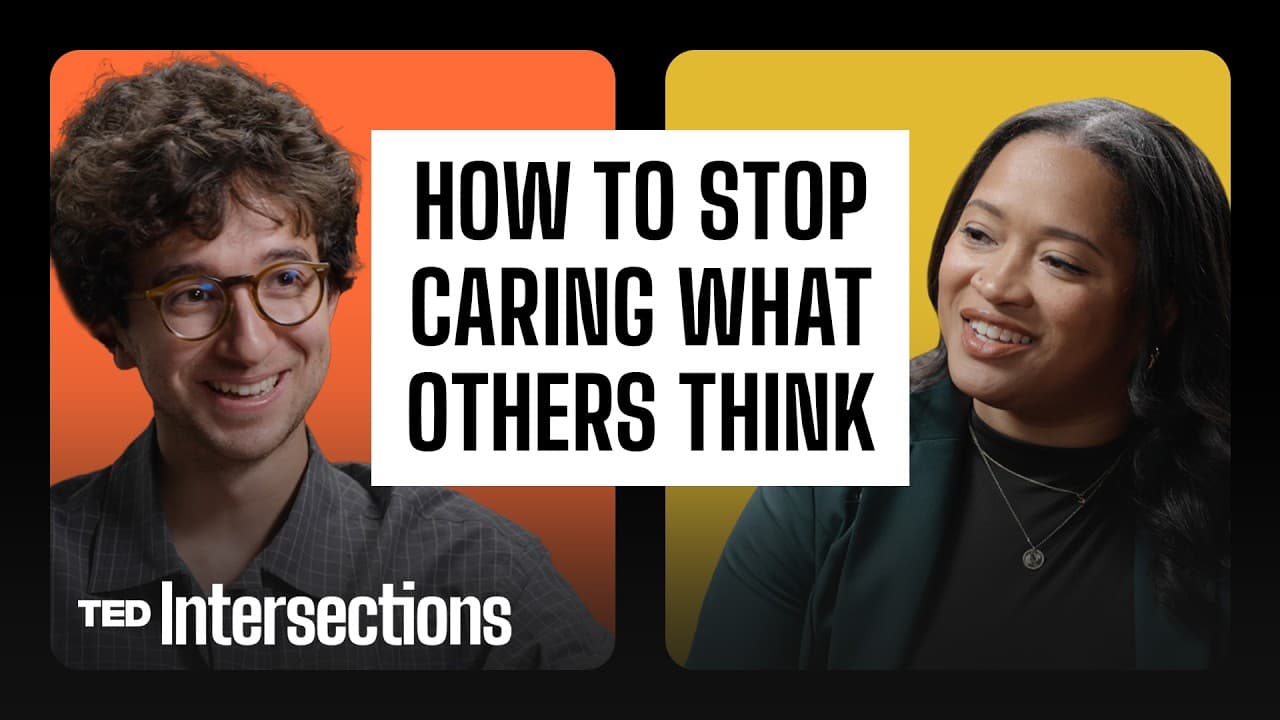
A filmmaker and therapist discuss overcoming people-pleasing and embracing self-awareness.
Transcript
Baron Ryan: I respect my dad's opinion a lot, and so oftentimes I won't call him for advice because I'm scared -- Stephanie R. Yates-Anyabwile: That I'm wrong. BR: That I'm wrong, and because I respect it so much that I know there's something inside that says he is right no matter what. But I think one of the wisest things we can do is not listen ... Read More
Key Insights
- Both speakers acknowledge their struggles with people-pleasing and the fear of rejection, highlighting its roots in personal relationships and upbringing.
- Awareness of people-pleasing tendencies is the first step toward addressing them, but it requires ongoing effort to change behavior.
- The conversation emphasizes the importance of resilience and opening up to others, even if it means facing potential rejection.
- Social media and public opinion play significant roles in shaping self-perception, with both positive and negative feedback impacting self-worth.
- The speakers discuss the importance of balancing respect for elders' opinions with personal discovery and learning from mistakes.
- Relationship dynamics often involve unrealistic expectations, and open communication is crucial to avoid projecting fantasies onto partners.
- The speakers explore the idea that a little fantasy in relationships might be necessary, but too much honesty can be detrimental.
- The discussion includes a hypothetical scenario about a lie detector test for couples, exploring the balance between honesty and fantasy in relationships.
Install to Summarize YouTube Videos and Get Transcripts
Explore YouTube Video Summarizer or Get YouTube Transcript Extractor
Questions & Answers
Q: How do the speakers view their own people-pleasing tendencies?
Both Baron Ryan and Stephanie R. Yates-Anyabwile acknowledge their struggles with people-pleasing. Baron admits to often avoiding confrontation due to fear of rejection, while Stephanie realized her tendencies through comparing herself to others. They both recognize the need for self-awareness and intentional efforts to overcome these habits.
Q: What role does social media play in self-perception according to the speakers?
The speakers discuss how social media can significantly impact self-perception, with both positive and negative feedback affecting one's self-worth. Baron likens opinions and comments to sugar, cautioning against taking too much of either. They emphasize the importance of not letting social media dictate one's self-esteem.
Q: How do the speakers suggest balancing respect for elders' opinions with personal discovery?
The speakers suggest that while respecting elders' opinions is important, personal discovery and learning from mistakes are equally valuable. Baron highlights the wisdom in not listening too closely to elders, as it allows for personal growth through experience. They advocate for a balance between seeking advice and making independent decisions.
Q: What is the importance of open communication in relationships according to the discussion?
Open communication is deemed crucial in relationships to avoid projecting unrealistic expectations onto partners. The speakers highlight the need for honesty about personal needs and desires, encouraging couples to negotiate and adapt to changing circumstances. They stress that avoiding difficult conversations can lead to long-term dissatisfaction.
Q: How do the speakers view the role of fantasy in relationships?
The speakers explore the idea that a little fantasy might be necessary for relationships to thrive. While honesty is important, they caution that too much can be detrimental. They suggest that maintaining some level of fantasy allows partners to navigate the complexities of relationships without overwhelming each other with harsh truths.
Q: What hypothetical scenario do the speakers discuss regarding honesty in relationships?
The speakers discuss a hypothetical scenario where couples must take a 100% accurate lie detector test to get married. The test asks intrusive questions, revealing harsh truths that could damage relationships. This scenario examines the balance between honesty and fantasy, questioning whether too much truth can hinder relationship success.
Q: How do the speakers address the impact of public opinion on personal relationships?
The speakers acknowledge that public opinion, particularly on social media, can heavily influence personal relationships. They discuss the need to balance the weight given to positive and negative opinions, suggesting that too much focus on either can skew one's self-perception and affect relationship dynamics.
Q: What personal experiences do the speakers share about seeking parental approval?
Both speakers share experiences of seeking parental approval, with Stephanie emphasizing her desire for her father's pride and Baron discussing his reluctance to seek advice from his father due to fear of being wrong. They reflect on the impact of parental approval on their self-esteem and decision-making processes.
Summary & Key Takeaways
-
Baron Ryan and Stephanie R. Yates-Anyabwile explore people-pleasing tendencies, emphasizing the importance of self-awareness and resilience in overcoming the fear of rejection. They discuss how personal relationships and social media influence self-perception, and the need for balance between respecting elders' opinions and personal discovery.
-
The conversation highlights the role of open communication in relationships, cautioning against projecting fantasies onto partners. The speakers touch on the necessity of a little fantasy in relationships, while acknowledging that too much honesty can be harmful. They consider the impact of public opinion on self-worth and the challenges of navigating social media feedback.
-
Ryan and Yates-Anyabwile discuss a hypothetical scenario involving a lie detector test for couples, examining the balance between honesty and fantasy in maintaining healthy relationships. They conclude that while some fantasy is necessary, open communication and self-awareness are key to overcoming people-pleasing and fostering genuine connections.
Read in Other Languages (beta)
Share This Summary 📚
Summarize YouTube Videos and Get Video Transcripts with 1-Click
Try YouTube Summary with ChatGPT & Claude or YouTube Transcript Generator
Explore More Summaries from TED 📚






Summarize YouTube Videos and Get Video Transcripts with 1-Click
Try YouTube Summary with ChatGPT & Claude or YouTube Transcript Generator