The Closest Spacecraft to the Sun on This Week @NASA – November 2, 2018
TL;DR
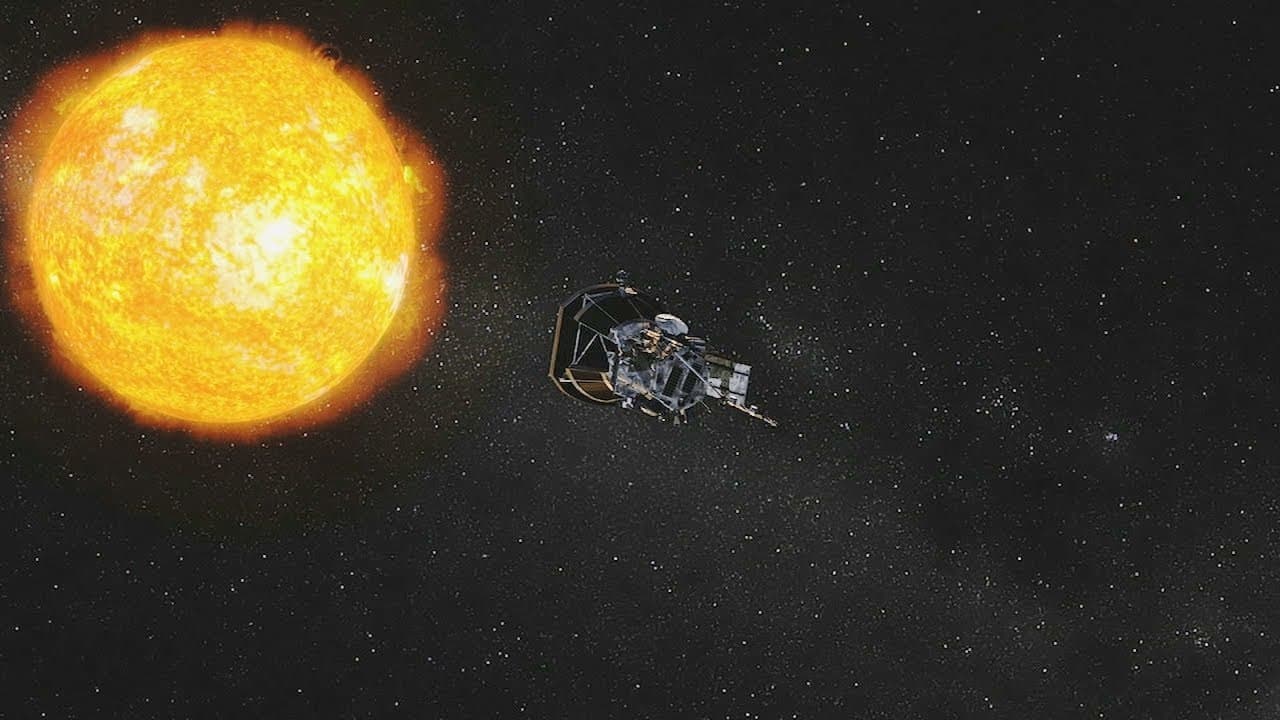
NASA's Parker Solar Probe sets a new record for closest approach to the Sun, the Kepler space telescope ends its mission after discovering over 2,600 planets, and the InSight mission to Mars is set to land soon.
Transcript
A new record for our mission to the Sun … The end of an era for a prolific planet hunter … And our next mission to Mars is closing in on its destination … a few of the stories to tell you about – This Week at NASA! Our Parker Solar Probe is the new record holder for closest approach to the Sun by a human-made object. According to calculations by th... Read More
Key Insights
- 👾 The Parker Solar Probe has broken a long-standing record for closeness to the Sun, showcasing the advancement in space exploration technology.
- 👾 The retirement of the Kepler space telescope marks the end of a successful mission, revolutionizing our understanding of exoplanets.
- 🎟️ Dawn's mission highlights the ability of spacecraft to explore multiple celestial bodies, expanding our knowledge of our solar system.
- 🥹 The InSight mission to Mars holds immense potential for unraveling the mysteries of planetary formation and seismic activity.
- 👱 NASA's collaboration with industry, academia, and the FAA in testing urban air mobility showcases the agency's commitment to shaping future transportation systems.
- ✈️ The wind tunnel testing of the X-59 Quiet SuperSonic Technology X-plane demonstrates NASA's efforts in developing supersonic flight technologies.
Install to Summarize YouTube Videos and Get Transcripts
Explore YouTube Video Summarizer or Get YouTube Transcript Extractor
Questions & Answers
Q: What record did the Parker Solar Probe break, and what is its expected distance from the Sun's surface in 2024?
The Parker Solar Probe broke the record for the closest approach to the Sun by a human-made object. By 2024, it is expected to be just 3.83 million miles from the Sun's surface.
Q: How many planets did the Kepler space telescope discover, and what will happen to it now?
The Kepler space telescope discovered over 2,600 planets during its mission, revealing that there are more planets than stars in our galaxy. It will be retired and placed in a safe orbit away from Earth.
Q: Which celestial bodies did NASA's Dawn spacecraft explore, and why did its mission come to an end?
Dawn explored two destinations beyond Earth - Vesta and Ceres, the dwarf planet it is currently orbiting. Its mission ended because it ran out of fuel necessary for orienting itself in space.
Q: What is the purpose of the upcoming InSight mission to Mars, and when is it expected to land?
The InSight mission aims to study marsquakes and other activity deep below the Martian surface, providing insights into the formation of rocky planets like Earth. It is scheduled to land on Mars on November 26.
Summary & Key Takeaways
-
The Parker Solar Probe has become the human-made object closest to the Sun, surpassing the previous record set by the Helios 2 spacecraft in 1976.
-
The Kepler space telescope, after discovering more planets than stars in our galaxy, is being retired and placed in a safe orbit away from Earth.
-
NASA's Dawn spacecraft, which explored Vesta and Ceres, has come to an end due to fuel depletion and will remain in orbit around Ceres for at least 20 years.
-
The InSight mission, scheduled to land on Mars on November 26, aims to study the planet's deep interior and provide insights into the formation of rocky planets like Earth.
Read in Other Languages (beta)
Share This Summary 📚
Summarize YouTube Videos and Get Video Transcripts with 1-Click
Try YouTube Summary with ChatGPT & Claude or YouTube Transcript Generator
Explore More Summaries from NASA 📚

Summarize YouTube Videos and Get Video Transcripts with 1-Click
Try YouTube Summary with ChatGPT & Claude or YouTube Transcript Generator