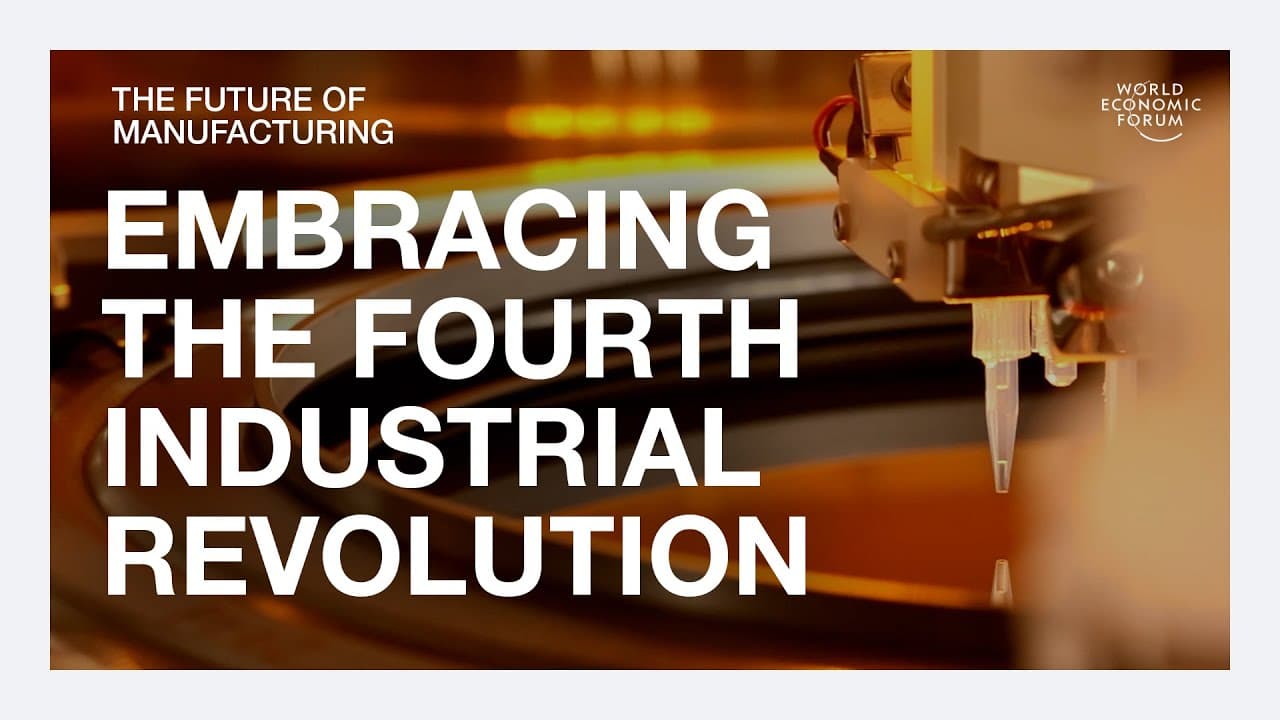
The Future Of Manufacturing | Ep 1 | Francisco Betti: The Fourth Industrial Revolution
TL;DR
Global manufacturing faces challenges from geopolitics, climate change, and the Fourth Industrial Revolution, requiring collaboration for sustainable and inclusive growth.
Transcript
The size of the challenges that we are facing today in manufacturing and across value chains is forcing companies and governments to work more closely together. Some of the recipes that have worked in the past, may not work in a context in which manufacturing has been disrupted by geopolitics, climate change and the evolution of the Fourth Industri... Read More
Key Insights
- 😀 Global manufacturing faces challenges from geopolitics, climate change, and the Fourth Industrial Revolution.
- ❓ Workforce engagement and upskilling are crucial for sustainable growth in the manufacturing sector.
- 🌐 Scaling technology adoption across supply networks is essential for addressing global challenges.
- 🤩 Collaboration between companies, governments, and global stakeholders is key to overcoming manufacturing challenges.
- 🪛 Initiatives like the Global Lighthouse Network and Smart Industry Readiness Index aim to drive innovation and sustainability in manufacturing.
- 🌐 The future of manufacturing requires a global community effort to tackle challenges collectively.
- 🪡 Companies need to focus on sustainability, innovation, and inclusivity in their production processes.
Install to Summarize YouTube Videos and Get Transcripts
Explore YouTube Video Summarizer or Get YouTube Transcript Extractor
Questions & Answers
Q: What are some challenges that global manufacturing faces today?
Global manufacturing is challenged by disruptions from geopolitics, climate change, and the Fourth Industrial Revolution, necessitating collaboration and innovation to address these issues.
Q: Why is workforce engagement and upskilling important in the manufacturing sector?
Workforce engagement, upskilling, and reskilling are crucial to make manufacturing more appealing to new generations and ensure sustainable growth in the sector.
Q: How can companies scale the adoption of technology in manufacturing?
Companies can scale technology adoption by expanding beyond specific cases at the factory level and implementing new solutions across their supply networks and functions like procurement and HR.
Q: Why is collaboration key in addressing global manufacturing challenges?
Collaboration is essential as global challenges impact everyone, and bringing together businesses, governments, academia, and civil society can lead to innovative solutions for the future of manufacturing.
Summary & Key Takeaways
-
Collaboration between companies and governments is vital for overcoming challenges in manufacturing caused by geopolitics, climate change, and the Fourth Industrial Revolution.
-
The future of manufacturing involves upskilling, reskilling, and making the sector appealing to new generations for sustainable growth.
-
Scaling technology adoption across supply networks and collaborating globally is crucial for addressing global manufacturing challenges.
Read in Other Languages (beta)
Share This Summary 📚
Summarize YouTube Videos and Get Video Transcripts with 1-Click
Try YouTube Summary with ChatGPT & Claude or YouTube Transcript Generator
Explore More Summaries from World Economic Forum 📚
Summarize YouTube Videos and Get Video Transcripts with 1-Click
Try YouTube Summary with ChatGPT & Claude or YouTube Transcript Generator