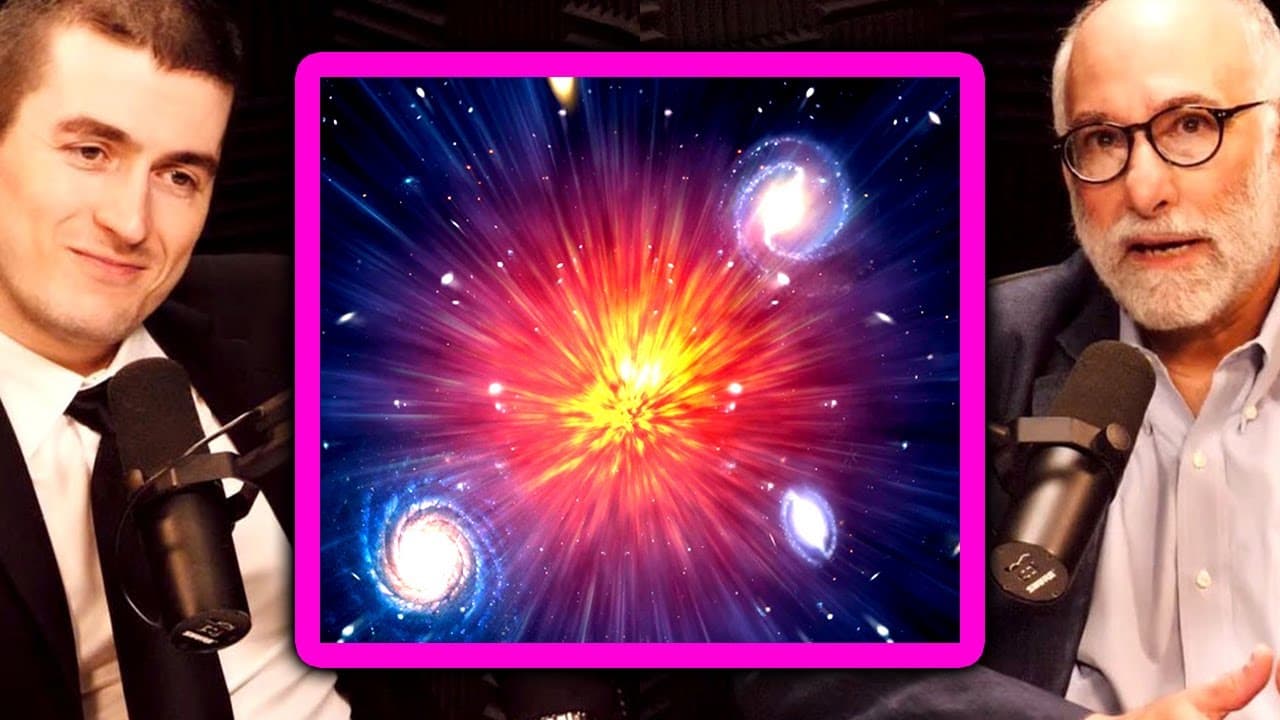
Theories of everything: Can humans fully solve physics? | Jed Buchwald and Lex Fridman
TL;DR
Exploring the concept of the theory of everything in physics and its limitations in understanding the complexities of the world.
Transcript
in physics there's a sense once you get to the theory of everything you've understood everything but there's a very deep sense in which you've actually understood not very much at all you've understood at that particular level how things work but you don't understand how the abstractions on top of abstractions form all the way to the chemistry to t... Read More
Key Insights
- ❓ The theory of everything in physics provides a framework for understanding the fundamental workings of the universe.
- 🚨 However, it fails to account for the abstractions that emerge from these fundamental principles.
- 🔬 Manipulating and probing nature through experimental science is essential to unraveling its mysteries.
- 🫚 The concept of the theory of everything has historical roots in ancient discussions about the nature of the world.
- 🖐️ Alchemy, as an early form of experimental science, laid the foundation for the pursuit of a theory of everything.
- 🌍 The belief in the applicability of artificial structures to understanding the natural world emerged in the 1500s.
- 🔬 Experimental science involves manipulating nature and convincing others of the authenticity of observations.
Install to Summarize YouTube Videos and Get Transcripts
Explore YouTube Video Summarizer or Get YouTube Transcript Extractor
Questions & Answers
Q: What is the theory of everything in physics?
The theory of everything in physics is a concept that seeks to elucidate the fundamental workings of the universe, encompassing all physical phenomena and explaining their interconnections.
Q: How does the theory of everything fall short in understanding complex abstractions?
While the theory of everything may explain the underlying principles of the universe, it fails to comprehend the higher-level abstractions that emerge, such as chemistry, human cognition, and societal structures.
Q: When did the manipulation of nature through experimental science become widely accepted?
The manipulation of nature through experimental science, which is fundamental to uncovering insights, gained traction in the 1500s after being pioneered by alchemists.
Q: What distinguishes the experimental approach from observational science in understanding nature?
The experimental approach involves actively probing and manipulating nature to gain insights, whereas observational science primarily focuses on studying and observing nature without interference.
Summary & Key Takeaways
-
The theory of everything in physics aims to explain how all aspects of the universe work but falls short in understanding complex abstractions.
-
Physics and chemistry have been instrumental in manipulating and probing nature to gain insights, leading to the development of the theory of everything.
-
The concept of the theory of everything has its roots in ancient discussions about the nature of the world but gained prominence in the 17th century.
Read in Other Languages (beta)
Share This Summary 📚
Summarize YouTube Videos and Get Video Transcripts with 1-Click
Try YouTube Summary with ChatGPT & Claude or YouTube Transcript Generator
Explore More Summaries from Lex Clips 📚





Summarize YouTube Videos and Get Video Transcripts with 1-Click
Try YouTube Summary with ChatGPT & Claude or YouTube Transcript Generator