Constructing a Personal Media Day: Switching Between Work and Play on a Laptop Computer
TL;DR
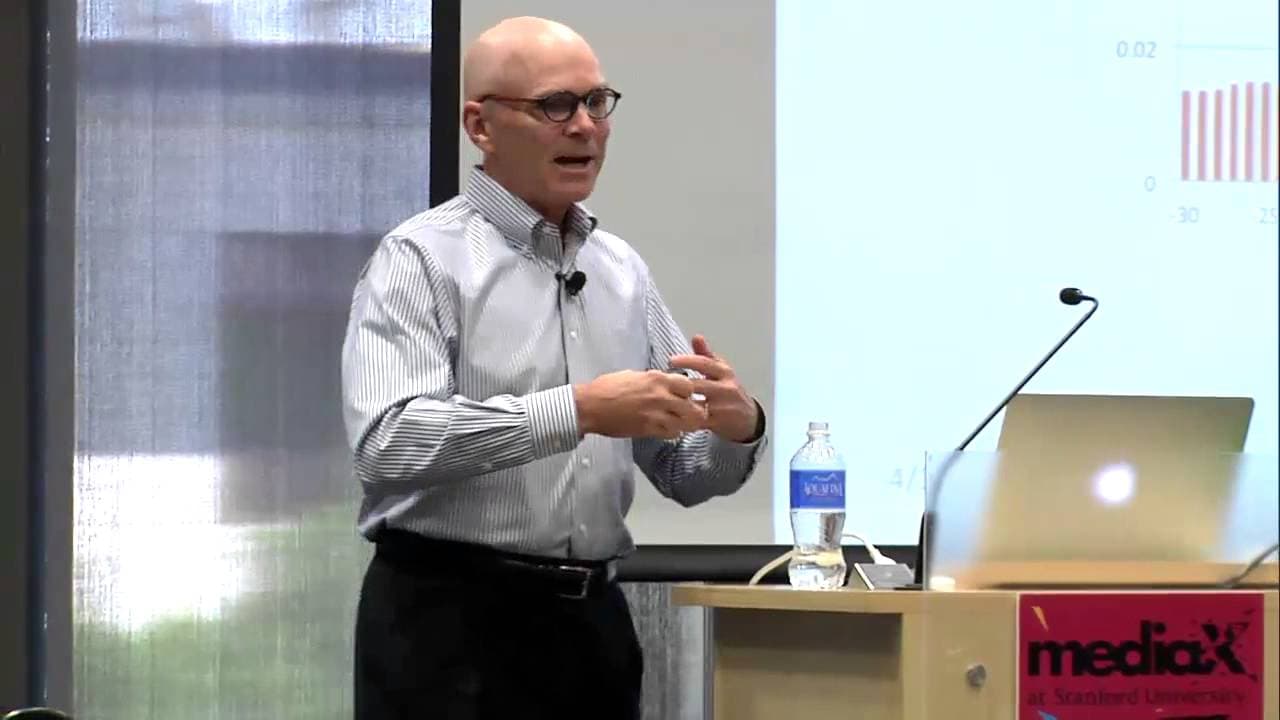
Media experiences are now being constructed in smaller time units, with individuals actively deciding which content to focus on, leading to task switching rather than multitasking.
Transcript
when we put together a personal media day now that idea and problem of multitasking is seen as a terrible influence and what that day looks like too many stimuli for competing for limited attention causing thoughtlessness if not stupidity and at least bad grades and probably a few car accidents but multitasking is turning into something new it's no... Read More
Key Insights
- 👷 Media experiences are now being constructed in smaller time units, with individuals actively deciding which content to engage with.
- 💁 Task switching has become the norm in media consumption, with individuals switching between different forms of content on single devices.
- 🔉 The average segment length of media consumption for Stanford undergraduates is 19 seconds, highlighting the fragmented nature of media consumption.
- 🥺 Task switching allows individuals to consume more content, but may lead to decreased attention and depth of engagement with each task.
- 🔉 The individual differences in media consumption styles can be categorized into offense-focused, defense-focused, coactive, and inactive styles.
- 🪛 Task switching is driven by primitive responses related to hunting, with individuals exhibiting either offense or defense biases.
- 🎚️ Arousal levels in anticipation of content switches suggest that task switching is an active and intentional process.
Install to Summarize YouTube Videos and Get Transcripts
Explore YouTube Video Summarizer or Get YouTube Transcript Extractor
Questions & Answers
Q: How has media consumption changed in recent years?
Media consumption has shifted towards task switching rather than multitasking, with individuals actively deciding which content to engage with and switching between different forms of media.
Q: What are the implications of task switching in media consumption?
Task switching allows individuals to consume more content in smaller time units, but it may also lead to a decrease in attention and depth of engagement with each individual task.
Q: How do individuals decide which content to prioritize in task switching?
Individuals prioritize content based on their personal preferences, interests, and motivations. They may switch between tasks based on what is most appealing or relevant to them in the moment.
Q: Does task switching have any advantages over traditional multitasking?
Task switching may lead to increased arousal and creativity, as individuals constantly switch between different forms of content and stimuli. However, it may also result in decreased focus and attention to each individual task.
Summary & Key Takeaways
-
Traditional categories of media consumption are being broken up and scattered throughout the day, with individuals actively deciding which content to engage with.
-
Task switching, rather than multitasking, is becoming the norm in media consumption, as individuals switch between different forms of content on their devices.
-
The average segment length of media consumption for Stanford undergraduates is 19 seconds, indicating that media is being consumed in small, fragmented chunks.
Read in Other Languages (beta)
Share This Summary 📚
Summarize YouTube Videos and Get Video Transcripts with 1-Click
Try YouTube Summary with ChatGPT & Claude or YouTube Transcript Generator
Explore More Summaries from Stanford 📚

Summarize YouTube Videos and Get Video Transcripts with 1-Click
Try YouTube Summary with ChatGPT & Claude or YouTube Transcript Generator