The #1 Serve Error Committed By Intermediate Players
TL;DR
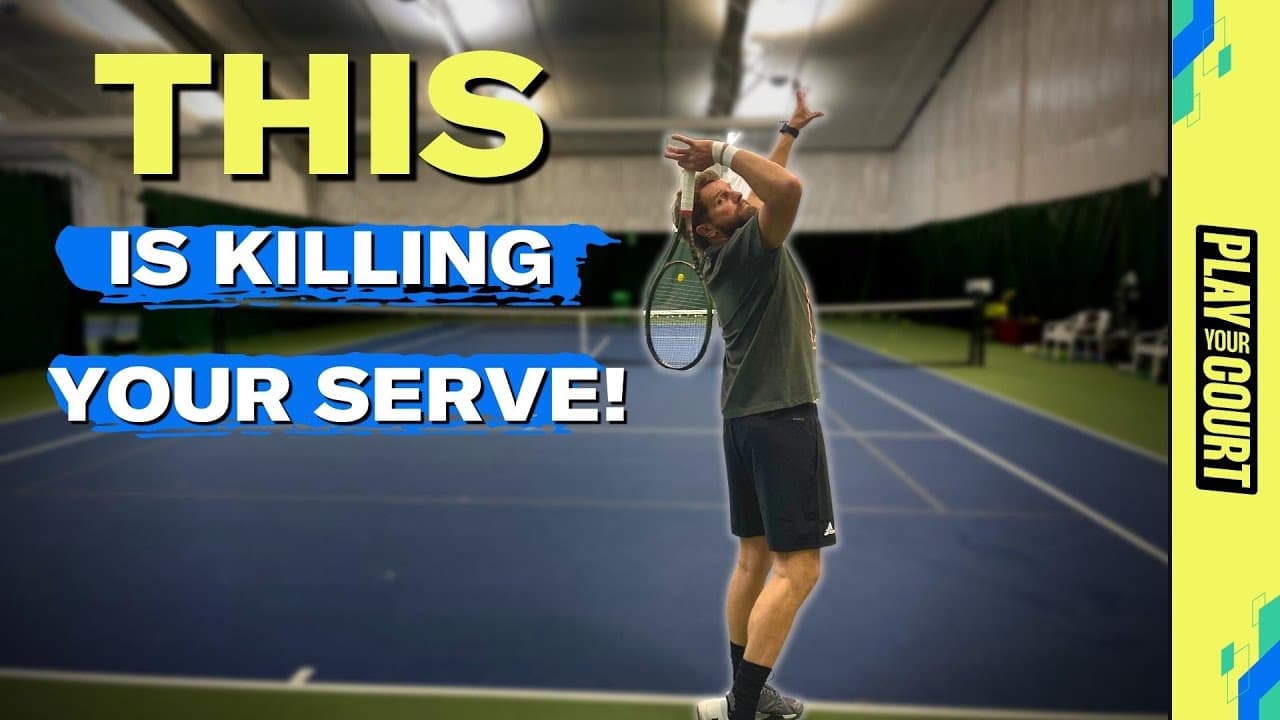
This video discusses two common mistakes in tennis serves: a disjointed knee bend and not using the back hip enough, and provides tips on how to fix them.
Transcript
I hope these tips helped an absolutes on hips tips all the same thing hope the tip for the hip helped oh baby it's still a lot buddy what's happening guys today here you have clicked this video because you're playing at a three five or a 4-0 level somewhere in between maybe even a 3-0 and you're having issues with the serve and you're like what is ... Read More
Key Insights
- ✊ Disjointed knee bend can hinder the power and timing of the serve, as players struggle to load and generate force effectively.
- 👻 Separating arm and leg movements in the serve allows for better coordination and power generation.
- 🛟 Utilizing the back hip properly in the serve enables better racket drop and greater serve potential.
- 🖐️ Foot placement and hip rotation play a crucial role in the serve's efficiency and power.
- 👻 Coiling the hips and positioning the arm on the non-dominant side allows for greater power potential in the serve.
- ✊ Poor hip rotation restricts the player's ability to generate power, resulting in a limited and ineffective serve.
- 🧎 Correcting the disjointed knee bend and back hip usage can greatly improve the overall quality and effectiveness of the tennis serve.
Install to Summarize YouTube Videos and Get Transcripts
Explore YouTube Video Summarizer or Get YouTube Transcript Extractor
Questions & Answers
Q: What is a disjointed knee bend in a tennis serve?
A disjointed knee bend occurs when players use their legs to lift the toss arm, making it difficult to properly bend and load for the serve. This affects timing and power.
Q: Why is it important to separate arm and leg movements in the serve?
Separating arm and leg movements allows for more efficient loading and power generation. It also helps with timing and coordination during the serve motion.
Q: How does not using the back hip enough affect the serve?
Not utilizing the back hip enough leads to limited hip rotation and poor racket drop. This restricts the player's ability to generate power and can result in an over-rotation of the upper body.
Q: How can I fix the issue of not coiling with the back hip in my serve?
To fix this issue, make sure your foot is positioned far back enough to allow for proper hip rotation. Focus on the right to left arm motion, which will help position the hitting arm on the non-dominant side.
Key Insights:
- Disjointed knee bend can hinder the power and timing of the serve, as players struggle to load and generate force effectively.
- Separating arm and leg movements in the serve allows for better coordination and power generation.
- Utilizing the back hip properly in the serve enables better racket drop and greater serve potential.
- Foot placement and hip rotation play a crucial role in the serve's efficiency and power.
- Coiling the hips and positioning the arm on the non-dominant side allows for greater power potential in the serve.
- Poor hip rotation restricts the player's ability to generate power, resulting in a limited and ineffective serve.
- Correcting the disjointed knee bend and back hip usage can greatly improve the overall quality and effectiveness of the tennis serve.
- Players should prioritize proper sequencing of arm and leg movements, as well as hip rotation, to maximize the power and accuracy of their serve.
Summary & Key Takeaways
-
Many players at the 3.5-4.0 level struggle with the serve due to a disjointed knee bend, which affects the power and timing of their serve.
-
Another common mistake is not utilizing the back hip enough, leading to poor racket drop and limited serve potential.
-
To fix these issues, players should focus on separating the arm and leg movements, and ensure proper hip rotation and coiling.
Read in Other Languages (beta)
Share This Summary 📚
Summarize YouTube Videos and Get Video Transcripts with 1-Click
Try YouTube Summary with ChatGPT & Claude or YouTube Transcript Generator
Explore More Summaries from PlayYourCourt.com 📚
Summarize YouTube Videos and Get Video Transcripts with 1-Click
Try YouTube Summary with ChatGPT & Claude or YouTube Transcript Generator