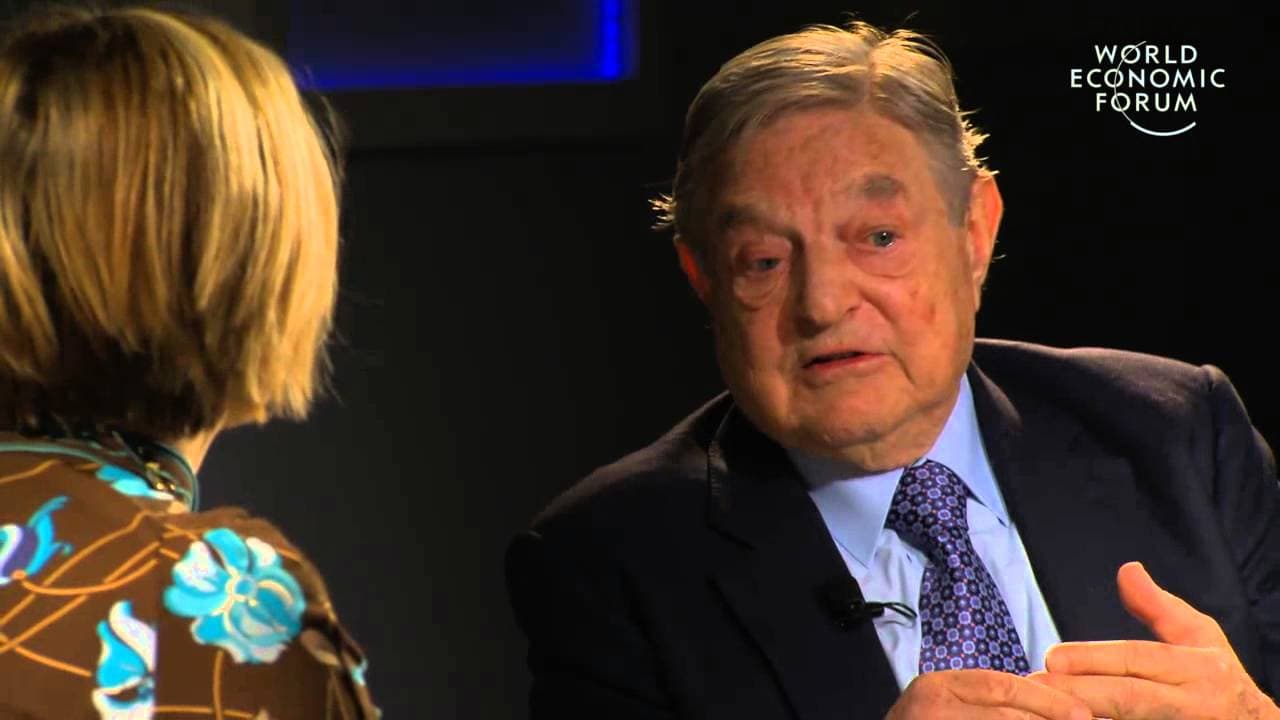
Davos 2013 - An Insight, An Idea with George Soros
TL;DR
George Soros discusses the distinction between natural and social phenomena, critical in shaping his life and financial theories.
Transcript
hello and welcome to an insight an idea I'm very pleased to welcome George Soros billionaire philanthropist and former hedge fund manager and today we're going to discuss the difference between natural phenomenon and social phenomenon an idea a big idea mr. Soros that has really guided you through life it's my pleasure it's basically something that... Read More
Key Insights
- 💠 Distinguishing between natural and social phenomena shapes Soros' understanding of economics and society.
- 💯 Perfect knowledge in natural phenomena contrasts with human uncertainty in social interactions.
- ❓ Soros' theory challenges traditional economic theories and highlights the importance of recognizing flaws in existing systems.
- 🤔 The theory gained traction after the 2008 financial crisis, reshaping economic thinking.
- 🏦 Central banks and policymakers must understand the distinction to avoid future crises.
- 🙈 The euro crisis revealed flaws in economic systems due to ignoring the distinction between natural and social phenomena.
- 🥺 Applying natural science methods to social systems can lead to misconceptions and crises.
Install to Summarize YouTube Videos and Get Transcripts
Explore YouTube Video Summarizer or Get YouTube Transcript Extractor
Questions & Answers
Q: How did George Soros develop the concept of natural and social phenomena?
Soros developed the idea while studying economics and Karl Popper's philosophy, recognizing the difference between predictable natural laws and uncertain social interactions.
Q: How did the theory of natural and social phenomena impact economic thinking?
Soros' theory challenged traditional economic theories by emphasizing the human element's influence on social phenomena and the need to recognize flaws in existing systems.
Q: Why did George Soros' theory gain traction after the 2008 financial crisis?
The 2008 financial crisis validated Soros' theory as it predicted and explained the crisis better than traditional economic theories, leading to a reevaluation of existing economic models.
Q: How does recognizing the distinction between natural and social phenomena help in avoiding future crises?
By understanding the flaws in applying natural science methods to social phenomena, policymakers and central bankers can prevent crises by acknowledging inherent human uncertainty in social systems.
Summary & Key Takeaways
-
George Soros developed the idea of distinguishing between natural and social phenomena during his student days by studying economics and Karl Popper's philosophy.
-
Natural phenomena have universal laws due to perfect knowledge, unlike social phenomena, which involve human uncertainty and can influence society.
-
Soros' theory gained traction after the 2008 financial crisis, challenging traditional economic theories and highlighting the importance of recognizing the flaws in existing systems.
Read in Other Languages (beta)
Share This Summary 📚
Summarize YouTube Videos and Get Video Transcripts with 1-Click
Try YouTube Summary with ChatGPT & Claude or YouTube Transcript Generator
Explore More Summaries from World Economic Forum 📚

Summarize YouTube Videos and Get Video Transcripts with 1-Click
Try YouTube Summary with ChatGPT & Claude or YouTube Transcript Generator