How Much Money Is Space Worth?
TL;DR
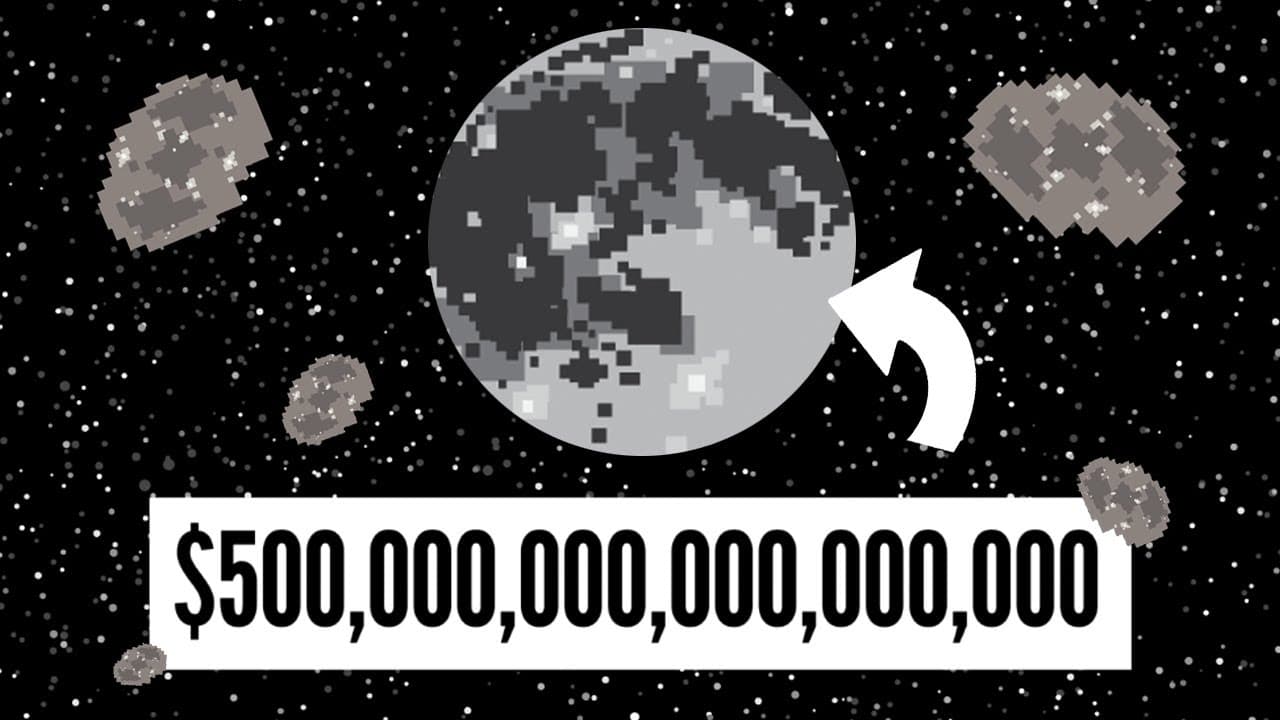
Space exploration reveals valuable elements in asteroids and the moon, potentially worth trillions on Earth.
Transcript
Hey there! Welcome to Life Noggin. Space exploration has taught us a lot about the stars, our universe, and even our own planet. But what if space could make you rich? There are some elements up in space that are very valuable here on Earth. Many are found inside asteroids and could be worth billions or trillions of dollars if we could mine them. T... Read More
Key Insights
- 💦 Valuable elements like platinum-group metals, water, and Helium 3 in asteroids and the moon have potential worth in trillions and quadrillions.
- 👾 Space mining presents challenges in docking with asteroids, identifying valuable targets, and navigating irregular gravitational fields.
- 👾 Advancements in space technology have led to innovations in various everyday products, highlighting the indirect benefits of space exploration.
Install to Summarize YouTube Videos and Get Transcripts
Explore YouTube Video Summarizer or Get YouTube Transcript Extractor
Questions & Answers
Q: What valuable elements can be found in asteroids and the moon?
Asteroids contain rare platinum-group metals, iron, nickel, cobalt, and water with potential uses like rocket fuel. The moon holds valuable Helium 3 for potential nuclear fusion reactors, valued in quadrillions.
Q: What are the challenges associated with space mining?
Challenges include docking with asteroids due to their weak gravity, identifying valuable asteroids among many candidates, and navigating irregular shapes and gravitational variations. Detection and accuracy of resources using infrared technology pose additional challenges.
Q: How are companies approaching space mining?
Companies are planning to extract water from asteroids by 2027 and NASA aims to mine the moon in the early 2020s. The focus is on developing technologies to overcome challenges in space mining operations.
Q: How has space exploration influenced technology on Earth?
NASA's advancements in space exploration have led to the development of technologies like smartphone cameras, memory foam, MRI and CAT scans, and ingredients in infant formula, showcasing indirect benefits of space research.
Summary & Key Takeaways
-
Space exploration has uncovered valuable elements in asteroids, including rare platinum-group metals, iron, nickel, cobalt, and water with various uses.
-
The moon holds Helium 3, rare on Earth but valuable for potential nuclear fusion reactors, with estimated resources valued in quadrillions.
-
Companies are exploring space mining, facing challenges like docking with asteroids and determining their value.
Read in Other Languages (beta)
Share This Summary 📚
Summarize YouTube Videos and Get Video Transcripts with 1-Click
Try YouTube Summary with ChatGPT & Claude or YouTube Transcript Generator
Explore More Summaries from Life Noggin 📚



Summarize YouTube Videos and Get Video Transcripts with 1-Click
Try YouTube Summary with ChatGPT & Claude or YouTube Transcript Generator